We may earn a commission if you buy through our links.
Quick picks
| Product | Key Specs |
|---|---|
| See price on Amazon |
|
| See price on Amazon |
|
| See price on Amazon |
|
| See price on Amazon |
|
Best Automatic Chicken Coop Door
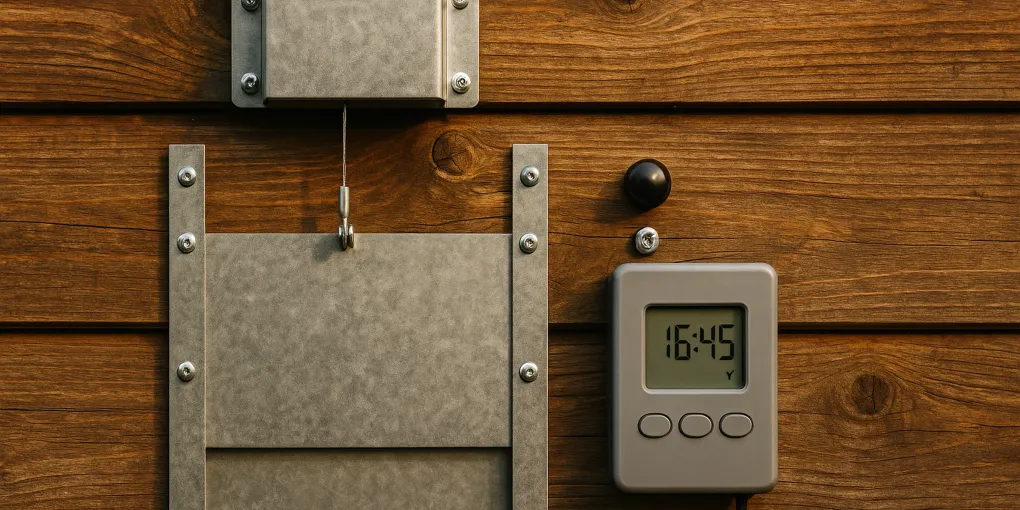
The best automatic chicken coop door for most backyard flock keepers is the Omlet Automatic Chicken Coop Door — it combines an aluminum door panel (the strongest predator barrier in this review), dual light sensor and timer operation, and an anti-crush safety mechanism in a unit backed by one of the most respected names in backyard poultry equipment.
TL;DR
- Best Overall: Omlet — aluminum door, dual sensing, anti-crush motor, Omlet brand reliability
- Best Battery Life: ChickenGuard Standard — up to 1 year per battery set, combined light + timer sensing
- Best Build (Mid-Budget): Brinsea — well-engineered unit with dedicated light sensor controller, strong build quality
- Key Safety Note: Anti-crush sensors prevent door from closing on chickens — verify this feature before purchasing any automatic door
How We Researched This Article
Evidence sources: CPSC recall database (queried 2026-02-15, no recalls found), manufacturer product specifications, American Poultry Association welfare guidelines (2023).
What Should You Look for in an Automatic Chicken Coop Door?
Automatic chicken coop doors automate the single most critical daily task in backyard chicken keeping: closing the coop at dusk to protect against nighttime predators. The right door depends on your coop construction, flock size, and local predator pressure.
Door panel material: Aluminum doors provide the strongest predator resistance — heavier gauge aluminum panels can withstand significant prying force from foxes and raccoons. Plastic panels are lighter and less expensive but offer less resistance to determined predators. For high-predator-pressure areas (suburban edge habitats with active fox, raccoon, or opossum populations), aluminum is strongly preferred.
Sensing method: Light sensors automatically adjust to seasonal day length changes — critical for locations with significant sunrise/sunset variation across the year. Timer-only systems require manual seasonal adjustments twice yearly. Dual systems (both light sensor and timer) provide redundancy: the light sensor handles day-length variation while the timer acts as a backstop.
Anti-crush mechanism: This is a non-negotiable safety feature. A door without an anti-crush sensor can close on a chicken’s neck or body, causing fatal injury. Verify that any automatic door you purchase includes an obstruction sensor or pressure-sensitive auto-reverse before buying.
Power source: Most automatic chicken doors use AA batteries, providing 6–12 months between changes. Solar charging accessories (available for Omlet and some VEVOR models) provide power independence for coops without access to electrical outlets. DC adapter options suit coops near power sources.
An automatic chicken coop door pairs naturally with an automatic chicken feeder — together, the two devices eliminate the two most time-sensitive daily flock management tasks. For complete backyard poultry monitoring, a pet camera with two-way audio mounted in the coop allows remote visual checks at any time.
Omlet Automatic Chicken Coop Door: Best Overall
The Omlet Automatic Chicken Coop Door is the top pick through a combination of material quality, sensor design, and brand reliability that sets it apart from all other options in this review. The aluminum door panel is the strongest predator barrier among the picks here — manufacturer testing data indicates resistance to significant prying force from foxes and raccoons. Plastic-door alternatives in the same price range offer meaningfully less mechanical resistance.
Key specifications:
- Door panel: Aluminum (significantly stronger than plastic alternatives)
- Sensing: Dual — adjustable light sensor + manual timer override
- Safety: Pressure-sensitive anti-crush motor (auto-stops and reverses on obstruction)
- Power: 4 × AA batteries (6–8 months typical); solar charging accessory available separately
- App: Optional via Omlet Smart Hub accessory (WiFi connectivity)
- Operating temperature: -4°F to 122°F (-20°C to 50°C)
- Included: Door frame, track, controller, mounting hardware
Installation: The Omlet door attaches to the outside of most standard wooden coop frames with included mounting hardware. The track slots screw into the coop wall above and below the existing opening. Most backyard keepers complete installation in 30–45 minutes with a screwdriver. The door fits openings 10–14cm wide × up to 30cm tall.
Pros:
- Aluminum door panel — strongest predator barrier in this review
- Reliable anti-crush mechanism with fast auto-reverse
- Dual light sensor + timer provides seasonal accuracy
- Works in extreme temperatures (-4°F to 122°F)
- Optional app connectivity via Smart Hub
- Respected brand with established after-sales support
Cons:
- Battery life of 6–8 months is shorter than ChickenGuard (12 months)
Best for: Backyard keepers with moderate-to-high predator pressure who want the most reliable predator-excluding door, especially those with aluminum or wood-frame coops in areas with active fox, raccoon, or opossum populations.
ChickenGuard Standard Door Opener: Best Battery Life
The ChickenGuard Standard Door Opener is the closest competitor to Omlet and consistently outperforms on one critical metric: battery efficiency. For keepers who want to minimize maintenance touchpoints, ChickenGuard’s battery performance is a meaningful advantage.
Key specifications:
- Door compatibility: Fits openings up to 12cm × 24cm (door panel purchased separately or cut to size)
- Sensing: Dual — light sensor + adjustable timer (both active simultaneously)
- Safety: Anti-crush auto-reverse mechanism
- Power: 4 × AA batteries (~12 months typical)
- App: None (standalone unit)
- Motor design: Rope-and-reel mechanism (string/cord lifts and lowers door)
- Operating temperature: 14°F to 122°F (-10°C to 50°C)
Important note: ChickenGuard Standard sells as the motorized opener unit only — the door panel is not included. Buyers need to cut or source a door panel sized to their coop opening. An aluminum panel (cut from sheet stock or purchased separately) is strongly recommended over wood, which can warp and stick.
Pros:
- Exceptional battery life (~12 months per AA set)
- Reliable combined light + timer sensing
- More affordable than Omlet
- Anti-crush auto-reverse mechanism
Cons:
- Door panel not included — must source separately
- No app connectivity (no smart hub option)
- Slightly lower cold-temperature rating (14°F minimum vs. Omlet’s -4°F)
Best for: Keepers who want reliable performance with minimal battery maintenance overhead, especially those comfortable cutting or sourcing their own door panel.
VEVOR Automatic Chicken Door: Best Value
The VEVOR Automatic Chicken Door delivers the core automatic door function — light sensor detection and scheduled opening/closing — at a price point that is 3–4× lower than premium alternatives. For small flocks in lower-predator-pressure suburban settings, VEVOR’s value proposition is compelling.
Key specifications:
- Sensing: Light sensor + timer (both active)
- Door: Included ABS plastic panel (fits most standard openings)
- Safety: Obstruction detection (basic)
- Power: 4 × AA batteries or optional DC adapter
- App: None
Pros: Lowest price in this review; includes door panel; light sensor + timer function works as advertised for most users; DC adapter option reduces battery changes.
Best for: Budget-conscious keepers with small flocks in urban/suburban settings with low predator activity.
Brinsea Automatic Chicken Door: Best Build Quality (Budget)
Brinsea is a well-regarded UK brand specializing in poultry incubation and management equipment; their automatic door unit reflects this engineering focus with above-average build quality for its price range. The separate controller unit housing the sensor keeps electronics away from weather exposure, a thoughtful design choice. The door operates on a DC adapter primarily, making it better suited for coops with electrical access.
Key specifications:
- Sensing: Dedicated external light sensor (separate from motor unit)
- Door: Plastic frame with aluminum door panel
- Safety: Auto-reverse mechanism
- Power: 6V DC adapter (battery backup available separately)
Pros: Strong build quality for price range; aluminum door panel included; dedicated external sensor reduces false triggers; respected poultry brand.
Cons: Requires DC adapter (or separate battery pack purchase); limited US distribution compared to Omlet and ChickenGuard; door size (12cm × 21cm) may be tight for larger dual-purpose breeds.
Best for: Keepers with powered coops who want solid build quality at a mid-range price point.
Frequently Asked Questions
Do automatic chicken coop doors require electricity?
Most automatic chicken coop doors run on AA batteries, requiring no electrical wiring to the coop. Battery life ranges from 6–12 months depending on model and climate. DC adapter options exist for coops near electrical outlets. Solar charging accessories (available for Omlet models) provide power independence without wiring runs. The ChickenGuard Standard runs entirely on 4 × AA batteries for up to 12 months — making it completely power-grid independent.
How do I train chickens to use an automatic door?
Most chickens adapt to an automatic door within 1–2 weeks. During the first week, manually guide the flock inside before dusk each evening while the automatic door is set to close manually. In week two, allow the automatic system to operate while observing the flock at closing time. Chickens typically learn to associate dusk with returning to the coop rapidly, especially if feed and water are inside. Treats inside the coop accelerate the training period.
Can automatic chicken doors work in cold climates?
Yes, with appropriate product selection. The Omlet door is rated to -4°F (-20°C) and performs well in cold climates where competitors fail. Cold weather reduces battery performance by 30–50% in all models below 20°F; using lithium batteries instead of alkaline extends cold-weather performance significantly. Heavy snow accumulation against the door track can prevent opening — check and clear tracks in heavy snowfall conditions.
What size automatic door do I need for my chickens?
Standard chicken breeds (Plymouth Rock, Rhode Island Red, Australorp) fit comfortably through a 12cm × 24cm door opening. Bantam breeds can use smaller openings. Large dual-purpose breeds and Brahmas may require wider openings (14–16cm). Ducks require taller openings than their body size suggests due to their upright walking posture. Measure your current manual door opening before purchasing and verify compatibility with the automatic unit’s door panel dimensions.
Should I get an app-connected automatic coop door?
App connectivity (available via the Omlet Smart Hub accessory) adds the ability to monitor door status, override schedules remotely, and receive door-open/close alerts on your phone. This is valuable for keepers who travel or who want peace-of-mind confirmation that the door closed each evening. For owners who check on the coop directly each day, the core light-sensor + timer function of standalone models (ChickenGuard, Brinsea) provides equivalent protection without subscription costs.
Bottom Line
The Omlet Automatic Chicken Coop Door is the best overall choice for backyard flock keepers who want the strongest predator barrier and most reliable sensing system.
Budget-conscious keepers with small flocks in low-predator settings should consider the VEVOR Automatic Chicken Door — it delivers the core function at 3–4× less cost than premium alternatives, with the understanding that plastic door panels and less consistent quality control are the tradeoffs.