We may earn a commission if you buy through our links.
Quick picks
| Product | Key Specs |
|---|---|
| See price on Amazon |
|
| See price on Amazon |
|
| See price on Amazon |
|
| See price on Amazon |
|
Best Automatic Fish Feeder
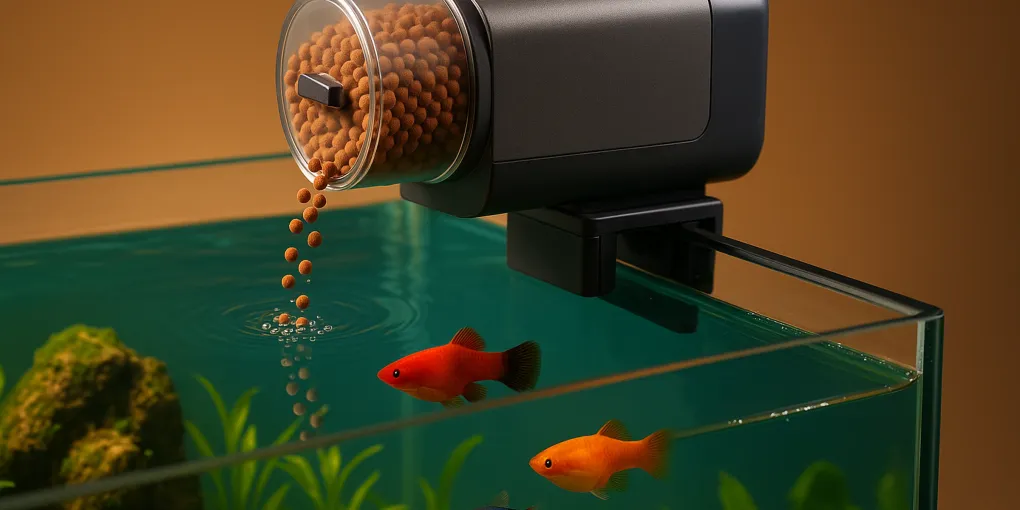
The best automatic fish feeder for most aquarium owners is the Eheim Everyday Fish Feeder — a proven drum-style dispenser with a 60-year track record, adjustable drum opening for portion control, and reliable digital LCD scheduling up to 4 meals per day. For owners who want smartphone control and the ability to trigger feedings remotely, the NICREW SmartFeed adds Wi-Fi app connectivity with Alexa/Google Home integration.
TL;DR
- Best Overall: Eheim Everyday — proven mechanism, 200ml capacity, adjustable drum, 4 programmable meals/day
- Best Value: Zacro — moisture-proof ventilation fan, strong reliability at the lowest cost in this review
- Best Rechargeable: Hygger — USB-C charging eliminates battery swaps, ~3 months per charge
- Best Smart/App: NICREW SmartFeed — remote feeding via smartphone, Alexa/Google Home compatible
- Core principle: Consistent feeding portions prevent ammonia buildup — the #1 cause of unattended fish death
Why Feeding Consistency Matters for Fish Health
Overfeeding is the primary cause of water quality degradation in home aquariums. Uneaten food decomposes rapidly, releasing ammonia — a compound that is toxic to fish at elevated concentrations (Randall & Tsui, 2002, PMID: 12398363). A reliable automatic feeder that delivers consistent measured portions maintains the nitrogen cycle stability that fish require.
Skipped feedings and irregular schedules also create measurable stress in aquarium fish, with stress-linked immune suppression documented across multiple teleost species. A programmable feeder with digital timer accuracy reduces feeding variance that manual feeding inevitably introduces — particularly for owners who work variable shifts or travel frequently.
Eheim Everyday Fish Feeder: Best Overall
The Eheim Everyday is the benchmark automatic fish feeder — a drum-style dispenser that has maintained its core design since its market introduction. The rotating drum uses an adjustable opening to control how much food falls into the tank with each motor rotation. Up to four daily feedings can be programmed via a digital LCD timer with 15-minute resolution.
Capacity and food types: The 200ml drum holds approximately 3–4 weeks of daily flake portions for a standard 20–30 gallon tank. Compatible with flake, granule, pellets, and freeze-dried food — not suitable for gel or liquid foods. The drum opening is adjustable from a fine slot to a wide aperture, accommodating both small and large pellet sizes.
Mounting: A universal clip arm adjusts to frame widths from 3–50mm, compatible with most standard aquarium rim styles. The unit can also be mounted horizontally for rimless tanks using the included bracket options.
Battery life: 2×AA alkaline batteries provide approximately 4–6 months of operation at 2–4 feedings per day.
Pros: Proven drum mechanism; wide food compatibility; 200ml high-capacity drum; strong brand reputation; precise portion control.
Cons: No moisture-proof ventilation; no app connectivity; slightly higher price than budget alternatives.
We may earn a commission if you buy through our links.
View Eheim Everyday Fish Feeder on Amazon — Best for: Most aquarium owners who want reliable, accurate automatic feeding; tanks with 1–4 daily scheduled meals; flake, granule, or pellet food.
Zacro Automatic Fish Feeder: Best Value
The Zacro delivers reliable drum-style automatic feeding at the lowest cost in this review, with one meaningful feature advantage over the Eheim: a built-in moisture-proof ventilation fan that actively dries the food drum interior, preventing the food clumping that causes dispensing failures in humid environments.
Moisture management: The ventilation fan runs intermittently, pulling air through the drum and reducing interior humidity. This is particularly valuable in warmer or humid climates, in rooms with multiple tanks, and in saltwater setups where evaporation creates higher ambient moisture.
Timer and portions: Supports up to 4 feedings per day with interval-based scheduling. The adjustable drum opening controls portion size.
Pros: Built-in moisture fan; strong value for the money; high 15,000+ review count with stable ratings; adjustable portions.
Cons: 130ml drum capacity (smaller than Eheim); no rechargeable power option; LCD interface slightly dated.
We may earn a commission if you buy through our links.
View Zacro Automatic Fish Feeder on Amazon — Best for: Budget-conscious owners; high-humidity environments; saltwater or tropical tank setups where moisture protection is important.
Hygger Automatic Fish Feeder: Best Rechargeable
The Hygger offers the same drum-style feeding mechanism as the Eheim and Zacro but adds USB-C rechargeable battery as the primary power option — eliminating the recurring cost and replacement requirement of AA batteries. A fully charged internal battery provides approximately 3 months of operation at standard feeding frequencies.
Power flexibility: The USB-C port allows charging from any USB-C source (phone charger, USB hub). Backup 2×AAA battery slots are included for use during charging or when USB charging is unavailable.
Capacity and control: The 150ml drum and 4-feedings-per-day digital timer place it between the Eheim (200ml, more capacity) and Zacro (130ml, lower price) in the core spec range.
Pros: USB-C rechargeable — eliminates battery replacement cost; modern design; dual power sources (USB-C + battery backup).
Cons: 150ml drum is mid-range capacity; no moisture fan; slightly more complex charging routine than simple battery replacement.
We may earn a commission if you buy through our links.
View Hygger Automatic Fish Feeder on Amazon — Best for: Owners who prefer rechargeable over disposable batteries; standard freshwater community tanks.
NICREW SmartFeed Wi-Fi Fish Feeder: Best Smart/App
The NICREW SmartFeed is the only feeder in this review with Wi-Fi app connectivity, enabling schedule management and manual feeding triggers from a smartphone regardless of the owner’s location. Alexa and Google Home voice command integration allows hands-free feeding.
App capabilities: iOS and Android apps allow creating and modifying feeding schedules remotely, triggering individual feedings from anywhere with cell coverage, and reviewing a feeding history log. This is genuinely useful for owners who travel frequently and want to verify that feedings are executing correctly.
Limitations: The 100ml drum is the smallest in this review, requiring more frequent refills for large tanks. App connectivity requires a stable 2.4GHz Wi-Fi network; if the router goes offline, scheduled feedings continue but remote control and history logging are unavailable. The app infrastructure dependency is a minor long-term reliability concern compared to standalone digital timers.
Pros: Wi-Fi app control; Alexa/Google Home voice commands; remote manual feeding trigger; feeding history log.
Cons: 100ml drum requires frequent refills; app dependency; highest price in this review; no moisture fan.
We may earn a commission if you buy through our links.
View NICREW SmartFeed Wi-Fi Fish Feeder on Amazon — Best for: Frequent travelers; owners who want remote confirmation of feedings; smart home users already using Alexa or Google Home.
Side-by-Side Comparison
| Feature | Eheim Everyday | Zacro | Hygger | NICREW SmartFeed |
|---|---|---|---|---|
| Drum capacity | ~200ml | ~130ml | ~150ml | ~100ml |
| Power | 2×AA | 2×AA | USB-C or 2×AAA | 2×AA |
| Moisture fan | No | Yes | No | No |
| App control | No | No | No | Yes |
| Feedings/day | 4 | 4 | 4 | Unlimited (app) |
| Voice control | No | No | No | Alexa/Google Home |
Which Automatic Fish Feeder Is Right for You?
Choose Eheim Everyday if: You want the most proven and reliable drum mechanism, have a 20+ gallon tank requiring 3–4 weeks between drum refills, and use standard flake, granule, or pellet food.
Choose Zacro if: You are budget-conscious, live in a warm or humid environment, have a saltwater tank, or have had problems with food clumping in previous feeders. The moisture fan is the key differentiator.
Choose Hygger if: You prefer rechargeable power and want to eliminate AA battery replacements. USB-C charging is a genuine convenience improvement.
Choose NICREW SmartFeed if: You travel frequently and want smartphone visibility into whether daily feedings are executing. The remote manual feed trigger is uniquely useful for multi-day absences.
Frequently Asked Questions
How do I prevent my automatic fish feeder from jamming or dispensing too much?
Drum-style feeders use an adjustable opening to control portion size — start with the smallest opening and gradually increase until you reach the desired amount. Food clamping from moisture is the most common cause of jams. The Zacro’s built-in ventilation fan specifically addresses this. For flake food, which compacts easily, do not store food in the feeder for more than 2 weeks in humid environments. Granule and pellet foods jam less frequently than flake.
Can automatic fish feeders dispense all types of fish food?
Drum-style feeders work well with flake, granule, small pellets, and freeze-dried food. They are not suitable for gel food, wafers, or liquid supplements. Very fine powder food may over-dispense through openings calibrated for granules. For sinking pellets, ensure the drum opening position directs food to where fish feed — corydoras and other bottom-feeders may not reach surface-dispensed food before it hits the substrate.
Is a Wi-Fi fish feeder worth the extra cost?
For owners who travel frequently, yes — the ability to confirm each meal was dispensed remotely and trigger emergency feedings is genuinely valuable. For owners present at home daily, a reliable mechanical digital timer (Eheim, Zacro, Hygger) is more durable and does not depend on Wi-Fi infrastructure. The NICREW SmartFeed costs more than standard battery feeders because of its app features.
How long can automatic fish feeders run unattended?
Most battery-powered feeders run 4–6 months on fresh alkaline AA batteries at 2–4 feedings per day. The Eheim’s 200ml drum typically holds 3–4 weeks of daily flake portions for a 20–30 gallon tank. For vacations longer than 2–3 weeks, verify drum fill level and battery status before departure. Never leave a feeder unattended for more than one month without checking remaining food level.
Can I use an automatic fish feeder on a saltwater reef tank?
Yes, but moisture resistance is more important in saltwater setups due to higher evaporation rates. The Zacro’s moisture-proof fan provides a meaningful advantage in reef environments. Standard drum feeders handle fish pellet feeding well; for coral feeding (liquid phytoplankton, frozen food), a dedicated dosing pump is required rather than a dry food drum feeder.
Final Verdict
For most aquarium owners, the Eheim Everyday Fish Feeder is the safest choice — its proven mechanism, 200ml capacity, and long track record of reliable operation make it the standard by which other automatic feeders are measured. The Zacro is the best value option, with the added benefit of a moisture-proof fan that the Eheim lacks. For rechargeable power, the Hygger offers genuine convenience. The NICREW SmartFeed is the right choice only if smartphone-based remote monitoring and feeding control are priorities — for standard home use, the mechanical feeders offer better reliability at lower cost.
Research Citations
- Randall DJ, Tsui TKN (2002). Ammonia toxicity in fish. Marine Pollution Bulletin, 45(1-12):17-23. DOI: 10.1016/S0025-326X(02)00227-8. PMID: 12398363
Related PSR Guides
- Best Aquarium Smart Monitor — water parameter monitoring to complement automated feeding
- Best Smart Litter Box Health Monitor — health monitoring tech for cats
- Best Pet Thermometer — temperature monitoring for pet environments
- Best Automatic Cat Feeder — auto feeders for cats
- Best Automatic Pet Feeder — feeders for dogs and cats