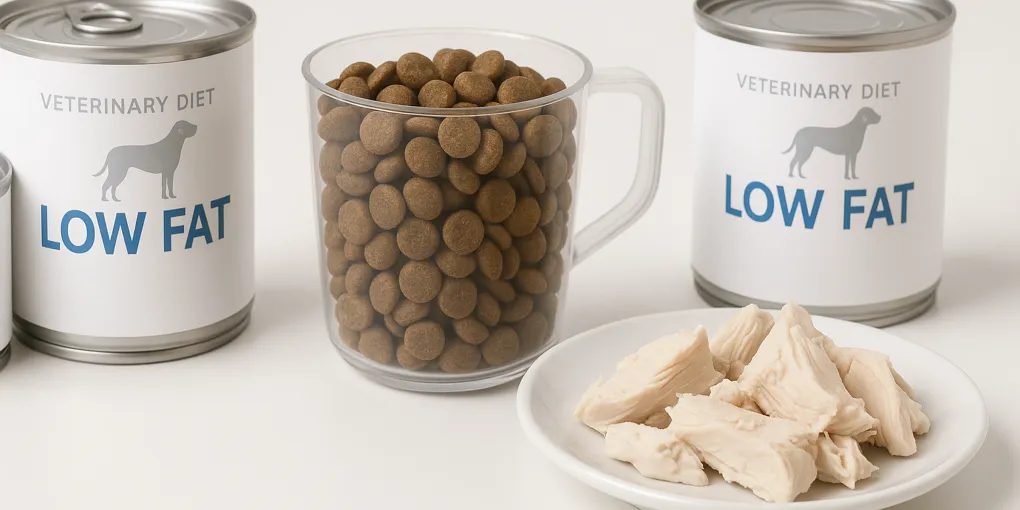
Royal Canin Veterinary Diet Gastrointestinal Low Fat
Common low-fat GI formula family to confirm with your veterinarianRole: Long-term or post-stabilization example when your veterinarian prescribes low fat
Varies by formula and retailer
Quick picks
| Product | Key Specs |
|---|---|
| See price on Amazon |
|
| See price on Amazon |
|
| See price on Amazon |
|
Product availability, certifications, and retailer details can change; check the current Amazon page before buying.
Start with the emergency distinction
Pancreatitis is not a casual “sensitive stomach” problem. Merck Veterinary Manual describes pancreatitis in dogs and cats as inflammation of the pancreas with signs that can include vomiting, abdominal pain, anorexia, weakness, dehydration, and systemic illness (Merck pancreatitis). If your dog may be having an acute episode, do not try a new food first. Call a veterinarian or emergency clinic.
This guide is for the safer follow-up question: after a veterinarian has evaluated the dog, what low-fat diet discussion should an owner be prepared for? Low-fat diets are commonly used in management, especially for chronic pancreatitis, recurrent-risk dogs, and dogs with hypertriglyceridemia or other risk factors. The 2024 JAVMA review on nutritional management of pancreatitis and concurrent disease emphasizes individualized veterinary planning because pancreatitis often overlaps with other conditions (PubMed 38569533).
July 2026 refresh check: the article still recommends veterinarian-directed formula matching rather than a casual OTC swap. The named Royal Canin, Hill’s, and Purina veterinary-diet rows remain examples of low-fat gastrointestinal formula families to discuss with a clinic. Tagged Amazon search paths were reviewed for current marketplace discoverability, but prescription-food listings change by retailer and authorization rules, so verify the exact formula, texture, bag/can size, seller, price, and clinic approval before buying.
What “best” means here
The best food is the one your veterinarian selects for your dog’s pancreatitis history, current clinical status, body condition, bloodwork, appetite, and concurrent disease. A dog recovering from hospitalization, a dog with chronic low-grade pancreatitis, and a diabetic dog with pancreatitis risk may not need the same formula.
Use WSAVA’s nutrition toolkit questions when comparing options: who formulates the diet, what quality-control information is available, whether it is complete and balanced for your dog, and whether the manufacturer can provide nutrient information beyond the marketing panel (WSAVA Global Nutrition Guidelines). For pancreatitis, ask your clinic to interpret fat on a dry-matter or calorie basis rather than relying only on the as-fed number on a label.
Formula categories to discuss with your veterinarian
| Diet category | Why it comes up | Key caution |
|---|---|---|
| Prescription low-fat GI diet | Common choice for chronic pancreatitis management or after stabilization | Requires veterinary authorization and monitoring; not every GI dog needs low fat |
| Low-fat canned therapeutic formula | Useful when moisture, aroma, or appetite support matters | Canned labels can look low-fat as fed because of water; ask about dry-matter fat |
| Moderate-fat digestible GI diet | Sometimes used when strict low fat is not required | May be too fatty for recurrent pancreatitis or hypertriglyceridemia risk |
| OTC weight-management food | Sometimes considered for stable dogs when the clinic approves | It is not a pancreatitis treatment and may lack therapeutic digestibility or clinical support |
If your veterinarian recommends Hill’s, Royal Canin, Purina, or another exact therapeutic formula, compare that exact formula through your clinic or authorized retailers. Do not substitute a non-prescription food because the words “low fat” appear on the bag.
How to shop without substituting the diet
If the discharge sheet names a formula, shop for that exact formula. A low-fat gastrointestinal therapeutic diet, a regular gastrointestinal therapeutic diet, a weight-management food, and a senior food can all have very different fat levels and digestibility. Use broad searches only as a lookup tool. For example, See current options on Amazon for Royal Canin Gastrointestinal Low Fat can help you find authorized listings, but the purchase should match your veterinarian’s written formula, texture, and size. If the dog needs canned food during recovery, search for the exact wet option, not just any See current options on Amazon for Hill’s i/d Low Fat canned food.
Check the practical details: prescription authorization, shipping speed, whether the food could arrive after the current supply runs out, and whether autoship could send the wrong size or flavor later. If the dog refuses the food, do not immediately add cheese, oil, peanut butter, fatty broth, or table scraps. Call the clinic and ask whether warming, water, a different texture, anti-nausea support, or a different formula is safer.
Why treats and toppers matter so much
Many pancreatitis relapses are discussed around meals, but the hidden fat often comes from outside the bowl. A pill wrapped in cheese, a lick of peanut butter, a marrow bone, a bully stick, fatty meat trimmings, a dental chew, or a rich training treat can add more fat than the owner realizes. That does not mean every dog with chronic pancreatitis must live with no rewards. It means rewards need to be part of the calorie and fat budget that the veterinarian sets.
For stable dogs, the clinic may allow tiny portions of the approved diet, low-fat single-food rewards, or a specific commercial treat. For dogs in an acute episode, dogs still vomiting, dogs not eating, or dogs with abdominal pain, treat selection is the wrong priority. Veterinary stabilization comes first.
Acute versus chronic: the wording difference matters
Acute pancreatitis language should be urgent and conservative. The owner should not read this article and decide to “try low fat for a few days” while a dog is painful, vomiting, dehydrated, or refusing food. Chronic pancreatitis language can discuss long-term fat management, body-condition management, avoidance of high-fat extras, and recheck planning, but it still belongs under veterinary supervision.
Concurrent disease is the reason this page does not publish a universal fat cutoff. Diabetes can change meal timing and carbohydrate needs. Hypertriglyceridemia may require stricter fat control. Kidney or heart disease can change protein, phosphorus, sodium, and calorie priorities. Puppies, pregnant dogs, and underweight dogs have growth or energy needs that can make a generic low-fat plan unsafe. The safest sentence is often: ask the veterinarian which nutrient target matters most for this dog.
What to monitor after the diet plan starts
Track appetite, vomiting, stool, abdominal comfort, water intake, weight, and energy. Note every treat, pill helper, chew, or table-food exposure. If signs return, the log helps your veterinarian separate food refusal, hidden-fat exposure, medication problems, progression of pancreatitis, and unrelated GI disease. Do not wait for a scheduled recheck if vomiting, pain, anorexia, weakness, blood, dehydration, or lethargy appears.
Red flags: do not wait on a diet trial
Seek veterinary help immediately for suspected acute pancreatitis or any of these signs:
- Repeated vomiting or retching
- Abdominal pain, prayer posture, hunched posture, or guarding the belly
- Refusal to eat, especially with vomiting or lethargy
- Dehydration, weakness, collapse, fever, or severe depression
- Bloody stool or vomit
- Known prior pancreatitis with returning signs
- Diabetes, endocrine disease, hypertriglyceridemia, kidney disease, heart disease, pregnancy, puppy growth needs, or other complex illness
These signs change the risk calculation. A dog in pain or repeatedly vomiting may need fluids, anti-nausea medication, pain control, diagnostics, and monitoring before diet is even the main question.
What to ask at the discharge or recheck visit
Bring these questions to your veterinarian:
- Is this suspected acute pancreatitis, confirmed acute pancreatitis, chronic pancreatitis, or pancreatitis risk management?
- What exact formula and format should I feed?
- Should I use dry, canned, or a mix?
- What is the daily calorie target, including treats and medication helpers?
- Which signs mean I should stop feeding and call?
- How should we handle concurrent disease such as diabetes, kidney disease, heart disease, endocrine disease, or hypertriglyceridemia?
- When do we recheck weight, appetite, stool, and bloodwork?
A low-fat diet can fail in practice if the dog gets high-fat chews, cheese-wrapped pills, table scraps, peanut butter, fatty meats, or too many treats. Ask your clinic to write down treat and transition rules as part of the same plan, without treating treats as medicine.
Treat and transition guardrails
For a dog with pancreatitis history, food transitions should be clinic-led. Some dogs need a gradual change once stable. Others need a specific post-hospital feeding plan. Avoid adding pumpkin, probiotics, toppers, broths, or new treats unless your veterinarian approves them. Even low-fat additions can cause trouble if they displace the therapeutic diet, change calories, or hide appetite loss.
If your dog’s issue is chronic diarrhea without a pancreatitis history, the safer starting point may be the chronic enteropathy and suspected IBD diet guide, not a low-fat pancreatitis page. Low fat is not automatically right for every GI dog.
A final practical check is household consistency. If one person follows the diet and another gives leftovers, the veterinarian may interpret a setback as diet failure when it was really uncontrolled exposure. Put the diet name, daily amount, approved rewards, and emergency signs on the refrigerator so everyone uses the same rules.
Sources
- WSAVA Global Nutrition Guidelines and Nutrition Toolkit: https://wsava.org/global-guidelines/global-nutrition-guidelines/
- Merck Veterinary Manual, Pancreatitis in Dogs and Cats: https://www.merckvetmanual.com/digestive-system/the-exocrine-pancreas/pancreatitis-in-small-animals
- Della Maggiore A, et al. Nutritional management of pancreatitis and concurrent disease in dogs and cats. JAVMA, 2024. PMID: 38569533. https://pubmed.ncbi.nlm.nih.gov/38569533/
Pancreatitis diet FAQ
Can I manage suspected acute pancreatitis with low-fat food at home?
No. Suspected acute pancreatitis, repeated vomiting, abdominal pain, anorexia, dehydration, collapse, or lethargy needs urgent veterinary care. Diet becomes part of the plan after evaluation and stabilization.
Is low-fat food always right for a dog with GI signs?
No. Low fat is commonly used in pancreatitis management, especially chronic or recurrent-risk contexts, but other GI diseases may need a different nutrition plan. Chronic enteropathy, protein-losing enteropathy, kidney disease, heart disease, diabetes, pregnancy, and growth can all change the decision.
Can an OTC low-fat food replace a therapeutic diet?
Do not assume that. If your veterinarian prescribed a therapeutic formula, compare and buy that exact formula through an authorized retailer. Use OTC options only when your veterinarian says the case is stable and the product fits the nutrition target.