How to Set Up a Leopard Gecko Humid Hide: Shedding Support Without a Wet Tank
ProtocolQuick picks
| Product | Key Specs |
|---|---|
| See price on Amazon |
|
| See price on Amazon |
|
Product availability, certifications, and retailer details can change; check the current Amazon page before buying.
How to Set Up a Leopard Gecko Humid Hide: Shedding Support Without a Wet Tank
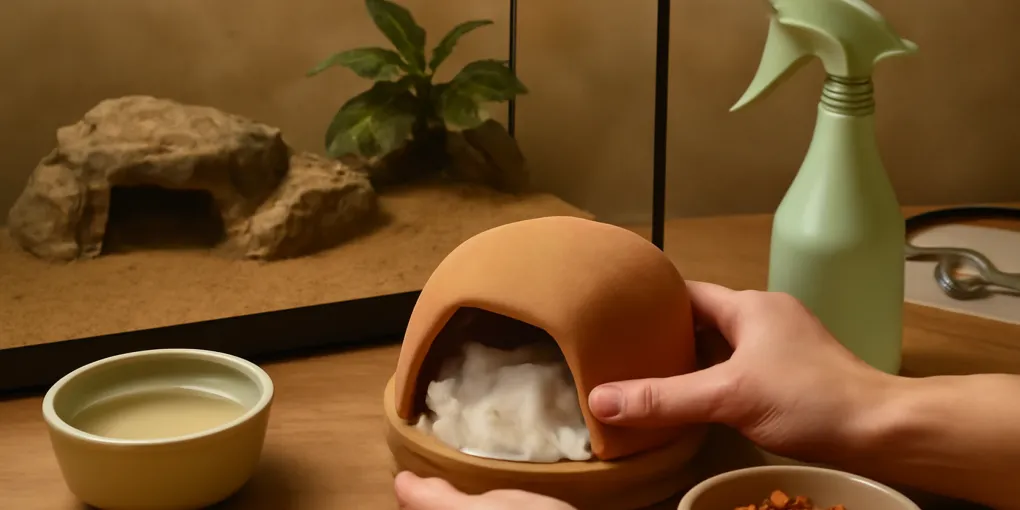
A leopard gecko humid hide gives the gecko one damp microclimate for shedding while the rest of the enclosure stays dry and correctly heated. The goal is not to make the whole tank humid. The goal is to offer a safe retreat where the gecko can soften old skin, especially around toes, tail tip, and eyes.
Use a small enclosed hide, damp sphagnum moss or folded paper towel, and placement on the warm-to-middle side of the enclosure. Check it daily during shed periods. If shed is stuck on toes, eyes look cloudy after shedding, or the gecko stops eating and acts weak, contact a reptile veterinarian rather than repeatedly soaking or picking at skin.
Setup supplies
- Search Amazon for leopard gecko humid hide cave if you want a washable cave with one low entrance.
- Search Amazon for reptile sphagnum moss for humid hide for a moisture-holding substrate when your gecko does not ingest it.
- Search Amazon for digital reptile thermometer hygrometer probe to verify the enclosure gradient instead of guessing.
If you are also adjusting heat, follow the safety logic in our reptile habitat controller guide before changing bulbs, mats, or ceramic emitters.
Step 1: choose the right hide
Pick a hide that is just large enough for the gecko to turn around inside. Too much open space dries faster and feels less secure. The entrance should be low and smooth, with no sharp molded edges. A removable lid or lift-off top makes cleaning much easier than a decorative cave you cannot inspect.
Opaque sides are better than clear plastic for a daily retreat. Geckos use hides partly because they feel hidden. If you make a do-it-yourself hide from a food container, sand the entrance smooth and avoid brittle plastic that can crack.
Step 2: choose the substrate
Damp sphagnum moss works well because it holds moisture without turning into a puddle. Rinse it, squeeze until it is damp rather than dripping, and fluff it loosely. Paper towel is safer for geckos that bite at moss, have a history of impaction risk, or need a very clean temporary setup.
Avoid loose sand, bark chips, aromatic woods, and dusty bedding inside the humid hide. The hide should support shedding, not add ingestion or respiratory risk. Replace substrate whenever it is soiled, moldy, sour-smelling, or full of shed fragments.
Step 3: place the hide in the temperature gradient
Put the humid hide on the warm-to-middle side, not directly under a heat source and not in the coldest corner. Warmth helps moisture evaporate inside the hide, but overheating a closed damp box can make it unsafe. The gecko should still have a dry warm hide and a dry cool hide.
Use measured temperatures. A thermostat-controlled heat source and digital probe are more reliable than stick-on dials. If the whole tank humidity rises and glass stays wet, the hide is too wet, ventilation is poor, or water placement needs adjustment.
PSR G6 Composite Score for a humid-hide setup
| Factor | Weight | Score | Weighted contribution |
|---|---|---|---|
| Research fit | 30% | 4.2 | 1.26 |
| Evidence quality | 25% | 3.8 | 0.95 |
| Value | 20% | 4.6 | 0.92 |
| User signals | 15% | 4.1 | 0.62 |
| Transparency | 10% | 4.4 | 0.44 |
| Composite | 100% | 4.2/5 |
The score reflects a low-cost habitat intervention with clear husbandry logic and easy daily checks. It does not replace veterinary care for retained eye caps, wounds, parasites, or systemic illness.
Step 4: moisture test before the gecko uses it
Press the moss or paper towel with a clean finger. It should feel cool and damp, but water should not pool on the floor of the hide. If you can wring out drops, it is too wet. If the material is crisp within a few hours, the hide is too ventilated, too close to heat, or underfilled.
During shed week, check daily. Outside shed week, many keepers still maintain a lightly damp hide because geckos choose microclimates as needed. Do not mist the whole tank every time the moss dries unless the species and enclosure plan require it.
Step 5: monitor the shed
A normal shed often happens quickly and may be eaten by the gecko. You may only notice dull skin before and brighter skin after. Check toes, tail tip, around the mouth, and eyes after the shed. Retained rings on toes can restrict circulation. Retained skin around eyes can signal husbandry problems or medical issues.
Do not pull dry skin from toes. If a small toe ring is present and the gecko is otherwise bright, a shallow warm-water soak and gentle damp cotton swab may help, but force can injure skin. When in doubt, use a reptile veterinarian.
Step 6: keep it clean
Humid hides are intentionally damp, so they grow residue faster than dry hides. Remove feces immediately. Replace paper towel often. Rinse and refresh moss before it smells. Wash the hide with reptile-safe cleaning practices, rinse thoroughly, and dry before reassembling.
If you see mold, throw away the substrate and clean the hide. If mold keeps returning, reduce moisture, improve ventilation, or change placement. A humid microclimate should not become a wet compost box.
Common setup mistakes
The first mistake is using a hide that is too large and exposed. The gecko ignores it because it does not feel safe. The second is putting the humid hide in the cold corner, where it becomes clammy rather than useful. The third is soaking moss until the gecko sits on wet bedding. Damp is enough.
The fourth mistake is treating repeated bad sheds as a product problem only. Stuck shed can come from low hydration, poor temperatures, illness, nutrition issues, injury, mites, or an enclosure that lacks proper hides. If the problem repeats, review the whole husbandry system.
FAQ
Should a leopard gecko humid hide be wet all the time?
It should stay damp enough to offer a humid retreat, especially around shedding, but it should not be dripping or moldy. Damp moss or paper towel is the target.
Can I use paper towel instead of moss?
Yes. Paper towel is easy to replace and safer for geckos that try to eat moss. Moss holds moisture longer, but ingestion risk and cleanliness matter more than appearance.
Where should the humid hide go in the tank?
Place it on the warm-to-middle side of the enclosure, away from direct overheating and separate from the dry warm and dry cool hides. Use thermometers rather than guessing.
Sources and veterinary references
- Merck Veterinary Manual: reptile husbandry and environmental health, https://www.merckvetmanual.com/exotic-and-laboratory-animals/reptiles
- Arizona Exotic Animal Hospital: basic care for leopard geckos, https://azeah.com/lizards/basic-care-leopard-gecko
- Association of Reptile and Amphibian Veterinarians: find a reptile veterinarian and care resources, https://arav.org/