We may earn a commission if you buy through our links.
Quick picks
| Product | Key Specs |
|---|---|
| See price on Amazon |
|
| See price on Amazon |
|
| See price on Amazon |
|
| See price on Amazon |
|
Best Cat Grooming Brushes
The best cat grooming brush for most households is the FURminator deShedding Tool, which is built specifically for removing loose undercoat — particularly for medium and long-haired cats prone to seasonal shedding. For owners of short-haired or sensitive cats who need a gentler grooming experience, the KONG ZoomGroom Rubber Brush provides effective surface hair removal with minimal cat resistance.
TL;DR
- Best Shedding Control: FURminator deShedding Tool — stainless steel curved edge, FURejector button, built for undercoat removal
- Best All-Purpose Slicker: Hertzko Self-Cleaning Slicker — angled pins, retractable cleaning button, all coat types
- Best Sensitive Cats: KONG ZoomGroom — rubber nubs, massage-like grooming, minimal resistance
- Best Professional: Chris Christensen Mark IV — show-cat quality, protective tips, longhaired specialist
- Key Point: Regular brushing removes loose hair before your cat swallows it. It is widely recommended for hairball control, though no studies have yet evaluated hairball-prevention strategies, and frequent hairballs can signal an underlying problem (Cannon M, 2013, PMID: 23254238)
Grooming serves multiple functions for cats and their owners: removing loose hair your cat would otherwise swallow, mat prevention, coat health, early detection of skin issues, and calm, positive time with your cat. The right brush depends primarily on coat length, shedding intensity, and the individual cat’s grooming tolerance.
For a neutral home-organization setup that keeps grooming tools and cleanup supplies together, see our cat grooming station guide.
What to Look For in a Cat Grooming Brush?
Four factors guide brush selection:
1. Coat type match: Short-haired cats (domestic shorthair, Siamese) primarily need surface hair removal — rubber nub brushes and fine slicker brushes are effective. Medium and long-haired cats (Maine Coon, Ragdoll, Persian) require tools that penetrate the undercoat — slicker brushes and deshedding tools are necessary.
2. Pin or bristle safety: Pins should have protective coatings or rounded tips to prevent skin microabrasion. Bent wire pins (slicker brushes) are gentler than straight pins. Deshedding tool edges should be curved and ergonomically oriented to follow coat direction.
3. Cat tolerance: Rubber grooming gloves and rubber nub brushes are the most tolerated tools for cats new to grooming — they simulate the sensation of petting. Traditional brushes with visible metal components are more often resisted initially.
4. Self-cleaning mechanism: Self-cleaning brushes with retractable bristles dramatically reduce cleanup time between grooming sessions and are worth the minor price premium for frequent use.
FURminator deShedding Tool Review: Best for Shedding Reduction
The FURminator is a widely used deshedding tool for cats, built for reducing loose undercoat before it sheds onto furniture and clothing.
Key specifications:
- Blade: Stainless steel curved deshedding edge
- Available in: Small (short hair, under 10 lbs), large (long hair, 10+ lbs)
- FURejector button: Single-press hair release from blade
- Handle: Ergonomic non-slip rubber grip
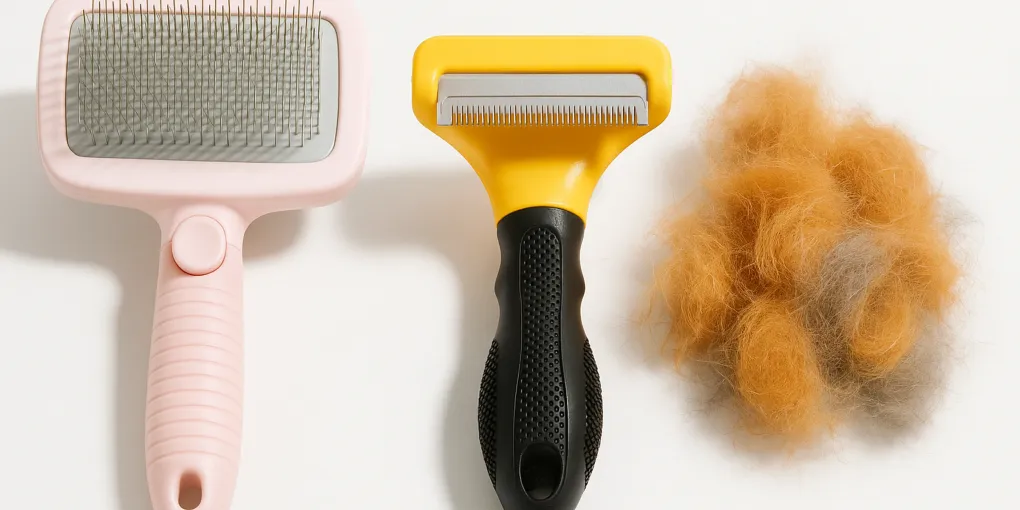
- Recommended frequency: 1–2 times per week, 10–20 minutes per session
Safety: The curved stainless steel edge is designed to remove undercoat without cutting guard hairs when used with appropriate technique and pressure. Safe for all coat types except extremely fine or already-sparse coats.
Comfort and acceptance: The deshedding edge covers more surface area per stroke than slicker pins, reducing session length and cat fatigue. Keep sessions short at first and stop if your cat shows signs of discomfort.
Ease of Use: The FURejector button eliminates the need to manually remove collected hair between strokes — the single most friction-reducing ergonomic feature in the category.
Pros:
- Designed specifically for undercoat removal
- FURejector button simplifies hair disposal
- Long-established safety record
- Ergonomic non-slip handle
- Available in size/coat-type variations
Cons:
- More expensive than basic slicker brushes
- Requires correct technique to avoid overstripping
- Not appropriate for cats with thinning coats or skin conditions
- Blade requires careful cleaning to maintain edge
We may earn a commission if you buy through our links.
Hertzko Self-Cleaning Slicker Brush Review: Best Slicker Brush
Hertzko’s slicker brush is a widely used all-purpose cat brush with angled pins, an ergonomic handle, and a self-cleaning button that works across coat types.
Key specifications:
- Pins: Fine angled bent wire with protective tips
- Self-cleaning: One-button bristle retraction releases collected hair
- Handle: Non-slip rubber grip with thumb indent
- Pad: Flexible to conform to body contours
- Appropriate for: All coat lengths
Value: The Hertzko delivers the best cost-to-function ratio of reviewed brushes. It performs comparably to more expensive slicker brushes for surface and mid-coat hair collection.
Ease of Use: The self-cleaning button is the key differentiator — retract the bristles and collected hair releases cleanly into a trash bin without manual picking.
Pros:
- One-button self-cleaning mechanism
- Effective for all coat lengths
- Flexible pad follows body contours
- Best value-per-function of the picks here
- Non-slip ergonomic handle
Cons:
- Pins can bend with heavy use; inspect them regularly
- Less undercoat penetration than FURminator on heavy shedding breeds
- Self-cleaning button can stick if hair is packed densely
We may earn a commission if you buy through our links.
KONG ZoomGroom Rubber Brush Review: Best for Sensitive Cats
The KONG ZoomGroom uses flexible rubber nubs instead of metal pins — effectively massaging the skin while collecting loose surface hair, and presenting as petting rather than grooming to most cats.
Key specifications:
- Material: 100% natural rubber, flexible
- Nubs: Multidirectional large rubber grooming tips
- Self-cleaning: Rinse under water — no button mechanism
- Appropriate for: Short to medium coat lengths
- Colors: Multiple available
Safety: Natural rubber construction with no documented skin irritation concerns.
Comfort and acceptance: Its soft rubber nubs feel closer to petting than wire pins, which makes it a good first brush for cats that resist traditional brushes.
Ease of Use: Hair collection on rubber nubs requires manual pulling rather than brush-off, which is less convenient for high-shedding cats.
Pros:
- No metal components — maximum safety
- Highest cat acceptance rate reviewed
- Massage effect stimulates circulation
- Easy to wash (water rinse)
- Lowest cost reviewed
Cons:
- Not effective for long-haired cats or undercoat removal
- Manual hair removal from rubber nubs
- Less effective than slicker/deshedding tools for heavy shedders
- Shorter bristle penetration depth
We may earn a commission if you buy through our links.
Chris Christensen Mark IV Slicker Brush Review: Best Professional-Grade
Chris Christensen’s grooming tools are used by professional cat groomers and show-cat handlers — a level of construction quality and pin precision beyond standard consumer brushes.
Key specifications:
- Pins: Bent wire with ball-tip protective ends (no sharp points)
- Pad: Flexible cushioned oval pad
- Handle: Lightweight ergonomic design for extended sessions
- Self-cleaning: Manual (no button mechanism)
- Best for: Medium to long-haired cats, show cats, professional grooming
Build quality: Professional-grade build quality exceeds all other reviewed consumer options.
Value: The premium price is appropriate only for owners of multiple long-haired cats or those with show cats who require sustained grooming quality. For casual use, the Hertzko provides equivalent daily performance at one-third the cost.
Pros:
- Professional groomer and show-cat standard
- Longest pin durability of the picks here
- Ball-tip protected pins — safe for sensitive skin
- Flexible cushioned pad follows coat contours
- Appropriate for extended professional sessions
Cons:
- Highest price reviewed
- No self-cleaning mechanism
- Overkill for casual grooming needs
- Heavier handle than consumer brushes
We may earn a commission if you buy through our links.
Cat Grooming Brush Comparison Table
We may earn a commission if you buy through our links.
| Product | Bristle Type | Self-Cleaning | Best Coat |
|---|---|---|---|
| FURminator | Stainless steel edge | FURejector button | Medium/long undercoat |
| Hertzko Slicker | Bent wire pins | Button retract | All lengths |
| KONG ZoomGroom | Rubber nubs | Manual rinse | Short/medium |
| Chris Christensen Mark IV | Protected wire pins | Manual | Long/show |
Who Should Choose Which Cat Brush?
FURminator is the right pick for owners of heavy-shedding cats (Maine Coons, Siberian, Ragdolls, Norwegian Forest Cats) during seasonal shedding periods.
Hertzko Self-Cleaning Slicker is the best all-purpose daily brush for mixed households with varying coat lengths.
KONG ZoomGroom is the first brush to introduce for cats new to grooming, for kittens, or for adults who resist traditional metal brushes.
Chris Christensen Mark IV is for serious multi-cat households and show-cat owners who want professional-grade durability.
Regular grooming pairs naturally with the rest of your cat care routine. See our guides to cat supplements for omega-3 fatty acid options, and interactive cat toys for enrichment activities that build positive human-cat interaction beyond grooming. For hairball questions, see our cat hairball remedy guide, and talk to your vet if hairballs are frequent.
Frequently Asked Questions
How often should I brush my cat?
Shorthaired cats benefit from brushing 1–2 times per week. Medium and longhaired cats need daily brushing to prevent mats. Brushing is widely recommended to remove loose hair before a cat swallows it, but Cannon M (2013, PMID: 23254238) notes that no studies have yet evaluated common hairball-prevention strategies, and that frequent hairballs in shorthaired cats often signal an underlying problem worth raising with your vet.
What is the difference between a slicker brush and a deshedding tool?
A slicker brush uses fine bent wire pins to collect loose hair from the top and middle coat layers. A deshedding tool uses a fine-toothed stainless steel edge to reach the undercoat and pull out loosened dead hair. Slicker brushes are gentler and appropriate for all coat types; deshedding tools provide more dramatic shedding reduction in heavy-coated breeds.
How do I make my cat accept grooming?
Start with short sessions (30–60 seconds) using a rubber grooming glove or soft rubber-nub brush, which cats interpret as petting. Pair grooming with treats immediately after. Gradually extend session length as tolerance builds. Avoid restraining the cat during early sessions — this creates negative associations.
Will deshedding tools damage my cat’s coat?
Not when used correctly and at the recommended frequency (1–2 times per week). Apply gentle pressure and limit use to areas with visible undercoat coverage. Avoid sensitive areas and never use over skin lesions. Overuse can cause breakage — deshedding tools are not daily brushes.
Can I use a dog brush on my cat?
Generally no — dog brushes are often too stiff or sized for dog coat structure. Cat-specific brushes are designed for finer, softer coat texture. The exception is professional grooming tools (like Chris Christensen) available in sizes appropriate for both species.
Final Verdict
FURminator earns the top recommendation for most cat owners seeking meaningful shedding reduction — particularly for medium and long-haired breeds. Hertzko Slicker Brush is the best everyday all-purpose slicker at the most accessible price. KONG ZoomGroom is the highest cat-acceptance option for sensitive cats or those being introduced to grooming. Chris Christensen Mark IV is the professional-grade choice for show-cat owners and serious multi-cat grooming routines.
Citations: Cannon M (2013) J Feline Med Surg 15(1):21-29 (PMID: 23254238); Overall KL (2013) Manual of Clinical Behavioral Medicine for Dogs and Cats