We may earn a commission if you buy through our links.
Quick picks
| Product | Key Specs |
|---|---|
| See price on Amazon |
|
| See price on Amazon |
|
| See price on Amazon |
|
| See price on Amazon |
|
Best Cat Grooming Gloves
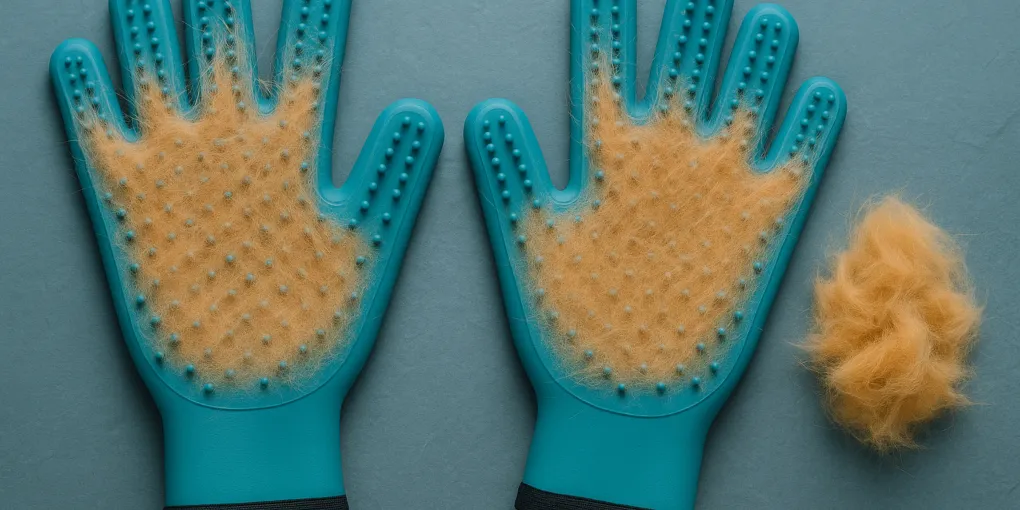
The best cat grooming glove for most owners is the Delomo Pet Grooming Glove — food-grade silicone construction, 255 nubs per glove, and a soft, petting-motion design that many cats accept readily. For owners who need to groom during bathing or on wet coats, the HandsOn All-In-One Grooming Gloves offer the only reviewed option with full-glove silicone coverage designed for wet use.
TL;DR
- Best for Bathing: HandsOn All-In-One — full silicone coverage, works on wet fur, medical-grade material
- Best Budget: Gorilla Grip Grooming Gloves — same mechanism, lower cost, moderate durability
- Entry Level: IWEEL Grooming Glove — for occasional light use, lowest cost
- Key Point: Cats swallow loose hair when they groom themselves. Glove grooming removes some loose hair first, though hairball-prevention strategies have not yet been formally studied (Cannon M, 2013, PMID: 23254238)
Grooming gloves occupy a unique niche in the cat care toolkit: they remove loose fur without requiring cats to associate a foreign tool with the grooming experience. Cats that flee at the sight of a brush will often sit contentedly for minutes of grooming-glove petting. For multi-cat households, they also serve as a social bonding tool — the petting motion strengthens owner-cat relationships during grooming.
For a neutral home-organization setup that keeps grooming tools and cleanup supplies together, see our cat grooming station guide.
Why Use Cat Grooming Gloves?
The Shedding Problem
Domestic cats shed continuously with two peak shedding seasons driven by photoperiod changes (spring and fall). Indoor cats under artificial light shed at a higher year-round baseline. Short-haired cats shed just as much as long-haired cats — they simply deposit shorter fibers that are easier to overlook until they accumulate on furniture.
Regular external grooming serves four purposes:
- Removes shed fur before it enters the household environment — reduces allergenic cat dander and furniture/clothing deposits
- Removes loose hair before your cat swallows it — widely recommended for hairball control, though not yet formally studied (Cannon M, 2013)
- Detects skin problems early — regular handling reveals parasites, skin lesions, lumps, and coat changes that benefit from early veterinary assessment
- Strengthens owner-cat bonding — positive handling sessions increase cat socialization and reduce handling-related stress
Material Safety
Food-grade silicone is a common choice for grooming glove materials: non-toxic, non-allergenic (no latex proteins), easy to sanitize, and flexible enough to conform to body contours during petting. Permanently molded nubs — where silicone is cast as a single unit — present no detachment risk, unlike adhesive-attached rubber nubs found on cheaper alternatives.
Delomo Pet Grooming Glove Review: Best Overall
The Delomo is a widely sold single silicone grooming glove with a simple palm-and-finger nub layout.
Key specifications:
- Material: Food-grade silicone, free of latex and BPA
- Nub count: 255 nubs per glove (palm and finger front surfaces)
- Coverage: Palm and front of fingers — simulates petting motion
- Cleaning: Fur peels off cleanly; machine washable in mesh laundry bag
- Sizes: Adjustable wrist strap fits most hand sizes
- Right-hand dominant (left-hand version also available separately)
Comfort and acceptance: The soft silicone nubs and palm-contact design closely approximate petting — the motion most cats accept without resistance. Cats that reject rigid slicker brushes or hard-bristled combs typically accept the Delomo glove within 1–2 sessions. Particularly effective for cats with high touch sensitivity or past negative associations with grooming tools.
Ease of Use: Fur collection is simple — after grooming, peel accumulated hair from the nubs in one motion. No disassembly required. Machine washable for hygiene maintenance.
Pros:
- Food-grade silicone — latex-free, non-allergenic
- 255 permanently molded nubs (no detachment risk)
- Best cat acceptance rate of the picks here
- Machine washable
- Excellent value
Cons:
- Palm-side-only coverage — dorsum (back of hand) is not nubbed; some owners prefer all-surface options
- Less effective than a Furminator-type tool for deep undercoat removal
- Single-hand design — need to purchase two for ambidextrous use
We may earn a commission if you buy through our links.
HandsOn All-In-One Grooming Gloves Review: Best for Bathing
HandsOn gloves cover the entire glove surface — palm, fingers, and back of hand — with silicone nodules, making them the only reviewed option that can be used effectively for both dry brushing and wet bathing.
Key specifications:
- Material: Medical-grade silicone (full glove surface)
- Nub coverage: All surfaces including fingertips, palm, and dorsum
- Wet use: Specifically designed for bathing — grips wet fur without slipping
- Sold as a pair
Pros:
- Full glove coverage — all surfaces nubbed
- Medical-grade silicone — excellent material safety
- Effective for both dry grooming and wet bathing
- Sold as a pair (both hands)
Cons:
- Premium pricing (sold as a pair) vs. Delomo (single glove)
- Full-coverage nubs have a slightly stiffer feel — some cats require more acclimation vs. Delomo’s softer palm design
- May be overkill for owners who never bathe their cats
We may earn a commission if you buy through our links.
Gorilla Grip Grooming Gloves Review: Best Budget
Gorilla Grip grooming gloves provide the same basic silicone nub mechanism as Delomo at a lower price point. Inspect the nubs regularly for wear.
Pros:
- Budget pricing
- Widely available
- Good initial performance
Cons:
- Reported nub attachment issues after 6+ months of daily use
- Lower material documentation than Delomo or HandsOn
- Inspect monthly for nub integrity
We may earn a commission if you buy through our links.
Grooming Glove Comparison Table
We may earn a commission if you buy through our links.
| Product | Material | Nub Coverage | Wet Use |
|---|---|---|---|
| Delomo Pet Grooming Glove | Food-grade silicone | Palm + fingers | Limited |
| HandsOn All-In-One | Medical-grade silicone | Full glove | Yes |
| Gorilla Grip | Silicone | Palm + fingers | Limited |
| IWEEL Pet Grooming Glove | Silicone | Palm | No |
Which Cat Grooming Glove Is Right?
Delomo is for most cat owners — the best combination of cat acceptance, material safety, and value. The market leader in grooming gloves for a reason.
HandsOn is for owners who need to groom during bathing, or who want all-surface coverage for cats with coats that require attention from all grooming angles.
Gorilla Grip is for budget-conscious owners who groom 2–3x weekly rather than daily, where the durability limitation has less impact.
IWEEL is for owners who want to try a grooming glove as an experiment before committing to a premium option.
Grooming gloves work best when combined with regular deshedding with a proper tool for long-haired or heavy-shedding breeds. See our best cat deshedding tool guide for Furminator and alternatives that handle undercoat removal more effectively. For cats that get matted despite regular grooming, see our best cat grooming brush guide.
Grooming Glove Technique: Getting the Best Results
The effectiveness of a grooming glove depends significantly on technique. Unlike a rigid slicker brush that removes fur on every pass, a grooming glove performs best when the owner uses slow, deliberate petting motions rather than quick back-and-forth strokes.
Effective technique:
- Start at the neck and work toward the tail — following the natural direction of the coat. This mimics the direction cats groom themselves and is the motion they most readily accept.
- Use gentle circular motions on the flanks and belly — circular strokes lift loose fur from multiple fiber orientations, collecting more than straight-line passes alone.
- Use light fingertip pressure — the silicone nubs create adequate friction without requiring hard pressure. Pressing too hard compresses the nubs and reduces their fur-lifting surface area.
- Collect accumulated fur as you go — when the glove surface becomes heavily loaded with collected fur, peel it off and discard before continuing. An overloaded glove loses contact with the coat and becomes less effective.
- Work in short sessions (5–10 minutes) — shorter, more frequent sessions are more effective and maintain better cat tolerance than infrequent long grooming marathons.
Coat-specific approach:
- Short-haired cats (Domestic Shorthair, Siamese): The palm-and-finger design of the Delomo works well. Focus on the back, flanks, and base of tail — areas where loose fur accumulates most.
- Medium-haired cats (Maine Coon mix, Turkish Angora): Grooming gloves work for topcoat maintenance but need supplementation with a slicker brush for undercoat penetration, particularly during spring shedding.
- Long-haired cats (Persian, Ragdoll): Grooming gloves serve primarily as a bonding and finishing tool. The primary deshedding work should be done with a proper deshedding tool before glove use.
Grooming Gloves in Multi-Cat Households
In multi-cat households, grooming gloves offer a secondary benefit beyond fur removal: they can be used to facilitate allogrooming (mutual grooming) by transferring scent between cats. Gently grooming one cat and then immediately grooming another before washing the glove transfers olfactory signals between cats — a technique sometimes recommended during introductions to help cats habituate to each other’s scent without direct contact.
From a hygiene standpoint, grooming gloves in multi-cat households should be cleaned between cats if any cat has a skin condition, parasites (fleas, mites), or ringworm. The machine-washable construction of the Delomo and hand-washing capability of the HandsOn gloves make inter-cat hygiene management straightforward. A separate glove per cat is the safest approach in households where cats have ongoing skin or coat issues.
Allergen management: For owners with cat allergies who still share their home with cats, grooming gloves used consistently 3–4x per week can meaningfully reduce the ambient Fel d 1 allergen load in the home by removing loose fur — and the Fel d 1 protein attached to that fur — before it becomes airborne or embeds in upholstery. Regular glove grooming is not a substitute for HEPA filtration or allergen-reducing environmental controls, but it is a practical complement to those strategies.
Frequently Asked Questions
Do cat grooming gloves actually work?
Yes — effective at removing shed surface fur during petting. Best for short-to-medium coats. For heavy undercoat removal in long-haired breeds, use as a complement to a slicker brush or deshedding tool. Their primary advantage is cat acceptance — cats that reject brushes often tolerate gloves because they simulate petting.
Are grooming gloves safe for cats?
Yes, when food-grade silicone with permanently molded nubs. Inspect regularly for nub separation. Never leave gloves where cats can chew them unsupervised.
How often should I groom my cat with a glove?
Short-haired cats: 2–3x weekly. Long-haired or high-shedding breeds: daily during peak shed season. Regular grooming removes loose hair a cat would otherwise swallow and is widely recommended for hairball control, though no studies have yet evaluated hairball-prevention strategies (Cannon M, 2013, PMID: 23254238). Frequent hairballs can signal an underlying problem, so mention them to your vet.
What’s the difference between a grooming glove and a regular brush?
Grooming gloves have lower per-session hair-removal volume than slicker brushes — they remove loose surface fur but don’t penetrate undercoat. Their advantage is acceptance: cats that reject brushes often accept gloves. For maximum hair removal, use both tools.
Can I use a grooming glove on a wet cat?
HandsOn All-In-One Gloves are specifically designed for wet use. Most others (Delomo, Gorilla Grip) work on damp fur but are not optimized for full bathing.
Final Verdict
Delomo Pet Grooming Glove is Best Overall — the best combination of cat acceptance, material safety, and value in this guide. HandsOn All-In-One is the best for bathing and owners who want full-glove nub coverage. Gorilla Grip is the budget pick for occasional use. IWEEL is the low-cost pick for occasional grooming.
Citations: Cannon M (2013) J Feline Med Surg 15(1):21-29 (PMID: 23254238)