We may earn a commission if you buy through our links.
Quick picks
| Product | Key Specs |
|---|---|
| See price on Amazon |
|
| See price on Amazon |
|
| See price on Amazon |
|
| See price on Amazon |
|
Best Cat Doors
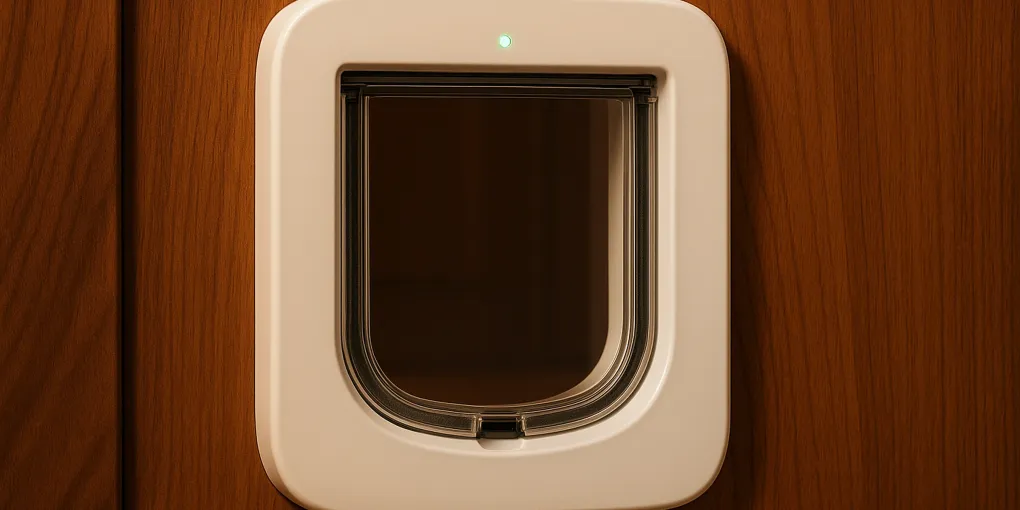
The best cat door for most households is the SureFlap Microchip Cat Flap — reads ISO-standard implanted microchips, registers up to 32 cats, provides 4-way manual lock override, and runs approximately 12 months on standard AA batteries. For large-breed cats (Maine Coon, Ragdoll) over 15 lbs, the PetSafe SmartDoor offers a larger 7-inch flap opening with 25-lb weight capacity.
TL;DR
- Best Overall: SureFlap Microchip — ISO microchip reader, 32-cat capacity, 12-month battery, 4-way lock
- Best for Large Cats: PetSafe SmartDoor — 5.5 × 7 inch flap, 25-lb capacity
- Best for Walls: Ideal Pet Telescoping — adjustable tunnel for wall thickness, 3.5–7.5 inch tunnel
- Key Point: Microchip cat doors keep unregistered neighborhood cats from coming inside. They do not stop your cat meeting other cats outdoors, so ask your vet about FeLV/FIV testing and vaccination for any cat with outdoor access
Cat doors address a core quality-of-life need for cats with outdoor enclosure access — allowing cats to self-regulate their indoor/outdoor time without requiring owner-controlled entry. For cats using a catio or other enclosed outdoor space, a cat door provides the connection between indoor and outdoor environments. The key differentiation in modern cat doors is whether the door is selective (microchip-based) or non-selective (manual lock), and whether it can be installed in a door, wall, or glass panel.
SureFlap Microchip Cat Flap Review: Best Overall
SureFlap is a widely sold microchip cat door, combining reliable microchip reading with practical features including multi-cat programming and manual lock modes.
Key specifications:
- Microchip compatibility: ISO 11784/11785 FDXB 15-digit (standard global format); firmware updates for older 9-digit FDX-A chips
- Cat capacity: Registers up to 32 individual microchips
- Flap opening: 5.5 × 6.7 inches — adequate for most adult cats up to ~15 lbs
- Lock modes: 4-way (in-only, out-only, both-way, locked)
- Battery: 4× AA alkaline; ~12 month life
- Curfew mode: Programmable auto-lock/unlock timer
Safety: Microchip selectivity keeps unregistered neighborhood cats from entering the home. The 4-way manual lock allows full lockout when needed. No moving parts accessible to entrap paws.
Comfort and acceptance: No collar required — uses implanted microchip.
Pros:
- Reads implanted microchip — no collar tag required
- Up to 32 cats programmable
- 4-way manual lock
- ~12 month battery life
- Programmable curfew timer
- Prevents neighborhood cat and wildlife intrusion
Cons:
- 5.5 × 6.7 inch flap — marginal for large breeds over 15 lbs
- Check microchip format compatibility (older FDX-A 9-digit chips may need firmware update)
- Electronic components require battery replacement
We may earn a commission if you buy through our links.
PetSafe Electronic SmartDoor Review: Best for Large Cats
PetSafe’s SmartDoor provides the largest flap opening of the picks here (5.5 × 7 inches) with a 25-lb weight rating — appropriate for large domestic breeds that standard flaps compress.
Key specifications:
- Flap opening: 5.5 × 7 inches — largest reviewed
- Weight capacity: 25 lbs
- Programming: Near-contact RFID learning (place any chipped/tagged collar near sensor to register)
- 4-way manual lock
- Battery powered
Comfort and acceptance: Larger flap opening eliminates the compression discomfort that causes large cats to avoid standard-size flaps.
Value: PetSafe SmartDoor is the most expensive reviewed option. The premium is justified for large-breed owners where flap size is the limiting factor.
Pros:
- Largest flap opening (5.5 × 7 inches)
- 25-lb weight capacity
- Near-contact RFID reading (versatile chip format support)
- 4-way lock
Cons:
- Highest price
- Near-contact programming less precise than SureFlap’s direct ISO reader
- Heavier flap requires slightly more force
We may earn a commission if you buy through our links.
PetSafe 4-Way Manual Locking Cat Door Review: Best Budget
The PetSafe manual 4-way is the standard non-electronic cat door — no batteries, no programming, just a flap with four lock-mode settings and a clear plastic panel.
Safety: No microchip selectivity — any cat (or small wildlife) can enter on in/out or two-way modes. Manual locking provides control when the owner is present, but cannot distinguish between authorized and unauthorized animals.
Value: The manual PetSafe is the most affordable cat door reviewed. For indoor room-to-room use (no outdoor access, no wildlife risk), it is a completely appropriate choice.
Pros:
- Lowest price
- No batteries or programming needed
- 4-way manual lock
- Appropriate for indoor room-to-room applications
Cons:
- No microchip selectivity — no protection against unauthorized entries
- Not appropriate for outdoor use in areas with wildlife or other cats
We may earn a commission if you buy through our links.
Ideal Pet Telescoping Frame Cat Flap Review: Best for Walls
The Ideal Pet model is designed specifically for wall installation, with an adjustable plastic tunnel that accommodates wall thicknesses from 3.5 to 7.5 inches.
Ease of Use: Wall installation is significantly more complex than door installation — requires measuring, cutting through wall material (may include insulation, vapor barrier, exterior cladding), and securing the tunnel. Best for experienced DIYers or with professional installation.
Pros:
- Adjustable tunnel (3.5–7.5 inches) for wall thickness
- Lower price than electronic options
- Vinyl flap with magnetic closure reduces draft
- Appropriate for permanent wall installations
Cons:
- No microchip selectivity
- Wall installation complexity
- Manual only — no selective entry
We may earn a commission if you buy through our links.
Who Should Choose Which Cat Door?
SureFlap Microchip is the right choice for most households with outdoor access — microchip selectivity keeps neighborhood cats from coming inside.
PetSafe SmartDoor is appropriate for large-breed households (Maine Coon, Ragdoll, large domestic shorthair) where flap size is the limiting factor.
PetSafe 4-Way Manual is appropriate for indoor room-to-room use where no outdoor or wildlife intrusion risk exists.
Ideal Pet Telescoping suits wall installation needs where a door installation is not possible or practical.
For complementary outdoor access products, see our guides to outdoor cat enclosures (catios — connect to cat door for indoor-outdoor flow), GPS cat tracker, cat collar (for collar-tag RFID if not microchipped), cat harness and leash, and microchip cat flap comparison.
Frequently Asked Questions
Will a microchip cat door work with my cat’s microchip?
SureFlap reads ISO 11784/11785 FDXB 15-digit chips (standard globally). Some older US cats have 9-digit FDX-A chips — verify compatibility with SureFlap’s compatibility tool. PetSafe SmartDoor uses near-contact learning that reads any format.
Can neighborhood cats get through a microchip cat door?
No — microchip doors only unlock for registered chips. Unregistered animals find the flap locked. This is the primary veterinary argument for microchip doors over manual flaps.
How do I install a cat door in a wall?
Wall installation requires a plastic tunnel that spans wall thickness (the Ideal Pet Telescoping model covers 3.5–7.5 inches). Cut a hole through the wall material, fit and secure the tunnel, and attach the frame. Consider professional installation for masonry or insulated walls.
Can raccoons open a cat door?
Raccoons can manipulate simple manual slide bolts. Microchip electronic locks require an RFID signal — raccoons cannot operate them. For manual doors in raccoon-active areas, add a carabiner or padlock to the manual bolt.
What size cat door do I need?
Minimum 1 inch wider than your cat’s shoulder width and 1 inch taller than back height. Average cats (8–12 lbs): 5.5 × 6.5–7 inch standard flap. Large breeds over 12–20 lbs: use a large-rated flap (7–9 inches wide).