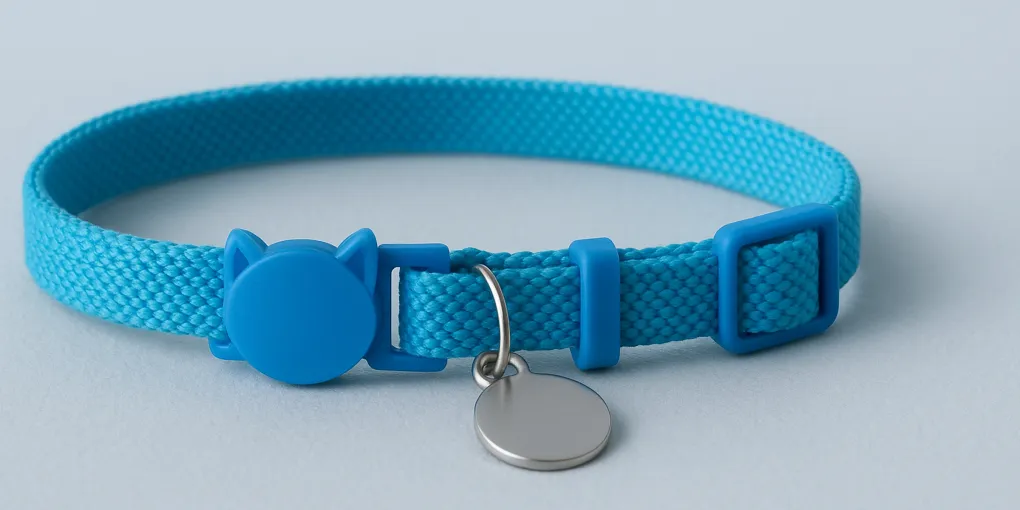
Rogz AlleyCat Safeloc Breakaway Collar
Best overallBreakaway: Adjustable Safeloc buckle
$8-$14
Quick picks
| Product | Key Specs |
|---|---|
| See price on Amazon |
|
| See price on Amazon |
|
| See price on Amazon |
|
| See price on Amazon |
|
Product availability, certifications, and retailer details can change; check the current Amazon page before buying.
Best cat collars in 2026
The best cat collar is a breakaway collar that your cat will actually wear, that fits close enough not to catch a jaw or leg, and that carries useful identification if the cat slips outside. For most households, start with a Rogz AlleyCat Safeloc breakaway collar if you want an adjustable release design, or a Blueberry Pet soft breakaway collar if comfort and first-collar tolerance matter most.
Quick picks:
- Best overall: Rogz AlleyCat Safeloc, a breakaway collar with an adjustable safety buckle and reflective options. Search Rogz Safeloc collars on Amazon
- Best soft everyday collar: Blueberry Pet soft breakaway collar for indoor cats learning to tolerate a collar. Search Blueberry Pet collars on Amazon
- Best visible ID: GoTags personalized breakaway collar when a phone number on the collar is more useful than a dangling tag. Search GoTags breakaway collars on Amazon
- Best visibility value: Reflective breakaway collar with a removable bell for dusk visibility and wildlife warning. Search reflective breakaway collars on Amazon
Do not buy a decorative non-breakaway collar for a cat. Cats climb, squeeze behind furniture, groom around their necks, and can catch a collar on a branch, crate wire, jaw, or front leg. The International Cat Care collar guidance specifically recommends quick-release collars and warns against elastic-only designs because cats can still become trapped in them (International Cat Care collar advice).
What matters most in a cat collar
The first filter is simple: true breakaway only. A collar that looks cute but does not release is not a safe everyday cat collar. Elastic inserts are not the same as a breakaway buckle because elastic can stretch far enough for a leg or jaw to enter, then continue trapping the cat.
The second filter is fit. A collar should sit close to the neck while allowing one to two fingers under the band. Too tight can rub hair and skin. Too loose can slide into the mouth during grooming or catch a front leg. Recheck kittens weekly and adult cats after weight change, shaving, or seasonal coat changes.
The third filter is the job. An indoor escape-risk cat needs visible ID. A cat that spends supervised time in a catio or harness area may benefit from reflectivity. A noise-sensitive cat may do better without a bell. A long-haired cat needs a soft, narrow collar that is checked often for matting.
Breakaway collar scorecard
| Collar type | Safety release | Comfort | ID usefulness | Visibility | Best role |
|---|---|---|---|---|---|
| Rogz AlleyCat Safeloc | 9/10 | 8/10 | 8/10 | 8/10 | Main daily collar for many adult cats |
| Blueberry Pet soft breakaway | 8/10 | 9/10 | 7/10 | Varies | First collar and indoor daily wear |
| GoTags personalized breakaway | 8/10 | 8/10 | 10/10 | 7/10 | Visible phone number without tag noise |
| Reflective breakaway with bell | 8/10 | 7/10 | 7/10 | 9/10 | Dusk visibility and wildlife warning |
This scorecard does not reward toughness above release safety. A cat collar should not be built like a dog collar. If the collar is caught, releasing is the point.
Rogz AlleyCat Safeloc breakaway collar
Rogz is the strongest first search for households that want more control over release behavior than a basic snap-away buckle offers. The Safeloc design is intended to release under load while reducing nuisance collar loss, and the brand sells reflective cat-collar options that add visibility without a separate light or bulky device.
This is a good fit for adult cats that have already worn collars and for owners who are frustrated by collars that pop off during normal scratching. It is not a reason to overtighten the collar or ignore fit checks. The release feature only helps when the collar is sized correctly and the buckle is functioning.
Blueberry Pet soft breakaway collar
Blueberry Pet is a practical first-collar search because the collars are lightweight, widely available, and sold in many colors. Soft webbing matters for cats that scratch at stiff collars or have fur that mats easily around the neck. For indoor cats, the comfort advantage can matter more than maximum reflectivity.
Check the exact listing before buying because colorways and reflective features change. The important features are a true breakaway buckle, the correct adjustment range for your cat’s neck, and a surface that does not feel sharp at the edges.
GoTags personalized breakaway collar
A personalized breakaway collar solves a real escape problem: if a neighbor finds your cat, a phone number printed or embroidered on the collar can be used immediately. That is faster than waiting for a microchip scanner, and it avoids a dangling ID tag that can jingle or catch.
The tradeoff is permanence. If your phone number changes, the collar has to be replaced. Personalization also means you should double-check every character before ordering. Choose a high-contrast color combination so the number is readable from a normal handling distance.
Reflective breakaway collar with bell
Reflective collars are most useful for cats that might be seen by a driver, cyclist, or neighbor in low light. A reflective strip cannot make outdoor roaming safe, but it is a reasonable added layer for supervised garden time, catio transitions, or indoor cats with door-dashing history.
Bells are more individual. Some cats ignore them after a short adjustment period; others show ongoing stress or reduced normal behavior. The RSPB notes that bells can reduce successful hunting, but owners still need to balance wildlife goals with the cat’s welfare and keep the collar breakaway (RSPB cats and garden birds).
Collar plus microchip, not collar instead of microchip
A collar is visible identification. A microchip is permanent identification. They solve different parts of the same escape problem. The AVMA recommends microchipping pets and keeping the registration updated because a chip only helps if the contact details are current (AVMA microchipping FAQ).
For indoor cats, this combination matters because escape events are often sudden: a contractor opens a door, a carrier latch fails, or a window screen gives way. Pair the collar with prevention steps from cat window screen safety and location tools from our GPS cat tracker guide. If your cat goes outside only in a harness or enclosed area, also review escape-proof cat harnesses and outdoor cat enclosures.
How to introduce a collar
Let the cat inspect the collar first. Put it near a meal or play session without fastening it. Then place it on for a few seconds, feed a treat, and remove it. Build up over short sessions rather than forcing a long first wear.
During the first full wear, supervise. Some cats scratch, roll, or back up as they notice the collar. Interrupt with food or play instead of scolding. Check under the chin and behind the ears after the first day for redness, hair pulling, or matting. Remove dangling extras while the cat is learning, then add a bell or tag later if needed.
Catio and outdoor-access cautions
A collar does not make outdoor access safe by itself. If your cat uses a catio, balcony, window perch, or supervised yard area, the collar should be part of a larger escape-risk plan: intact screens, secure latches, no collar tags that can snag on mesh, and a routine check after storms or repairs. Reflectivity helps people see the cat; it does not prevent predation, traffic injury, heat stress, or escape.
For cats with repeated door-dashing or outdoor history, prioritize containment and identification together. Use a breakaway collar with visible ID, keep the microchip registered, photograph the cat wearing the collar, and avoid non-breakaway GPS or tag attachments unless the device is designed for cats and mounted on a breakaway system.
If the collar will carry a tag, keep the tag small and check the split ring. Large dangling tags can hit food bowls, encourage chewing, or snag on mesh. For many cats, a printed phone number on the collar plus a microchip is cleaner than a heavy tag stack. If you use an AirTag-style holder, confirm that the whole collar system remains breakaway and that the device weight does not rotate under the chin.
Cat collar FAQ
What type of collar is safest for a cat?
A true breakaway collar is the safest general-purpose collar for cats. The buckle should release when the collar is caught, while still fitting snugly enough that the cat does not slip it off during normal movement.
How tight should a cat collar be?
Fit it so you can slide one to two fingers between the collar and the cat’s neck, then recheck after grooming, weight change, or kitten growth. Too tight can rub; too loose can catch the jaw or a front leg.
Should an indoor cat wear a collar if microchipped?
Yes, many indoor cats benefit from both. A microchip is permanent identification, while a collar with visible ID can help a neighbor contact you before the cat reaches a shelter or clinic.
Are bells safe on cat collars?
A small bell on a breakaway collar is usually tolerated, but watch the individual cat. Remove the bell if it causes persistent stress, interferes with eating, or keeps the cat from resting.
Frequently Asked Questions
- A true breakaway collar is the safest general-purpose collar for cats. The buckle should release when the collar is caught, while still fitting snugly enough that the cat does not slip it off during normal movement.
- Fit it so you can slide one to two fingers between the collar and the cat's neck, then recheck after grooming, weight change, or kitten growth. Too tight can rub; too loose can catch the jaw or a front leg.
- Yes, many indoor cats benefit from both. A microchip is permanent identification, while a collar with visible ID can help a neighbor contact you before the cat reaches a shelter or clinic.
- A small bell on a breakaway collar is usually tolerated, but watch the individual cat. Remove the bell if it causes persistent stress, interferes with eating, or keeps the cat from resting.