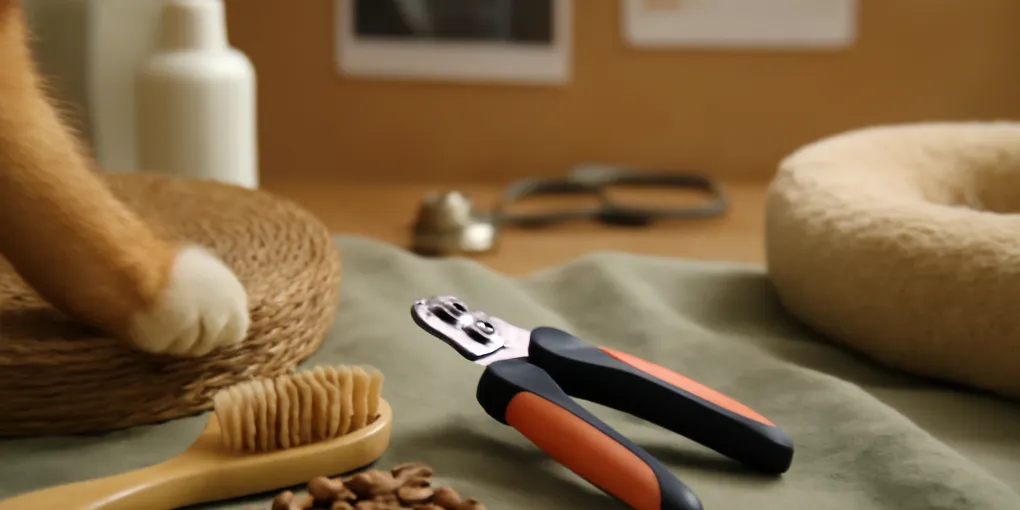
Best Cat Nail Clippers for Beginners: Quiet Tools, Guards, and First-Trim Control
Buyer's GuideSmall scissor-style cat nail clippers
Best first toolBest for: Kittens, small cats, and owners who want a quiet single squeeze
$6-$14
Quick picks
| Product | Key Specs |
|---|---|
| See price on Amazon |
|
| See price on Amazon |
|
| See price on Amazon |
|
Product availability, certifications, and retailer details can change; check the current Amazon page before buying.
The best beginner cat nail clipper is not the fanciest one. It is the quiet tool you can place accurately on the clear claw tip while the cat stays calm. For most first-time owners, that means a small scissor-style clipper, a towel, treats, good lighting, and styptic powder within reach.
A nail clipper with a guard can help some people orient the claw, but guards are not magic. Cat claws are curved, small, and partly transparent. You still need to see the quick and cut less than you think.
Quick recommendations
Start with small scissor-style cat clippers if your cat is a kitten, small adult, or nervous about handling. Search Amazon for small scissor cat nail clippers. They are quiet, cheap, and easy to position around one claw.
Choose plier-style clippers if you have larger hands or a big cat with thicker claws. Search Amazon for cat nail clippers with safety guard. Use the guard as a reminder, not as the decision-maker.
Buy styptic powder before the first trim. Search Amazon for pet styptic powder. A tiny quick nick is common when people are learning, and having powder ready prevents panic.
Why trimming matters
Indoor cats can develop sharp hooks that snag blankets, furniture, and skin. Older cats may shed claw sheaths less effectively and can grow thicker nails that curve toward the paw pad. Cornell Feline Health Center lists “Trimming Your Cat’s Claws” among its feline health resources, which is a useful reminder to treat nail care as a learned handling routine rather than a restraint battle (Cornell Feline Health Center: feline health topics).
Trimming is not declawing. It removes only the sharp outer tip of the claw. The cat still needs scratching posts to stretch, mark, and maintain claw health.
Scissor-style clippers
Small scissor clippers look like tiny blunt scissors with a curved notch. They are the easiest first tool because they are quiet and let you approach from the side. The cut is quick, and there is no motor vibration.
Look for a sharp stainless blade, a comfortable finger loop, and a size that matches cat claws rather than dog nails. Avoid dull clippers that crush before cutting. If the claw splinters or the clipper requires a hard squeeze, replace it.
The weakness is hand fit. Some adults find the loops too small. If your hand cramps, you will rush, and rushing is what causes mistakes.
Small scissors are also the easiest tool to pair with a two-person first trim. One person can feed a squeeze treat or hold a towel loosely while the other clips a single clear hook. Because the cutting head is tiny, it is less likely to block your view of the pink quick. That visibility is more useful than a large handle when you are still learning claw anatomy.
Skip oversized dog-style scissors for cats. They may look similar online, but the blade opening can be too large for a kitten or small adult cat. A cat-specific pair should let you isolate one claw without pulling fur, pressing the toe sideways, or forcing the paw into an awkward angle.
Plier-style guarded clippers
Plier clippers have spring handles and sometimes a sliding guard behind the blade. They can be easier for large hands and thicker claws. They are also bulkier around a cat’s paw, so visibility matters.
Do not set the guard deep and clip every nail to the guard. Cat claws vary. Instead, expose the claw with gentle pressure, find the pink quick if visible, and remove only the clear hook. If the nail is dark, take an even smaller tip.
The best plier-style option for a beginner has a light spring, a blade that meets cleanly, and a handle you can close without shifting your wrist. If the safety stop wobbles, treat it as a rough reference and keep your eyes on the claw. A guard cannot tell whether the cat has a long clear tip, a short quick, or an old thickened claw that needs professional help.
Plier clippers make more sense for large cats, senior cats with thicker nails, or owners whose hands cramp in scissor loops. They are less ideal for tiny kittens because the cutting head can hide the nail tip. If you choose pliers, practice opening and closing them away from the cat first so the spring action does not surprise you during the trim.
Grinders and files
A quiet nail grinder can smooth a sharp edge after clipping, but it is rarely the best first purchase. Cats often object to vibration near their paws. If you want to try one, desensitize separately: grinder off near treats, grinder on across the room, then brief touches near a paw without grinding.
Manual files are low risk but slow. They work for one snagged edge, not for a full first trim on an impatient cat.
If your cat already accepts clicker training, a grinder can become a later finishing tool. Keep sessions under a few seconds per claw and check heat at the nail tip. For most households, though, a sharp scissor clipper plus a scratching surface solves the sharp-hook problem with less noise and less training time.
Do not use a high-speed rotary tool meant for hardware projects. Pet grinders are slower, shielded, and easier to control around fur. Even then, long-haired cats need extra care because toe fur can wrap around a spinning bit.
What else belongs in the first-trim kit
Good lighting is a safety tool. Trim near a window or under a lamp so the clear tip and pink quick are visible. For dark claws, assume the quick is closer than you think and remove only the needle-like end.
Keep treats close enough that you do not have to stand up mid-session. A lickable treat, small dish of wet food, or a few favorite crunchy treats can turn paw handling into a predictable routine. The treat is not a bribe for a full manicure; it is payment for one calm paw touch, one exposed claw, or one clipped tip.
A towel is useful only if it lowers stress. Lay it on your lap for traction or wrap it loosely around the body if the cat already tolerates that. Do not turn the first trim into a tight restraint battle. If the cat thrashes, bites, pants, or freezes hard, stop and ask a veterinary clinic or groomer to demonstrate a safer setup.
For a household kit, pair the clipper with a jar of styptic powder, a washable towel, and a dedicated scratcher near the cat’s favorite sleeping area. The scratcher does not replace trimming, but it helps the cat shed outer claw sheaths between sessions and can reduce fabric snags.
The first-trim protocol
For black or mottled claws, a built-in LED does not make the quick reliably visible; fur, angle, and glare can still hide it. Choose a clipper with a narrow head instead, then remove only the hooked point in thin slivers. If the cut surface shows a small dark oval in the center, stop: the living tissue is getting closer.
Pick a sleepy time, not playtime. Put the clippers, treats, towel, and styptic powder within reach. Touch one paw, reward, and stop. If the cat stays relaxed, press gently above and below one toe to extend the claw. Clip only the clear hook. Reward again.
End after one or two nails if needed. A beginner win is not a perfect full set. It is a cat that lets you try again tomorrow.
International Cat Care recommends low-stress handling and avoiding forced restraint when possible (International Cat Care: reducing stress for cats). For nails, that means building tolerance in tiny sessions instead of wrapping and wrestling a panicked cat.
When not to trim at home
Do not trim an ingrown nail, a swollen toe, a bleeding nail, or a claw that is embedded in the pad. Call a veterinarian. Also ask for help if the cat is extremely fearful, bites during handling, or has medical conditions that make restraint risky.
For senior cats, check claws weekly. Thickened claws can hide under fur and curve quickly. A groomer or veterinary technician can show you the safe angle if you are unsure.
Reader test: which clipper should you buy?
Buy small scissor clippers if you want the lowest-noise, lowest-cost first tool. Buy plier clippers if hand comfort matters more and your cat is large enough that the tool does not block your view. Buy a grinder only after your cat accepts paw handling. Always buy styptic powder with the clipper.
FAQ
How often should I trim cat nails?
Many indoor cats need a check every two to four weeks. Fast-growing nails, senior cats, and cats that do not use scratching posts may need more frequent tip trims.
Can I use human nail clippers?
Human clippers can split cat claws because they flatten the nail from the wrong angle. Cat-specific scissor or plier clippers are easier to position safely.
What if I cut the quick?
Stay calm. Press styptic powder to the nail tip and keep the cat quiet. Call a veterinarian if bleeding does not stop, the nail is badly torn, or the cat seems painful afterward.