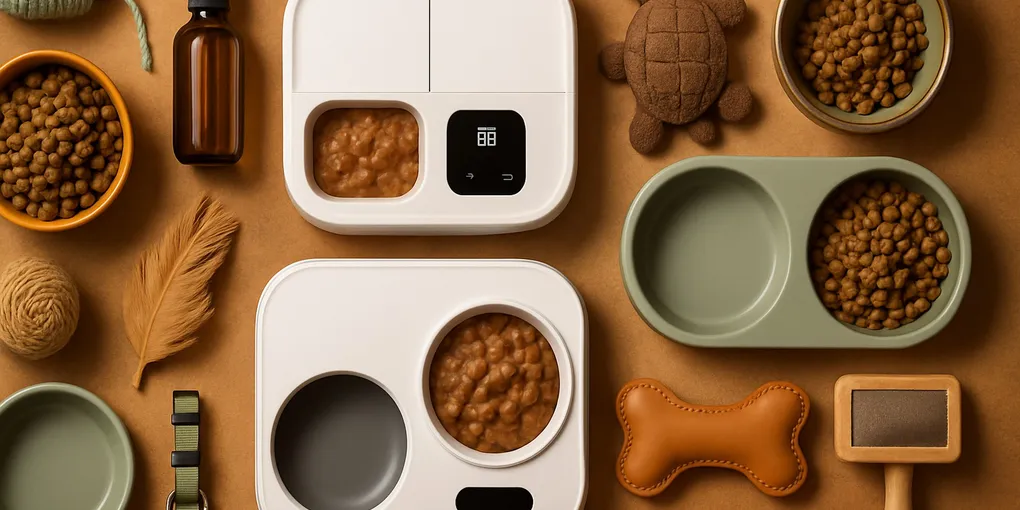
automatic wet food cat feeder with ice pack
Best fitBest for: Keeping short, scheduled wet-food meals chilled
Varies
Quick picks
| Product | Key Specs |
|---|---|
| See price on Amazon |
|
| See price on Amazon |
|
| See price on Amazon |
|
Product availability, certifications, and retailer details can change; check the current Amazon page before buying.
How We Score Automatic Wet Food Feeders
| Criterion | Weight | Score | Weighted | Why it matters here |
|---|---|---|---|---|
| Research | 30% | 8.0 | 2.40 | FDA/CDC handling guidance, feline appetite monitoring, and feeder design constraints support a conservative approach. |
| Evidence Quality | 25% | 8.0 | 2.00 | Food-safety principles are strong, while individual feeder performance still depends on design and household temperature. |
| Value | 20% | 8.0 | 1.60 | A good wet-food feeder can solve short scheduling gaps, but it is not worth paying for features that compromise cleaning. |
| User Signals | 15% | 7.5 | 1.13 | Owners value convenience but report common issues with prying, residue, drying food, and cat acceptance. |
| Transparency | 10% | 9.0 | 0.90 | The guide states when a feeder is unsafe, when to choose dry food or a sitter, and when veterinary oversight is needed. |
| Composite Score | 8.0/10 | Useful for short, scheduled wet-food windows, but not a set-and-forget appliance. |
The Short Answer
The best automatic wet food cat feeder is a timed, easy-to-clean compartment feeder with removable trays, a secure lid, ice packs or a chilled base, battery backup, and portions sized for your cat’s normal meals. It should keep wet food available for shorter windows, not all day. If you need to leave food for many hours in a warm home, a dry-food feeder or a pet sitter may be safer than stretching wet food beyond reasonable limits.
Start your search here:
- Search Amazon for automatic wet food cat feeder with ice pack
- Search Amazon for timed wet food feeder cat
- Search Amazon for cat feeder with removable stainless steel bowl
- Search Amazon for microchip cat feeder wet food
Because feeder models and listings change frequently, compare current capacity, ice-pack design, timer reliability, cleaning steps, recent reviews, and return policy before buying.
Why Wet Food Feeders Are Harder Than Dry Food Feeders
Dry kibble feeders mostly solve timing and portion delivery. Wet food feeders also have to manage spoilage, texture, odor, insects, cleaning, and cats that refuse food after it dries out. The U.S. Food and Drug Administration’s pet food safety advice emphasizes clean handling and proper storage; once wet food is opened and exposed, time and temperature become the issue.
That means a wet-food feeder should be judged less like a smart gadget and more like a small food-safety system. The right question is not “How many meals can it schedule?” The right question is “Can it keep one or two meals appetizing and reasonably safe until my cat eats?”
Best Overall Type: Rotating Compartment Feeder With Ice Packs
For most cats, the best automatic wet-food format is a rotating tray with covered compartments and a place for ice packs underneath. The lid exposes one meal at a time. The tray lifts out for washing. The device runs on batteries or has battery backup.
Pros:
- Good for one to five scheduled meals depending on model
- Better wet-food fit than gravity feeders
- Can separate portions without dispensing mushy food through a chute
- Usually simple enough for cats to learn
Cons:
- Ice packs only buy time; they do not make wet food shelf-stable
- Some cats can pry weak lids
- Large portions may smear or dry out
- Cleaning is required after each wet-food cycle
Look for a feeder with rounded tray corners, dishwasher-safe removable parts if available, and a lid that does not trap food residue in seams.
Best for Multi-Cat Homes: Microchip or Collar-Tag Access
If one cat steals food or one cat needs a special diet, consider a microchip-access feeder. These feeders are not always automatic in the same way as timed feeders; many are selective-access bowls that open only for the recognized cat. They can be valuable for prescription diets, weight management, or food-guarding households.
Search options:
Use caution if the medical stakes are high. A feeder can reduce stealing, but it cannot prove exactly how much a cat ate unless it has reliable weighing or app logs, and even then you should validate it against real intake.
Best for Short Workdays: Two-Meal Wet Food Feeder
A two-compartment feeder can work well when you feed breakfast manually, schedule a midday or afternoon meal, and return before dinner. Simpler feeders often have fewer parts to clean and fewer ways to fail.
This format is a good fit for:
- Cats that eat small wet meals rather than grazing
- Homes that are not hot during the day
- Owners who can clean the tray daily
- Cats that do not pry, flip, or chew plastic parts
It is a poor fit for long travel days, unreliable eaters, or cats that require medication with a confirmed meal.
Food Safety Rules for Wet Food Feeders
Use conservative rules:
- Chill the food before loading if the feeder instructions allow it.
- Freeze or fully chill the feeder’s ice packs.
- Keep the feeder out of direct sun and away from heat vents.
- Use smaller portions so the cat finishes the meal quickly.
- Wash trays after each wet-food use.
- Discard uneaten food that has dried, warmed, smelled off, or sat longer than your veterinarian or food manufacturer recommends.
- Test the schedule while you are home before relying on it.
If your home is warm, your cat is immune-compromised, or the food is a raw or lightly cooked product, be more cautious. Raw pet food carries additional pathogen concerns noted by FDA and CDC resources.
Cleaning: The Feature People Underestimate
Wet food residue turns a convenient feeder into a bacteria and odor problem quickly. Favor feeders with removable trays, few crevices, and materials that tolerate thorough washing. Stainless steel inserts can be easier to sanitize than scratched plastic bowls, but not every automatic feeder supports them.
Helpful accessories:
- Search Amazon for small bottle brush for pet bowls
- Search Amazon for stainless steel cat bowl inserts
- Search Amazon for pet safe dish soap
Do not rely on appearance alone. A tray can look clean while retaining grease in corners or under the lid.
When Not to Use an Automatic Wet Food Feeder
Skip or get veterinary guidance first if your cat:
- Is diabetic and meal timing must match insulin
- Has kidney disease, pancreatitis, IBD, or appetite instability
- Is on a strict elimination diet or prescription feeding trial
- Is a kitten, frail senior, or recovering from illness
- Has a history of food refusal when routines change
- Needs medication mixed into food and confirmed intake
For these cats, the risk is not only spoilage; it is missed calories or missed medication.
How Long Is Too Long?
There is no universal safe number because room temperature, food formula, starting temperature, feeder insulation, and cleaning all matter. Treat marketing claims as optimistic. If a feeder says it can keep food cool for many hours, test it with a thermometer and a nonessential portion while you are home. Feel the tray, check condensation, and see whether the food dries at the edges before your cat eats it.
A practical rule is to design the schedule so food is exposed for the shortest realistic time. If your cat usually eats within 20 minutes, do not create a six-hour grazing window just because the feeder can hold the food. If your cat grazes slowly, ask whether wet food is the right unattended format. Some cats do better with a timed dry-food portion during the day and supervised wet meals morning and evening.
How to Test a New Feeder Before Depending on It
Run a three-day home trial. On day one, put treats or a spoonful of familiar food in the feeder while you are present. Let the cat investigate the sound and lid movement. On day two, schedule a normal meal and watch from a distance. On day three, leave the room but verify that the cat ate, the lid moved correctly, and no food remained hidden under the rim.
Measure the portion before and after if intake matters. Some cats lick gravy and leave solids; others pull food out and eat it later. A feeder can appear successful because the compartment is empty, while the actual meal is on the floor under the cabinet. For cats with medical conditions, visual confirmation is not enough.
Wet Food Texture and Feeder Fit
Pate usually works better than shredded or chunky food in shallow compartments because it stays together and is easier for cats to scoop. Shreds may dry out faster or stick under the lid. Gravy-heavy foods can spill into seams. If your cat eats only one texture, choose a feeder around that texture rather than expecting the feeder to change the cat’s preference.
Portion depth matters too. A deep compartment can bother cats with whisker sensitivity or make it hard for flat-faced cats to reach food. A shallow, wide tray is often more comfortable. If the feeder uses plastic, inspect for scratches; scratched plastic can hold odor and residue even after washing.
Power, Noise, and Failure Modes
Battery backup is not optional if the feeder controls an important meal. App connectivity is less important than a schedule that continues during Wi-Fi outages. If a feeder depends on cloud service to open, that is a vulnerability. Prefer simple local timers for core feeding and treat app features as a bonus.
Noise matters for cautious cats. A loud motor can cause a cat to avoid the feeder, especially if it rotates while the cat is nearby. Introduce the sound gradually and never use hunger to force acceptance. If your cat is afraid of the device, return to manual feeding and try a simpler design.
Cleaning Checklist
After every wet-food day, remove the tray, wash with hot soapy water, rinse thoroughly, and dry completely before reloading. Wash ice packs or chilled inserts too; condensation can carry residue from the feeder base. Wipe the lid hinge and underside where food vapor and splatter collect. If odor remains after washing, retire or deep-clean according to manufacturer instructions.
Do not mix yesterday’s residue with today’s food. Cats have a strong sense of smell, and a slightly sour tray can cause refusal long before a human notices the problem.
Source Notes
- FDA: safe handling and storage of pet food and treats.
- CDC: cautions around raw pet food and household pathogen exposure.
- Cornell Feline Health Center: appetite changes and the importance of monitoring cats that stop eating.
- AAHA/WSAVA nutrition guidance: meal plans should match health status and veterinary recommendations.
Bottom Line
An automatic wet food cat feeder can make scheduled meals easier, but it should be treated as a short-window feeding tool, not a refrigerator. Choose cleanability and chilled timing over app features, test it while you are home, and use conservative food-safety rules. If your cat’s health depends on exact intake, involve your veterinarian before letting a device run the meal plan.
Frequently Asked Questions
- Usually no. Wet food is perishable, and safe timing depends on room temperature, feeder design, ice packs, and the specific food. Use shorter windows and discard food that looks, smells, or feels questionable.
- They can be useful for scheduled meals, but they are not a substitute for monitoring appetite, cleaning bowls, and following food safety rules. They are risky for cats that need exact medical monitoring.
- For wet food, the most important features are easy cleaning, secure timed compartments, chilled inserts or ice packs, and a schedule that keeps food out for as little time as possible.
- Only under a veterinarian's plan. Cats on insulin or medical diets may need precise timing, confirmed intake, and monitoring that a simple feeder cannot guarantee.