Quick picks
| Product | Key Specs |
|---|---|
| See price on Amazon |
|
| See price on Amazon |
|
| See price on Amazon |
|
Product availability, certifications, and retailer details can change; check the current Amazon page before buying.
Short Answer
Cat lick mats can help with mild enrichment, slower wet-food eating, grooming distraction, and predictable medication routines, but they are not magic calming tools. The best use is a thin smear of familiar wet food on a washable mat with shallow grooves. The worst use is handing a stressed cat a calorie-heavy paste and calling the behavior problem solved.
If your cat needs more daily stimulation, pair a lick mat with vertical space, scent work, and puzzle feeding. Our indoor cat vertical space guide explains why climbing and lookout options solve a different part of the enrichment puzzle.
Product Starting Points
| Check current options | Best use | What to inspect |
|---|---|---|
| Search Amazon for cat lick mats for wet food | First mat for most cats | Shallow grooves, food-safe material, easy washing |
| Search Amazon for suction cat lick mats | Brief grooming support | Secure suction, floor-height use, no dangling edges |
| Search Amazon for wet cat food slow feeders | Fast wet-food eaters | Portion size, texture depth, dishwasher guidance |
How We Evaluated the Use Case
| Criterion | Weight | Score | Weighted | Why it matters here |
|---|---|---|---|---|
| Research | 30% | 8.0 | 2.40 | Cat welfare guidance supports feeding enrichment and predictable low-stress routines. |
| Evidence Quality | 25% | 7.5 | 1.88 | Direct studies on lick mats are limited, so claims should stay modest and behavior-specific. |
| Value | 20% | 8.5 | 1.70 | A cheap washable mat can extend mealtime without a large equipment commitment. |
| User Signals | 15% | 8.0 | 1.20 | Owners mainly use lick mats for grooming, boredom, and slowing wet-food intake. |
| Transparency | 10% | 9.0 | 0.90 | Buyer guidance focuses on material, cleaning claims, groove depth, suction strength, and calorie control. |
| Composite Score | 8.1/10 | Worth trying for food-motivated cats when calories and hygiene are controlled. |
What a Lick Mat Can Actually Do
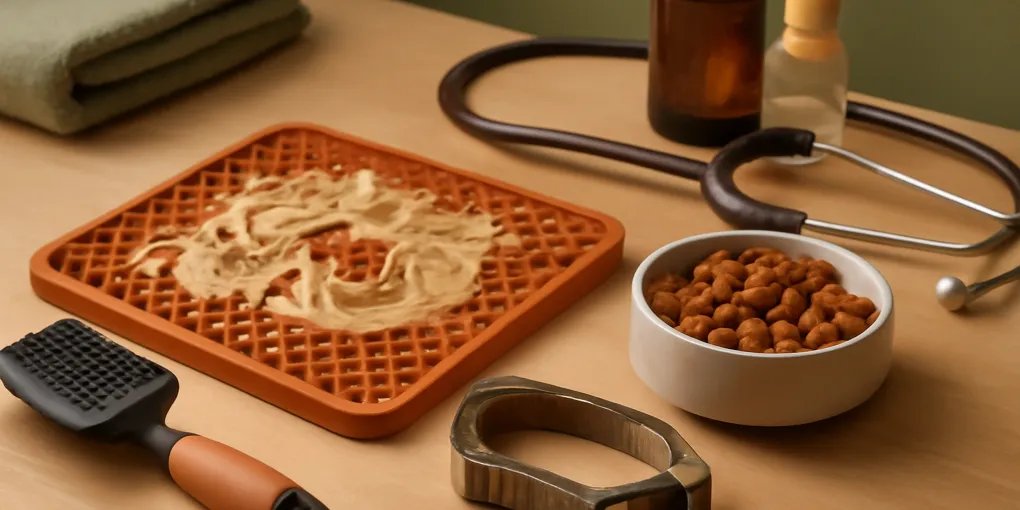
A lick mat spreads food into a textured surface so the cat has to use the tongue repeatedly instead of taking large bites. That can make a small portion last longer, give a food-motivated cat a simple task, and provide a positive association during low-intensity handling.
For grooming, the mat is best used before the cat is upset. Put it on the floor or a stable surface, let the cat choose to engage, and brush for only a few seconds at first. If the cat leaves, the session is over. A lick mat should not become restraint by distraction.
For fast eating, the mat can slow wet-food intake, but it may not help cats that gulp dry kibble or vomit from medical causes. Repeated vomiting, weight loss, drooling, or appetite change needs a veterinarian.
What It Cannot Do
A lick mat cannot fix chronic stress, territorial conflict, dental pain, nausea, urinary disease, or an unsafe home setup. It also cannot replace hunting-style play, scratching surfaces, elevated resting spots, and clean litter boxes. International Cat Care guidance on cat-friendly homes and play emphasizes multiple resource categories, including feeding, hiding, play, scratching, and safe spaces. A mat covers only one narrow slice of that picture.
Sources: International Cat Care cat-friendly homes, International Cat Care feeding cats
Food Safety and Portion Control
Use the cat’s regular wet food first. That keeps calories predictable and reduces the risk of digestive upset. If you add treats, measure them. A tablespoon of a rich paste can be a meaningful calorie increase for a small indoor cat.
Avoid human spreads with garlic, onion, xylitol, chocolate, alcohol, coffee, or heavy dairy content. Plain pumpkin is sometimes used for dogs, but cats do not need random fiber additions unless your veterinarian recommends them. For medication, ask your veterinary team whether the medication can be mixed with food. Some tablets should not be crushed, and some cats develop food aversion if medicine changes the taste.
Cleaning Matters More Than Pattern
Deep grooves look engaging, but they can trap residue. Choose a pattern you can wash fully with hot water and dish soap, and follow the product’s dishwasher guidance if provided. Rinse away soap smell, because many cats reject food that smells different.
Inspect silicone or rubber mats for chewing damage. If your cat bites off pieces, stop using that mat. Supervise the first sessions and pick up the mat when the food is gone.
A Safe First-Week Plan
Day 1: Place a tiny smear of regular wet food on a plate beside the mat.
Day 2: Put the same food on one edge of the mat and let the cat explore without handling.
Day 3: Use the mat during a quiet time, not when guests, dogs, or loud appliances are present.
Day 4: Add one or two brush strokes while the cat licks, then stop.
Day 5: Try a slightly larger smear, still within the normal meal portion.
Day 6: Wash, dry, and inspect the mat before reuse.
Day 7: Decide whether it helped. A good result is a calmer meal or easier short grooming session, not forced compliance.
Cat Lick Mat FAQ
Is a lick mat better than a puzzle feeder?
It depends on the food and the cat. Lick mats work well for wet food. Puzzle feeders are often better for dry food and hunting-style activity.
Can kittens use lick mats?
Yes, with supervision, shallow texture, and kitten-appropriate food portions. Do not use a mat as a chewing toy.
How often can I use one?
Daily use can be fine if the food comes from the cat’s normal ration and the mat is cleaned fully. If it adds treats on top of meals, use it less often or reduce other calories.
Frequently Asked Questions
- They can be useful for some cats because licking and food-search behavior can extend mealtime, but they are not a complete enrichment plan by themselves.
- Use a thin layer of the cat's regular wet food or a veterinarian-approved treat. Avoid onions, garlic, xylitol, high-fat spreads, and dairy-heavy human foods.
- It may help during mild handling or routine transitions, but hiding, aggression, appetite loss, or litter-box changes need veterinary or behavior support.