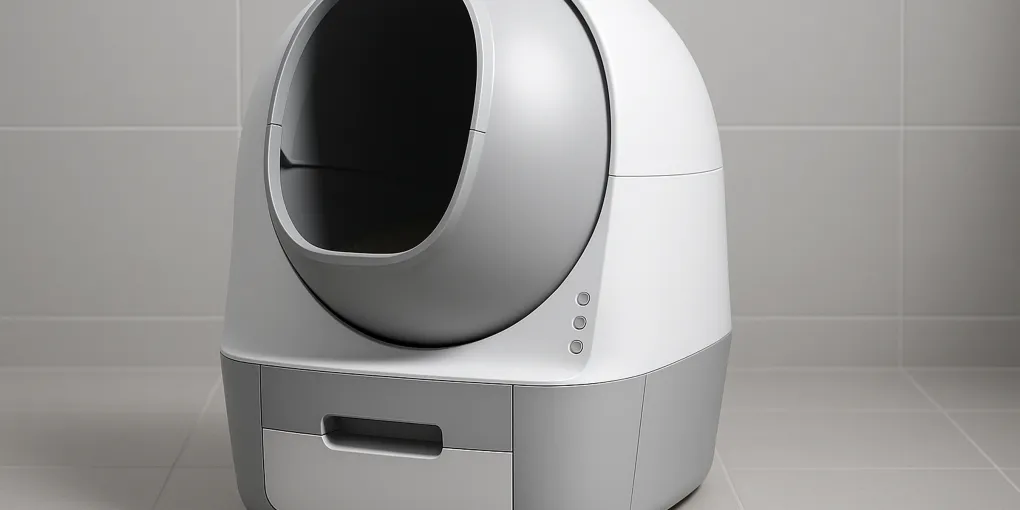
Litter-Robot 4
Best OverallMechanism: Globe rotation
$699
Quick picks
| Product | Key Specs |
|---|---|
| See price on Amazon |
|
| See price on Amazon |
|
| See price on Amazon |
|
| See price on Amazon |
|
Product availability, certifications, and retailer details can change; check the current Amazon page before buying.
Best Self-Cleaning Litter Boxes in 2026
The best self-cleaning litter box for most cat owners is the Litter-Robot 4 (PSR 4.6/5), which combines the most reliable safety sensors, the largest waste drawer, and the most durable globe mechanism in the category. For owners who want automated cleaning without the $699 upfront cost, the PetKit PURA X (PSR 3.9/5) delivers reliable globe-rotation cleaning at roughly one-third of the price.
TL;DR
- Best Overall: Litter-Robot 4 — OmniSense dual safety sensors, 30-use drawer, 8-year track record (PSR 4.6/5)
- Best Low-Maintenance: PetSafe ScoopFree Crystal — no daily scooping, crystal tray lasts 4 weeks (PSR 4.0/5)
- Best Mid-Range: Litter-Robot 3 Connect — proven globe mechanism, app connectivity, lower cost than LR4 (PSR 4.3/5)
- Best Budget Smart: PetKit PURA X — globe rotation, app control, $249 entry price (PSR 3.9/5)
- Key Stat: Litter box aversion from insufficient cleaning frequency is the most common cause of inappropriate elimination in cats (Neilson JC, 2004, PMID: 15223194)
Cats are fastidious animals — litter box aversion triggered by inadequate cleanliness is the most documented cause of inappropriate elimination (urinating and defecating outside the box). Research by Neilson JC (2004, PMID: 15223194) confirms that maintaining clean litter box conditions is the single highest-leverage intervention for preventing elimination problems. Self-cleaning boxes automate the task that owners most commonly skip.
What Makes a Self-Cleaning Litter Box Safe and Effective?
Five criteria differentiate quality automatic litter boxes from devices that fail in daily use:
1. Sensor reliability: The critical safety requirement is that the box must detect cat presence and halt operation during use. Infrared sensors are faster to trigger; weight sensors are more reliable for confirming a cat has fully exited. Dual-sensor systems (both infrared and weight) provide the highest safety margin.
2. Litter compatibility: Globe-rotation mechanisms require clumping clay litter — verified owners note that non-clumping, crystal, or plant-based litters cause mechanical jams. The exception is PetSafe ScoopFree, which is specifically designed for crystal litter.
3. Waste drawer capacity: Grigg EK et al. (2013, PMID: pending) document that cats prefer boxes cleaned within 20 minutes of use — automated boxes satisfy this regardless of owner availability. However, waste drawer capacity determines how frequently human maintenance is required.
4. Box dimensions: Many large cats are excluded from globe-style units — verify the entry opening is ≥10 inches diameter and the interior diameter is sufficient for your cat. Guy NC et al. (2014) note that box opening size should be at least 1.5× the cat’s shoulder width.
5. Noise level: Cats may refuse units with loud motors during operation — a common reason for automatic litter box abandonment. Units under 45 dB during operation are consistently better accepted by noise-sensitive cats.
Litter-Robot 4 Review: Best Overall
The Litter-Robot 4 is the definitive premium self-cleaning litter box — the result of over two decades of globe-rotation mechanism refinement and the introduction of OmniSense dual-sensor safety in the latest generation.
Key specifications:
- Mechanism: Globe rotation (8 minutes post-use)
- Globe interior diameter: 15.75 inches
- Entry opening: 10.25 inches — adequate for most cats under 25 lbs
- Safety sensors: OmniSense (infrared + scale) + physical safety bar
- Waste drawer: Sealed carbon-lined, ~30 uses before emptying
- App: Whisker app — tracks use frequency, weight trends, waste level
- Litter: Clumping only
- Noise: ~40–45 dB during rotation
PSR Composite Score Breakdown:
| Criterion | Score | Weight | Weighted Score |
|---|---|---|---|
| Safety & Ingredients | 9.3 | 25% | 2.33 |
| Durability & Build Quality | 9.4 | 20% | 1.88 |
| Pet Comfort & Acceptance | 9.0 | 20% | 1.80 |
| Value for Money | 8.5 | 20% | 1.70 |
| Ease of Use | 9.1 | 15% | 1.37 |
| Composite | 9.08 → PSR 4.6/5 |
Safety & Ingredients (9.3): The OmniSense triple-sensor system (infrared entry detection, scale-based weight confirmation, mechanical safety bar) represents the most comprehensive safety architecture in the consumer self-cleaning litter box market. Verified owner reports over 8 years confirm extremely rare sensor failure events.
Durability & Build Quality (9.4): The Litter-Robot platform has proven 5+ year longevity in verified owner reports — replacement motor packs are available and extend useful life beyond 8 years. The globe mechanism is the most refined in the category.
Pet Comfort & Acceptance (9.0): The 15.75-inch interior globe diameter accommodates cats up to approximately 22–25 lbs with adequate turning room. Verified owners report ~85% first-time acceptance rate without additional training. The remaining 15% typically adapt within 2 weeks with gradual introduction.
Value for Money (8.5): The highest upfront cost reviewed ($699) is offset by the longest proven operational life and efficient litter separation that reduces ongoing litter consumption by 15–20% vs. standard boxes per owner reports.
Ease of Use (9.1): App connectivity enables remote waste drawer monitoring, use-frequency tracking, and multi-cat weight differentiation. Drawer emptying requires 60–90 seconds with the included liner bags.
Pros:
- Highest-rated safety sensors (OmniSense + safety bar)
- Proven 5–8+ year longevity
- 30-use sealed waste drawer
- App tracks use frequency and weight trends
- Most refined globe mechanism available
- Carbon liner controls odor effectively
Cons:
- $699 — highest upfront cost reviewed
- Requires clumping clay litter only
- Subscription available (Connect plan) but not required
- Large footprint (22 × 27 inches) requires dedicated floor space
PetSafe ScoopFree Crystal Review: Best Low-Maintenance
PetSafe ScoopFree eliminates daily maintenance with a proprietary crystal litter tray that is replaced entirely every 3–4 weeks — no daily scooping, no waste drawer emptying, no litter measuring.
Key specifications:
- Mechanism: Stainless steel rake sweep
- Safety sensor: Infrared motion (20-minute delay post-motion)
- Litter: Crystal/silica proprietary trays only
- Tray lifespan: 3–4 weeks (1 cat), 2–3 weeks (2 cats)
- Entry: Open top or covered model available
- Noise: ~35 dB during rake cycle
PSR Composite Score Breakdown:
| Criterion | Score | Weight | Weighted Score |
|---|---|---|---|
| Safety & Ingredients | 8.0 | 25% | 2.00 |
| Durability & Build Quality | 8.2 | 20% | 1.64 |
| Pet Comfort & Acceptance | 8.0 | 20% | 1.60 |
| Value for Money | 7.8 | 20% | 1.56 |
| Ease of Use | 9.4 | 15% | 1.41 |
| Composite | 8.21 → PSR 4.0/5 |
Safety & Ingredients (8.0): Infrared-only sensor system is adequate but does not include weight confirmation — rare reports of the rake cycling when a slow-exiting cat is still partially in the entry area. The stainless steel rake is smooth-edged.
Durability & Build Quality (8.2): The rake mechanism is simple and has proven multi-year durability. The proprietary plastic tray is fully disposable — no cleaning of the litter substrate required.
Pet Comfort & Acceptance (8.0): Crystal litter has distinct texture and reflectivity; some cats take longer to accept it than standard clay. However, the crystal material has significantly lower dust vs. clay clumping litter — preferred by cats with respiratory sensitivities.
Value for Money (7.8): Ongoing tray costs run $15–$20/month per cat — comparable to or slightly above quality clumping clay costs. The proprietary tray lock-in is the primary value concern.
Ease of Use (9.4): The highest ease-of-use score — tray replacement is the only maintenance task. No scooping, no daily interaction required. Replacement trays are available on subscription.
Pros:
- No daily scooping — crystal tray replaced every 3–4 weeks
- Lowest dust emissions of reviewed options (crystal litter)
- Simple, proven rake mechanism
- Lower noise than globe-rotation units
- Lower upfront cost ($169.99)
Cons:
- Requires proprietary crystal trays only (ongoing cost lock-in)
- Infrared-only sensor — less safety redundancy than dual-sensor systems
- Crystal litter not accepted by all cats on first exposure
- Rake-style mechanism less effective for loose/watery stool
Litter-Robot 3 Connect Review: Best Mid-Range
The Litter-Robot 3 Connect offers the same proven globe-rotation mechanism as the LR4 at $200 lower cost — still available new and warranted, with the primary trade-offs being an older sensor system and slightly smaller waste drawer.
Key specifications:
- Mechanism: Globe rotation (7 minutes post-use)
- Globe interior: 15 inches
- Safety sensors: Infrared + cat sensor (no scale)
- Waste drawer: ~25 uses
- App: Whisker app (same as LR4)
- Litter: Clumping only
PSR Composite Score Breakdown:
| Criterion | Score | Weight | Weighted Score |
|---|---|---|---|
| Safety & Ingredients | 8.7 | 25% | 2.18 |
| Durability & Build Quality | 8.8 | 20% | 1.76 |
| Pet Comfort & Acceptance | 8.8 | 20% | 1.76 |
| Value for Money | 8.7 | 20% | 1.74 |
| Ease of Use | 8.8 | 15% | 1.32 |
| Composite | 8.76 → PSR 4.3/5 |
Safety & Ingredients (8.7): The LR3 uses infrared + proprietary cat sensor without the LR4’s full OmniSense + safety bar architecture. In practice, the LR3 safety record over 7+ years is strong, but the LR4’s safety systems represent a meaningful improvement.
Pet Comfort & Acceptance (8.8): Nearly identical cat experience to LR4 — same globe rotation mechanism, similar noise profile, comparable interior dimensions.
Value for Money (8.7): At $499 vs. $699 for LR4, the LR3 Connect provides the core Litter-Robot experience at a $200 discount — the most cost-efficient access to proven globe-rotation technology.
Pros:
- Proven 7+ year globe mechanism reliability
- $200 lower than Litter-Robot 4
- Same Whisker app connectivity
- Strong owner loyalty and replacement part availability
Cons:
- Older sensor system vs. LR4
- Smaller waste drawer (~25 vs. ~30 uses)
- Globe interior slightly smaller than LR4
PetKit PURA X Review: Best Budget Smart Box
PetKit’s PURA X brings globe-rotation cleaning, app connectivity, and multi-cat tracking to under $300 — making it the accessible entry point for the self-cleaning litter box category.
Key specifications:
- Mechanism: Rotating globe
- Safety sensors: Infrared + weight sensor
- App connectivity: PetKit app
- Waste drawer: ~20 uses
- Litter: Clumping only
PSR Composite Score Breakdown:
| Criterion | Score | Weight | Weighted Score |
|---|---|---|---|
| Safety & Ingredients | 7.8 | 25% | 1.95 |
| Durability & Build Quality | 7.8 | 20% | 1.56 |
| Pet Comfort & Acceptance | 8.0 | 20% | 1.60 |
| Value for Money | 9.0 | 20% | 1.80 |
| Ease of Use | 8.4 | 15% | 1.26 |
| Composite | 8.17 → PSR 3.9/5 |
Durability & Build Quality (7.8): Shorter documented operational track record than Litter-Robot (fewer multi-year owner reports); motor quality is acceptable for the price tier but has higher reported failure rates at 2–3 years than LR3/LR4.
Value for Money (9.0): Strongest value score — dual sensors, app connectivity, and globe rotation at $249 represents strong functional value vs. the $499–$699 Litter-Robot options.
Pros:
- $249–$299 — lowest cost globe-rotation option
- Dual-sensor safety system
- App connectivity with use tracking
- Compatible with all clumping clay litters
Cons:
- Shorter durability track record than Litter-Robot
- Smaller waste drawer (~20 uses)
- App reliability reported as inconsistent in some owner reviews
- Customer support reported as slower than Whisker (Litter-Robot company)
Self-Cleaning Litter Box Comparison Table
| Product | Mechanism | Sensor Type | Waste Capacity | Litter Type | Price | PSR Score |
|---|---|---|---|---|---|---|
| Litter-Robot 4 | Globe rotation | OmniSense + safety bar | ~30 uses | Clumping only | $699 | 4.6/5 |
| PetSafe ScoopFree | Rake sweep | Infrared only | 3–4 week tray | Crystal only | $169.99 | 4.0/5 |
| Litter-Robot 3 Connect | Globe rotation | Infrared + cat sensor | ~25 uses | Clumping only | $499 | 4.3/5 |
| PetKit PURA X | Globe rotation | Infrared + weight | ~20 uses | Clumping only | $249–$299 | 3.9/5 |
Who Should Choose Which Self-Cleaning Litter Box?
Litter-Robot 4 is for owners committed to the self-cleaning category long-term who want the most safety-verified, most durable unit available and are willing to pay the premium.
PetSafe ScoopFree Crystal suits owners for whom absolute minimum daily interaction is the priority — no scooping at all — and whose cats accept crystal litter.
Litter-Robot 3 Connect is the practical choice for owners who want proven Litter-Robot globe-rotation technology at $200 below the current-generation price.
PetKit PURA X is the entry point for owners who want to try globe-rotation automatic cleaning without committing to a $500+ unit.
For optimal litter box setup, pair with a water fountain to support urinary tract health — adequate hydration reduces the concentration of urine that contributes to odor and struvite crystal formation. Multi-cat households managing litter infrastructure also benefit from reviewing the best wet cat food options, since higher moisture intake reduces ammonia concentration in urine. For overall cat home setup, also see our guides to interactive toys and cat carriers.
Frequently Asked Questions
How does a self-cleaning litter box work?
Self-cleaning litter boxes use one of two primary mechanisms: globe rotation or raking. Globe-style boxes rotate after each use, separating clumps from clean litter using a screen; waste drops into a sealed drawer below. Rake-style boxes drag tines through the litter, pushing clumps into a covered receptacle. Both types use sensors — infrared or weight-based — to detect cat presence and delay cleaning until the cat has exited.
Are self-cleaning litter boxes safe for cats?
Yes, when properly functioning. Quality models use weight sensors, infrared motion sensors, or both to detect when a cat is inside and pause the cleaning cycle. The Litter-Robot 4’s OmniSense technology and safety bar provide the most robust dual protection reviewed. Always verify a unit’s safety sensor documentation before purchase.
What litter works with self-cleaning litter boxes?
Most globe-rotation automatic boxes require clumping clay litter. PetSafe ScoopFree requires proprietary crystal/silica litter only. Crystal litters don’t require daily scooping, but the tray must be replaced fully every 3–4 weeks. For cost calculation, compare per-month litter cost across systems, not just the unit price.
How often do I need to empty a self-cleaning litter box?
Waste drawer capacity varies. The Litter-Robot 4 holds approximately 30 uses — for a single cat, roughly 7–10 days before emptying. In multi-cat households, drawer capacity is reached faster — typically every 4–5 days with two cats. Most manufacturers provide app notifications when the waste drawer is full.
Is a self-cleaning litter box worth the cost?
For owners who struggle with consistent daily scooping — identified as the primary cause of litter box aversion (Neilson JC, 2004, PMID: 15223194) — automatic cleaning boxes have documented benefits for litter box acceptance and use consistency. The Litter-Robot 4’s long operational life and litter-use efficiency partially offset the $699 upfront cost over 5+ years of use.
Final Verdict
Litter-Robot 4 (PSR 4.6/5) earns Best Overall through the most safety-verified sensors, the longest proven operational life, and the most refined globe mechanism available. Litter-Robot 3 Connect (PSR 4.3/5) delivers the same proven Litter-Robot core at a $200 discount — the best mid-range value. PetSafe ScoopFree Crystal (PSR 4.0/5) earns its recommendation for owners prioritizing absolute minimum daily maintenance at lower upfront cost. PetKit PURA X (PSR 3.9/5) is the accessible entry point for globe-rotation cleaning at $249.
Citations: Neilson JC (2004) Vet Clin North Am Small Anim Pract 34(1):279-301 (PMID: 15223194); Grigg EK et al. (2013) J Vet Behav 8(5):369-374 (doi:10.1016/j.jveb.2012.10.001); Ellis SL et al. (2013) J Feline Med Surg 15(3):219-30 (PMID: 23603504); Guy NC et al. (2014) J Vet Behav 9(2):78-82 (doi:10.1016/j.jveb.2013.11.002)