We may earn a commission if you buy through our links.
Quick picks
| Product | Key Specs |
|---|---|
| See price on Amazon |
|
| See price on Amazon |
|
| See price on Amazon |
|
| See price on Amazon |
|
Best Cat Water Fountains
If you are shopping because a veterinarian mentioned dilution, crystals, or urinary recurrence, pair this hydration guide with our best cat food for urinary health so food choice and water intake work together.
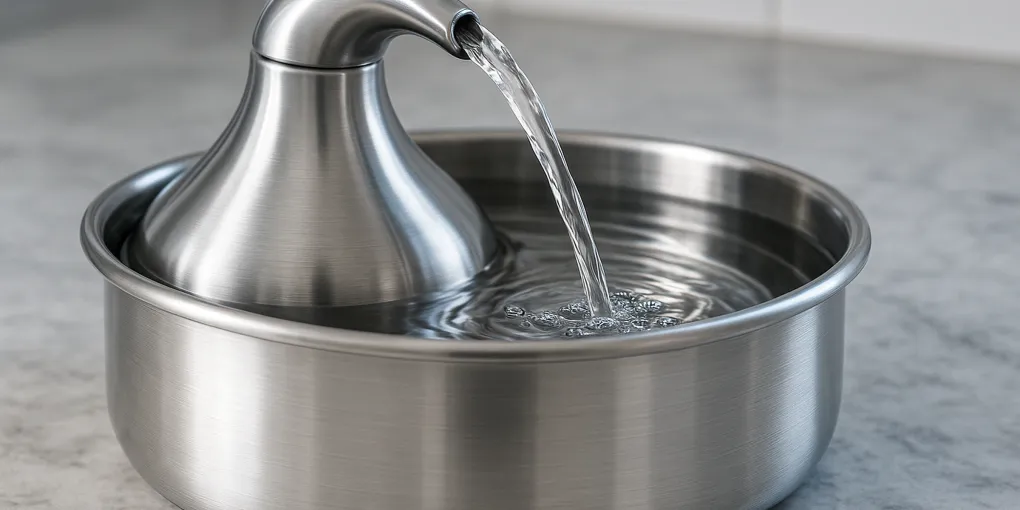
The best cat water fountain for most households is the Pioneer Pet Raindrop Stainless Steel Fountain, which combines food-grade 304 stainless steel (non-porous and easy to clean), a quiet pump, and dishwasher-safe construction that makes weekly cleaning practical rather than onerous. For owners where the premium of stainless or ceramic is a barrier, the Catit Flower Fountain delivers reliable BPA-free plastic construction at a lower cost.
TL;DR
- Best Stainless Steel: Pioneer Pet Raindrop — 304 SS construction, dishwasher-safe, UL-listed pump
- Best Ceramic: Sugar Vine Ceramic — lead-free glazed ceramic, very low noise, non-porous
- Best Smart: Petkit Eversweet 3 Pro — wireless pump (ultra-quiet), 4-stage filtration, app monitoring
- Best Budget: Catit Flower Fountain — BPA-free plastic, 3L capacity, dual-stage filter, lowest cost reviewed
- Key Stat: In a controlled study of laboratory cats, water bowl type (still, free-falling or circulating) had no appreciable effect on average water intake, though some individual cats showed a preference (Robbins MT et al., 2019, PMID: 30303439)
Increasing water intake and diluting urine are recommended for cats with urinary stones and idiopathic cystitis (Grant DC, 2010, PMID: 20005758), and fountains are often suggested to encourage drinking. Set expectations, though: studies have not shown that fountains reliably raise intake. In Grant’s home study of 12 cats, intake was only slightly greater from a fountain and urine was not more dilute, and a controlled study of laboratory cats found no significant difference between still, free-falling and circulating bowls (Robbins MT et al., 2019, PMID: 30303439). Feeding more moisture is the better-documented way to raise total fluid intake (Buckley CM et al., 2011, PMID: 22005408). A fountain makes most sense for a cat that clearly prefers moving water, as part of a vet-guided hydration plan.
What Makes a High-Quality Cat Water Fountain?
Five criteria differentiate quality fountains:
1. Material safety: 304 stainless steel and non-porous glazed ceramic are the easiest materials to keep clean. Plastic develops microscopic scratches that harbor biofilm and bacteria. BPA-free labeling on plastic is necessary but not sufficient — non-BPA plastics can still harbor bacteria in surface micro-scratches.
2. Pump noise: Pumps louder than 30–35 dB deter noise-sensitive cats. Ultrasonic pumps (as in Petkit Eversweet 3 Pro) operate nearly silently — a meaningful advantage for cats who abandoned previous fountains due to pump noise.
3. Filter quality: Activated carbon is the minimum — removes chlorine taste that drives cat rejection of tap water. Ion exchange resins extend filtration quality in hard-water areas.
4. Cleaning ease: Weekly disassembly and cleaning is required. Dishwasher-safe components reduce cleaning friction significantly — fountains that require hand-scrubbing of complex tube systems are cleaned less frequently, leading to bacterial contamination and cat rejection.
5. Capacity: Households with multiple cats need higher-capacity fountains. The standard recommendation is 200–400ml per cat per day from fountain use alone; a two-cat household needs at minimum a 2L capacity to avoid running empty between cleanings.
Pioneer Pet Raindrop Stainless Steel Fountain Review: Best Stainless Steel
Pioneer Pet’s Raindrop is a widely available stainless steel cat fountain and a common choice for owners moving away from plastic, for example for cats with chin acne.
Key specifications:
- Material: 304 food-grade stainless steel (bowl, reservoir, all contact surfaces)
- Capacity: 60 oz (approximately 1.8 liters)
- Flow: Raindrop falling into bowl — high oxygenation, attractive to most cats
- Filter: Replaceable activated carbon filter
- Pump: Submersible, UL-listed
- Dishwasher safe: Yes (all components except pump)
Safety: 304 stainless steel is non-porous, easy to keep clean, and dishwasher-sanitizable. No BPA or plastic food-contact surfaces.
Build quality: Stainless steel construction is the most durable reviewed — no degradation, warping, or scratching over time.
Comfort and acceptance: The raindrop flow pattern is engaging for most cats — the falling water stream draws many cats to investigate. Noise is low.
Ease of Use: All stainless components are dishwasher-safe — weekly cleaning is a 2-minute task. The relatively small capacity (1.8L) means refilling every 1–3 days depending on cat count.
Pros:
- 304 food-grade stainless steel throughout
- Dishwasher-safe all components (except pump)
- Durable stainless steel construction
- Low pump noise
- Raindrop flow pattern attracts cats effectively
- Best choice for cats with chin acne or plastic sensitivities
Cons:
- Smaller capacity (1.8L) — more frequent refilling in multi-cat homes
- Higher cost than plastic options
- Single filter stage (activated carbon only)
We may earn a commission if you buy through our links.
Sugar Vine Ceramic Cat Fountain Review: Best Ceramic
Ceramic fountains combine the hygienic benefits of non-porous surfaces with an aesthetic that blends into home décor — a meaningful consideration for owners who keep fountains in kitchens and living areas.
Key specifications:
- Material: High-fire lead-free glazed ceramic
- Capacity: 1.5–2L (varies by model)
- Flow: Multiple flow modes (stream, waterfall, flower)
- Filter: Activated carbon + sponge pre-filter
- Pump: Submersible, low-noise
- Dishwasher safe: Yes (ceramic body; pump hand-wash)
Safety: Lead-free glazed ceramic is non-porous and bacteria-resistant — comparable to stainless steel in hygienic properties. The lead-free verification is important; lower-quality ceramic fountains should be avoided.
Comfort and acceptance: Multiple flow modes accommodate different cat preferences — some cats prefer the stream mode, others approach the waterfall or flower flow. The quietest fountain reviewed.
Ease of Use: Ceramic body is dishwasher-safe; heavier than plastic or stainless but stable enough to prevent tipping.
Pros:
- Lead-free glazed ceramic — non-porous, hygienic
- Multiple flow modes
- Very low noise
- Dishwasher-safe body
- Attractive aesthetic for home placement
Cons:
- Heavier than plastic/stainless (requires stable placement)
- Smaller capacity than budget plastic options
- Ceramic can chip if dropped
- Pump requires separate hand-cleaning
We may earn a commission if you buy through our links.
Petkit Eversweet 3 Pro Review: Best Smart Fountain
Petkit’s Eversweet 3 Pro introduces wireless pump technology that eliminates the tube-and-impeller maintenance issues that cause most fountain pump failures, combined with the most comprehensive 4-stage filtration of the picks here.
Key specifications:
- Material: BPA-free Tritan plastic
- Capacity: 2.5L
- Pump: Wireless submersible pump (magnetic drive, no impeller shaft)
- Filtration: 4-stage (foam pre-filter + activated carbon + ion exchange + fine filter)
- Noise: Ultralow (wireless motor design)
- Connectivity: Petkit app — usage monitoring, water level alert
Safety: BPA-free Tritan plastic is a safer plastic material, but still plastic — lower bacterial resistance than stainless or ceramic. Regular weekly cleaning is more critical for plastic than for non-porous materials.
Comfort and acceptance: The ultralow noise from the wireless pump is the key comfort advantage — the quietest option reviewed by a significant margin. Cats who rejected previous fountains due to pump noise typically accept the Eversweet 3 Pro.
Value: With 4-stage filtration and wireless pump technology, the Petkit delivers high functional value.
Pros:
- Wireless pump — ultralow noise
- 4-stage filtration (most comprehensive reviewed)
- App monitoring with water level alerts
- 2.5L adequate for multi-cat homes
- Strong value for its filtration and pump technology
Cons:
- Plastic material (lower bacterial resistance than SS/ceramic)
- App dependency for some features
- Proprietary filter cartridges (ongoing cost)
- Less established than Pioneer Pet
We may earn a commission if you buy through our links.
Catit Flower Fountain Review: Best Budget
Catit’s Flower Fountain is a budget plastic fountain with a generous 3L capacity.
Key specifications:
- Material: BPA-free plastic
- Capacity: 3 liters — largest reviewed
- Flow: Flower top (three streams), gentle waterfall, or calm bubble
- Filter: Dual-stage (activated carbon + ion exchange)
- Pump: Submersible, UL-listed
Safety: BPA-free plastic — the same limitations as other plastic fountains regarding bacterial resistance. More frequent cleaning is important. Clean plastic components show no safety concerns; scratched or aged plastic should be replaced.
Value: The multi-cat household value is particularly strong given the 3L capacity reduces refilling frequency.
Comfort and acceptance: The flower top creating multiple simultaneous streams is the most visually engaging design reviewed — many cats bat at the streams, which can make the fountain more engaging for cats that like moving water.
Pros:
- 3L capacity — best for multi-cat homes
- Lowest price reviewed
- Flower top creates multiple streams
- Dual-stage filtration
- UL-listed pump
Cons:
- Plastic material requires more frequent bacterial cleaning
- Flower top component can mold if not dried thoroughly during cleaning
- Lower durability than stainless/ceramic
- Multiple small parts make weekly cleaning more complex
We may earn a commission if you buy through our links.
Cat Water Fountain Comparison Table
We may earn a commission if you buy through our links.
| Product | Material | Capacity | Filter | Noise |
|---|---|---|---|---|
| Pioneer Pet Raindrop | 304 Stainless Steel | 1.8L | Activated carbon | Low |
| Sugar Vine Ceramic | Lead-free ceramic | 1.5–2L | Carbon + sponge | Very low |
| Petkit Eversweet 3 Pro | BPA-free Tritan | 2.5L | 4-stage | Ultralow |
| Catit Flower Fountain | BPA-free plastic | 3L | Carbon + ion exchange | Low |
Who Should Choose Which Cat Water Fountain?
Pioneer Pet Raindrop is for owners prioritizing maximum hygiene — particularly for cats with chin acne, recurrent digestive issues, or plastic sensitivities.
Sugar Vine Ceramic suits owners where home aesthetics matter alongside hygiene — the quietest fountain in a non-porous material.
Petkit Eversweet 3 Pro is for noise-sensitive households and cats who previously rejected fountains due to pump sound.
Catit Flower Fountain is for multi-cat homes needing maximum capacity at minimum cost.
A fountain is most useful as one part of a wider hydration plan. See our wet cat food guide for moisture-rich nutrition, which is the better-documented way to raise fluid intake, and our cat supplements guide for other options to discuss with your vet. Dental health is worth watching too: dental calculus and gingivitis were the most commonly reported disorders in a large study of cats and dogs seen at US private practices (Lund EM et al., 1999, PMID: 10319174).
Frequently Asked Questions
Do cat water fountains actually increase water intake?
Not reliably. In a home study of 12 healthy cats, intake was only slightly greater from a fountain than from a bowl, and urine was not more dilute (Grant DC, 2010, PMID: 20005758). In a controlled study of 14 laboratory cats, still, free-falling and circulating bowls made no significant difference to average water intake, although a few individual cats showed a clear preference (Robbins MT et al., 2019, PMID: 30303439). A fountain is worth trying if your cat likes moving water, but wet food is the better-documented way to raise total fluid intake: in a small study, cats fed a 73% moisture diet had higher total fluid intake and more dilute urine (Buckley CM et al., 2011, PMID: 22005408). For cats with urinary problems, follow your vet’s hydration plan.
Is stainless steel or ceramic better than plastic for cat fountains?
Generally yes — stainless steel and non-porous glazed ceramic are easier to keep clean than plastic. Both can be dishwasher-sanitized. Plastic develops micro-scratches that harbor biofilm. For cats with chin acne or plastic sensitivities, switch to stainless or ceramic.
How often should a basic cat fountain be cleaned?
Full disassembly and cleaning weekly. Pump impeller cleaned with a brush weekly. Filters replaced every 2–4 weeks. An underclean fountain can develop bacterial growth that causes cats to reject it — worse than a simple water bowl.
What filter type is best for cat water fountains?
Activated carbon reduces chlorine taste and odor. Four-stage filtration (foam + carbon + ion exchange + fine filter) provides the most comprehensive treatment. All filter types require regular replacement — exhausted filters harbor bacteria.
How do I get my cat to use a new water fountain?
Place it in the cat’s existing drinking location and keep a still water bowl available while your cat adjusts. Some cats never prefer a fountain; in one study, a cat refused to drink from the fountain altogether (Grant DC, 2010, PMID: 20005758).
Final Verdict
Pioneer Pet Raindrop Stainless Steel earns Best Overall through the combination of a non-porous, easy-to-clean stainless steel build and dishwasher-safe parts. Sugar Vine Ceramic is the best ceramic option for owners prioritizing both hygiene and home aesthetics. Petkit Eversweet 3 Pro is the best smart fountain for noise-sensitive households. Catit Flower Fountain is the Best Budget for multi-cat homes needing maximum 3L capacity at the lowest cost.
Citations: Grant DC (2010) J Feline Med Surg 12(6):431-4 (PMID: 20005758); Robbins MT et al. (2019) J Feline Med Surg 21(8):682-690 (PMID: 30303439); Buckley CM et al. (2011) Br J Nutr 106 Suppl 1:S128-30 (PMID: 22005408); Lund EM et al. (1999) JAVMA 214(9):1336-41 (PMID: 10319174)