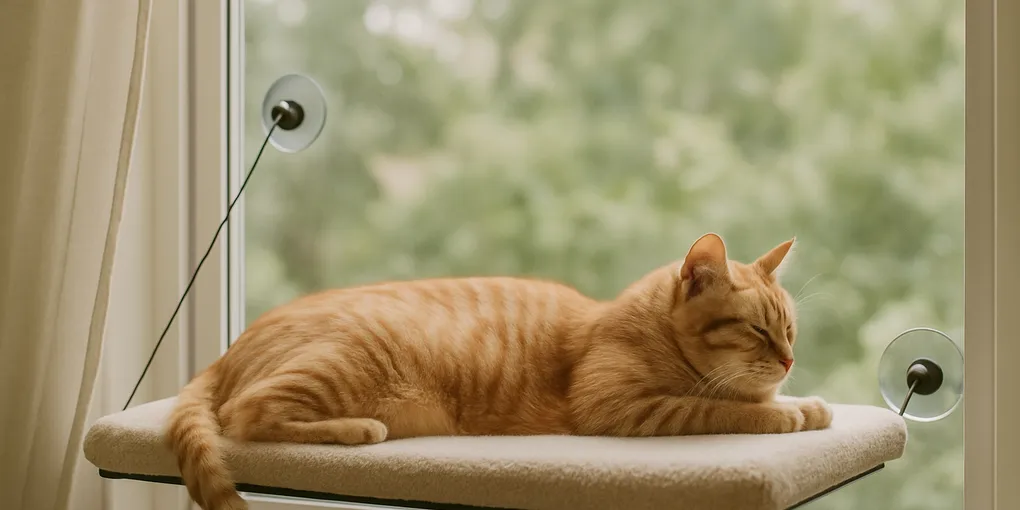
Best Cat Window Perches for Enrichment: Stability, Safety, and Bird-Watching Value
Buyer's Guidecat window perch sturdy
Best fitBest for: Active or heavier cats that need a stable perch
Varies
Quick picks
| Product | Key Specs |
|---|---|
| See price on Amazon |
|
| See price on Amazon |
|
| See price on Amazon |
|
Product availability, certifications, and retailer details can change; check the current Amazon page before buying.
How We Score This Buying Guide
| Criterion | Weight | Score | Weighted | Why it matters here |
|---|---|---|---|---|
| Research | 30% | 8.0 | 2.40 | Feline welfare research consistently supports vertical space, environmental complexity, and opportunities for species-typical observation. |
| Evidence Quality | 25% | 8.0 | 2.00 | Direct product trials are limited, but the behavioral rationale for elevated resting and viewing zones is strong. |
| Value | 20% | 8.5 | 1.70 | A good perch can add daily enrichment in a small apartment without requiring a large cat tree. |
| User Signals | 15% | 8.5 | 1.28 | Owner reviews strongly favor sturdy platforms, washable covers, easy installation, and designs that do not sag under heavy cats. |
| Transparency | 10% | 9.0 | 0.90 | This guide emphasizes fall prevention, window safety, weight limits, and when suction cups are the wrong choice. |
| Composite Score | 8.3/10 | A strong enrichment upgrade when installed conservatively and matched to the cat’s size, age, and mobility. |
The Short Answer
The best cat window perch is a stable, washable, weight-appropriate resting platform that lets a cat watch outdoor movement without risking a fall. For many cats, that means a wall-supported shelf, a cat tree placed by a window, or a sill-expanding platform. Suction-cup hammocks can be useful in rentals, but they should be treated as removable accessories that require inspection, not as permanent structural furniture.
Cats are not just looking for sunlight. They use height to monitor territory, rest without interruption, avoid conflict with other pets, and choose warmer or cooler microclimates. A perch near a window adds visual enrichment: birds, leaves, traffic, weather, and neighborhood routines. That can reduce boredom for indoor cats, but only when the perch feels safe. A wobbly platform creates stress instead of enrichment.
Useful searches for current options:
- Search Amazon for cat window perch sturdy
- Search Amazon for cat window hammock washable cover
- Search Amazon for cat window shelf no suction cups
- Search Amazon for cat tree for window perch
Verify current weight rating, bracket design, sill depth, suction-cup requirements, rental-friendly hardware, and installation instructions before buying.
Why Window Perches Work as Enrichment
Indoor cats need predictable resources and opportunities to perform normal behavior. A window perch supplies three things at once: vertical territory, a resting zone, and visual stimulation. That combination is especially valuable in apartments where floor space is limited. A perch can make a studio apartment feel larger to a cat because it adds usable three-dimensional space.
Visual access should be calming, not frustrating. Some cats chatter at birds and then relax. Others become agitated if outdoor cats visit the window or if prey is constantly visible but unreachable. Watch the individual cat. If the perch leads to redirected aggression, urine marking, or frantic pacing, use blinds, privacy film, or a different window.
A perch is not a substitute for interactive play. The best routine pairs passive watching with wand play, food puzzles, scratching posts, and hiding places. Think of the perch as the cat’s theater seat, not the entire enrichment plan.
Best Overall Type: Sill-Supported Platform
For many homes, the safest default is a platform that rests on or clamps to the window sill rather than hanging entirely from suction cups. Sill-supported designs distribute weight onto a building surface, which reduces the risk of sudden detachment. They are especially good for heavier cats, older cats, and households where owners may forget weekly suction-cup checks.
Measure sill depth, window width, and curtain clearance. Some platforms need a deep sill; others use legs or braces below. If you rent, confirm whether the hardware leaves marks. A non-damaging design is only non-damaging if installed exactly as directed and removed carefully.
Useful search: Search Amazon for cat window perch sill mounted.
Best for Renters: Conservative Suction-Cup Hammock
Suction-cup hammocks are popular because they avoid drilling. They can work well for light to medium cats on clean, smooth glass. The key word is conservative. Choose a model with a published weight rating comfortably above your cat’s weight, large cups, replaceable parts, and clear instructions. Clean the glass thoroughly before installing, press each cup firmly, and test with gradual pressure before allowing the cat to jump onto it.
Recheck cups often, especially after temperature swings, direct sun, humidity changes, or cleaning. Do not place a fragile table, plant, or hard object under the hammock. If it detaches, the cat should land on a clear surface. For heavy cats or cats that launch themselves aggressively, choose a sill or floor-supported option instead.
Useful search: Search Amazon for suction cup cat window perch large cups.
Best for Heavy Cats: Cat Tree by the Window
Large cats often do better with a floor-standing cat tree placed near a window. It may take more space, but it provides a broad base, scratching surfaces, multiple levels, and less dependence on glass or wall hardware. Look for a heavy base, wide top platform, sisal scratching posts, and a height that lets the cat see out without leaning into the glass.
For very heavy cats, avoid tiny round beds with high rims that compress the body. Choose rectangular platforms or hammocks with reinforced frames. If the cat tree wobbles when the cat jumps, anchor it or choose a wider model. A perch that moves unpredictably can discourage use and increase fall risk.
Useful search: Search Amazon for sturdy cat tree window perch large cat.
Best for Senior Cats: Low Step-Up Window Seat
Senior cats need access more than height. Arthritis can make jumping painful, and some older cats hide pain until furniture changes reveal it. Choose a low perch, a cat tree with small step intervals, or a platform paired with pet stairs. The goal is to let the cat reach the window without a single dramatic leap.
Soft bedding matters, but overly plush beds can be unstable. A firm washable pad is often better than a deep cushion. Watch whether the cat hesitates before jumping down; that hesitation often means the perch is too high or the landing is too hard. Add a ramp, step, or lower intermediate surface.
Useful search: Search Amazon for senior cat window perch steps.
Best for Multi-Cat Homes: Multiple Platforms
One window perch can create conflict if several cats want the same high-value spot. In multi-cat homes, provide more than one elevated resting place, ideally with separate approach routes. A dominant cat should not be able to block the only path up or down. If staring, swatting, or guarding starts, add a second perch in another window or a cat tree nearby.
Size matters. A platform that technically holds two cats may still create tension if they cannot turn around comfortably. Cats that are bonded may share; cats that merely tolerate each other usually prefer parallel options. Two modest perches are often better than one deluxe perch.
Useful search: Search Amazon for multi cat window perch wide.
Safety Checks Before You Buy
Check the window itself. Screens are not fall protection. A cat leaning on a screen can push it out. If the window opens, use secure window stops and never rely on a perch to keep a cat away from an opening. If the perch attaches to glass, avoid cracked, textured, frosted, or dirty glass. If it attaches to a wall, use studs or anchors appropriate for the load.
Check sun and heat. A south-facing perch can become hot, especially behind glass. Cats enjoy warmth but can overheat, particularly seniors, kittens, and flat-faced breeds. Provide a way to leave easily and keep water available.
Check cords. Blind cords and curtain ties can entangle cats. Secure them away from the perch. Remove fragile objects from the landing zone.
What Makes a Perch Comfortable?
Comfort is partly padding and partly confidence. A cat relaxes when the surface does not sway, the fabric does not slide, and the exit path is clear. Washable covers are important because windows collect dust, pollen, and hair. Choose removable fabric if the cat sheds heavily or has allergies.
Perch depth should allow the cat to loaf, sprawl, or turn around. Narrow shelves may be fine for a quick look outside but poor for napping. If your cat sleeps curled tightly, a smaller platform may work. If your cat stretches long in sun patches, buy wider.
Installation Tips That Prevent Failure
Install when you are not rushed. Clean surfaces, read the full instructions, and let adhesives or suction cups set if the manufacturer recommends it. Test with steady pressure heavier than the cat before allowing access. For the first day, supervise and place a soft rug below.
Recheck after the first week. Many failures happen not at installation but after the material settles, straps stretch, or suction cups experience temperature changes. Put a monthly reminder on your calendar. Safety equipment only works if maintained.
When Not to Use a Window Perch
Skip a high perch if the cat has uncontrolled seizures, severe balance problems, recent orthopedic surgery, or a pattern of panic around outdoor cats. Also skip suction-cup designs if your windows get extreme direct heat, condensation, or frequent opening and closing by children. Use a floor-standing tree or low bed near the window instead.
If a dog in the home fixates on the cat, do not place the perch where the dog can jump, bark, or trap the cat. The perch should be a refuge, not a stage for harassment.
How to Tell Whether the Perch Is Working
A good perch changes daily behavior in quiet ways. The cat uses it voluntarily, settles instead of crouching tensely, grooms or sleeps there, and can leave without being ambushed by people, dogs, or other cats. You may also see less counter surfing if the window perch becomes the preferred observation point. That is a useful sign that the perch is meeting the cat’s need for height without turning kitchen counters into the only lookout.
A poor perch creates avoidance or conflict. If the cat jumps up once and never returns, check wobble, heat, fabric smell, and exit route. If another cat blocks the landing zone, the issue is household resource layout rather than the product. If the cat uses the perch only at night, daytime sun or outdoor activity may be too intense. Move the perch, add another option, or reduce visual triggers with partial window film.
Do not judge success by photos. The best cat furniture is furniture the cat chooses when nobody is encouraging it. Give the setup two weeks, then keep the perch that earns repeat use and remove the one that becomes clutter.
Bottom Line
A cat window perch is one of the best small-space enrichment upgrades, but safety is the product. Choose the support system first, match the platform to your cat’s weight and mobility, secure the window area, and inspect the perch regularly. When a cat can climb up confidently, watch the world, nap, and leave without conflict, the perch is doing its job.
Sources
- American Association of Feline Practitioners environmental needs guidelines.
- International Cat Care resources on indoor cat enrichment and stress reduction.
- Cornell Feline Health Center guidance on household safety and feline behavior.
- Shelter medicine recommendations for vertical space, hiding, and resource distribution.
Frequently Asked Questions
- They can be safe for the right cat and window when installed exactly as directed, but they are not ideal for every home. Weight rating, clean glass, sun exposure, and regular rechecks matter.
- A cat tree is more stable and works away from glass; a window perch offers stronger visual enrichment. Many homes benefit from both, but the safest choice depends on weight, rental rules, and window layout.
- They can help because cats value vertical resting places and visual access to outdoor movement. They should be part of a broader enrichment plan that includes play, scratching, hiding, and predictable feeding.
- Yes, but choose a low, stable option first. Kittens misjudge jumps, chew cords, and outgrow small hammocks quickly, so supervision and conservative height are important.