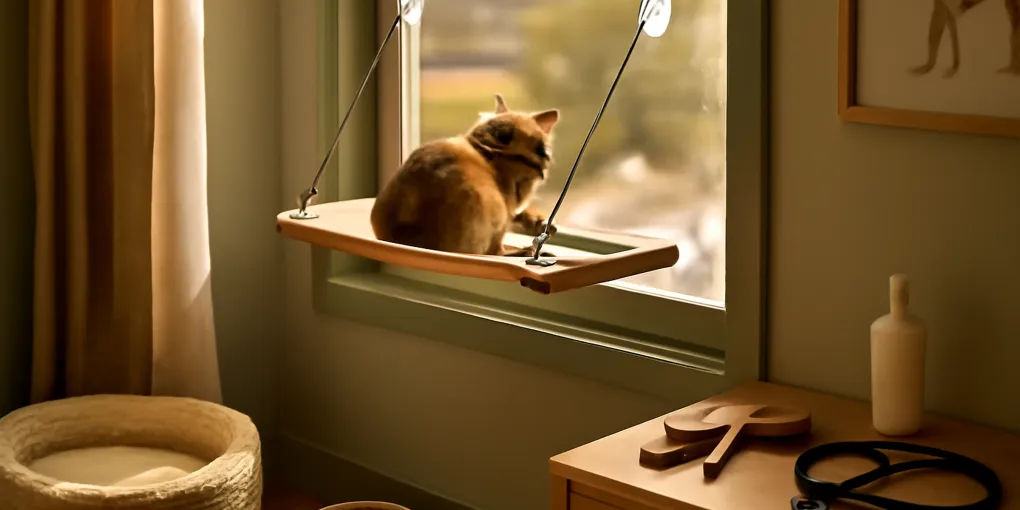
Best Cat Window Perches in 2026: Safer Enrichment Without Wobbly Suction Cups
Buyer's GuideK
Best fitBest for: | K&H EZ Mount Window Bed | Cats that like enclosed hammock-style views | Suction cups need regular checks |
Varies
Quick picks
| Product | Key Specs |
|---|---|
| See price on Amazon |
|
| See price on Amazon |
|
| See price on Amazon |
|
Product availability, certifications, and retailer details can change; check the current Amazon page before buying.
Quick verdict
The best cat window perch is the one that stays attached, fits the cat fully, and gives a stable view without blocking escape routes. A perch can be excellent enrichment, but only if the mounting method, window surface, sun exposure, and cat weight are respected. This guide treats products as management tools, not medical treatment. If a pet has pain, appetite change, vomiting, diarrhea, heat stress, urinary changes, sudden fear, or any other concerning sign, use a veterinarian rather than a shopping list as the first intervention.
How we evaluated the options
| Factor | Weight | What we looked for | How it applies here |
|---|---|---|---|
| Research | 30% | Fit with veterinary, welfare, and behavior guidance | We favored setups that reduce risk while preserving normal species behavior. |
| Evidence Quality | 25% | Specific claims tied to credible sources | We avoided cure-style promises and separated evidence from marketing. |
| Value | 20% | Useful daily function for the cost | Durable, washable, repairable products scored higher than novelty items. |
| User Signals | 15% | Repeated owner reports about failure points | Reviews were used to identify slipping, cleaning, noise, chewing, and sizing issues. |
| Transparency | 10% | Materials, dimensions, limits, and warnings | Clear specifications and conservative safety language improved confidence. |
Product shortlist and shopping links
| Check price | Option | Best fit | Watch-outs |
|---|---|---|---|
| Search Amazon | K&H EZ Mount Window Bed | Cats that like enclosed hammock-style views | Suction cups need regular checks |
| Search Amazon | K&H Kitty Sill | Homes with usable window sills | May require hardware depending on model |
| Search Amazon | AMOSIJOY cordless window perch | Renters wanting suction-cup design | Glass must be clean and smooth |
| Search Amazon | Frisco cat window perch | Budget sill-supported lounging | Confirm dimensions for large cats |
After narrowing the perch style, confirm the window dimensions, mounting surface, rated weight, cushion washability, and how easily you can inspect the hardware. A perch is only worth buying if it fits the exact window your cat already uses and can be checked regularly without dismantling the room.
What makes a perch safe
A window perch concentrates a cat’s weight on suction cups, brackets, sill hardware, or a frame. That means the mounting system matters more than the cushion pattern. Check the rated weight, but also read how that rating is achieved: clean glass, smooth surface, correct cup spacing, and regular reattachment are often assumed. If your windows are textured, drafty, dirty, unusually narrow, or exposed to strong sun, choose a sill-supported or furniture-style perch instead. A useful way to evaluate the setup is to write down the baseline before changing anything. Note where the pet eats, rests, plays, drinks, hides, and asks for attention. Then change one variable at a time and observe the result for several days. This makes it easier to tell whether the product helped or merely looked organized in the room. It also prevents the common mistake of adding three new items at once and not knowing which one caused avoidance, chewing, overexcitement, or better calm.
Cleaning is part of safety, not a cosmetic detail. Food residue, saliva, dust, fur, and moisture change how a product performs over time. Smooth surfaces, removable parts, manufacturer cleaning instructions, and visible wear points matter more than a dramatic feature list. If an item cannot be cleaned at the frequency your household realistically maintains, choose a simpler option.
Supervision is still necessary during the first uses. Watch body language: loose posture, normal breathing, willingness to disengage, and normal appetite are reassuring. Hard staring, frantic pawing, repeated startle responses, guarding, panting unrelated to temperature, or refusal to approach suggest the setup needs to be easier, quieter, cooler, farther from traffic, or removed entirely.
How to choose
Measure the cat from chest to rump while lying down and compare that with the usable platform, not the outer frame. Large cats need depth as much as width. Seniors need a low step or adjacent furniture; a dramatic leap onto a swinging perch can aggravate pain or discourage use.
For renters, tension or suction designs may avoid holes, but they require more inspection. For long-term homes, a sill-mounted perch or cat tree by the window may be more reliable. Washable covers are worth paying for because windows collect dust, pollen, and fur.
Sun, temperature, and privacy
Window lounging can become too hot. Provide water elsewhere, avoid trapping a cat in direct afternoon sun, and make sure the cat can leave easily. Some cats also become aroused by outdoor animals. If the perch causes chattering, redirected aggression, or fights with another pet, add visual breaks or move it to a calmer view.
Setup checklist
Clean the window, install exactly as instructed, wait before loading if the product requires it, and press-test with your hands below the rated load. Let the cat discover the perch rather than placing the cat on it. During week one, inspect cups, straps, seams, and the sill daily. After that, inspect during routine cleaning.
Mounting methods compared
Suction-cup perches are attractive for renters, but their safety depends on clean smooth glass, correct cup placement, fresh rubber, and regular reattachment. Sill-supported models shift more load onto the window frame or sill and can be better for heavy cats, but they require enough sill depth and sometimes hardware. Furniture-style perches beside a window avoid glass attachment entirely and are often safer for senior cats that need predictable steps.
Do not evaluate a perch only by the advertised weight limit. Ask how the load is supported when the cat jumps, turns around, kneads, or lands off-center. A wide, rigid platform with washable fabric and a low approach route is usually more useful than a hammock that looks cozy but twists under movement.
Sun, stress, and window behavior
Window access can enrich a cat’s day, but it can also create heat exposure or arousal. Direct afternoon sun can overheat a resting surface even in a cool room. Birds, outdoor cats, dogs, and delivery traffic can trigger chattering, pacing, redirected aggression, or conflict with another indoor pet. If the perch creates agitation, use a calmer window, partial film, blinds adjusted for a filtered view, or a shorter supervised session.
For cats with arthritis, obesity, poor vision, or recent injury, plan the route as carefully as the perch. Add a stable step, avoid slick furniture launches, and keep the landing area clear. A perch that requires a dramatic jump may be ignored by the cat who would benefit most from low-stress enrichment.
Inspection checklist
During the first week, inspect suction cups, straps, hooks, brackets, seams, and the window surface every day. Reclean glass when dust, condensation, pollen, or paw oils appear. After the first week, inspect during regular room cleaning and after temperature swings, storms, or any fall. Retire cloudy, cracked, stretched, or hardened suction cups before they fail.
Wash covers often enough that fur, skin oils, and litter dust do not build up. If the perch blocks window locks, cords, screens, or emergency exits, choose a different location. Safety includes the human household as well as the cat.
Perch choice by home type
For renters, start with designs that do not damage trim, but do not assume suction cups are automatically the safest rental option. If the glass is textured, old, drafty, filmed, frequently wet with condensation, or exposed to intense sun, a freestanding cat tree near the window may be safer and still reversible. Keep proof of weight limits and installation instructions with the product so reassembly after moving is not guesswork.
For homes with deep sills, sill-supported perches can feel more stable to cautious cats. Check whether the bracket interferes with blinds, locks, window opening, or emergency exits. A perch that makes the window hard to operate will be moved, ignored, or installed incorrectly. The best design is the one the household can leave correctly installed.
For senior cats, prioritize the path to the view. Add a low bench, stable step, or cat tree with wide platforms. Avoid narrow ladders and slippery furniture routes. If the cat has arthritis, the most beautiful perch may be the wrong answer if it requires a jump down onto hard flooring. Soft landings and predictable footing matter as much as the perch itself.
For multi-cat homes, avoid creating one premium window spot that becomes a contested resource. Add a second resting place nearby or use a wider furniture-style platform when cats already share peacefully. Watch for blocking behavior: one cat sitting on the route, staring, or occupying the perch only when another cat approaches. That subtle pressure means the resource plan needs adjustment.
Red flags in customer reviews
Read negative reviews for failure patterns rather than star averages. Repeated reports of suction cups dropping overnight, fabric tearing at the same seam, unclear installation steps, or cats avoiding the platform are more useful than one dramatic success photo. Give extra weight to reviews from households with cats similar in size, age, and activity level to yours.
Also look for maintenance clues. If owners say the cover is hard to remove, replacement cups are unavailable, or the frame loosens after cleaning, the perch may become unsafe after the novelty period. A slightly less attractive perch with replaceable parts and plain instructions is often the better long-term buy.
Photograph the final installation from the side and below. If you cannot see how the load transfers to glass, sill, bracket, or furniture, recheck the instructions before letting the cat use it unsupervised.
FAQ
Are suction-cup cat perches safe?
They can be safe for the right cat and window when installed exactly as directed and inspected regularly. They are a poor fit for textured glass, dirty glass, damaged cups, heavy jumpers, or homes that will not recheck attachment.
What size should I buy?
Measure the cat’s resting length and choose usable platform space, not just outer frame dimensions. Large cats need depth for turning around, and senior cats need an easy route up and down.
Which cat enrichment routine pairs with window perches?
Use this guide with our cat water fountain cleaning protocol when designing an indoor cat environment that supports hydration, resting choice, and low-stress daily observation.
Evidence notes and sources
- AAFP/ISFM environmental needs guidelines support vertical space, safe resting areas, choice, and resource distribution for cats: https://journals.sagepub.com/doi/full/10.1177/1098612X13477537
- International Cat Care explains indoor enrichment and the importance of choice, hiding, resting, and safe observation opportunities: https://icatcare.org/advice/enriching-your-cats-life/
- Ohio State Indoor Pet Initiative discusses creating cat-friendly indoor spaces and reducing environmental stressors: https://indoorpet.osu.edu/cats
- AVMA animal welfare principles support enrichment that reduces distress rather than adding unmanaged novelty: https://www.avma.org/resources-tools/avma-policies/animal-welfare-principles
Bottom line
The best cat window perch is the safest stable viewing spot your specific cat will actually use. Favor secure support, washable materials, a low-stress route, and weekly inspection over dramatic suction-cup claims.