Quick picks
| Product | Key Specs |
|---|---|
| See price on Amazon |
|
| See price on Amazon |
|
| See price on Amazon |
|
Product availability, certifications, and retailer details can change; check the current Amazon page before buying.
Cat Carrier Training Protocol
A cat carrier should not appear only on vaccination day. When the carrier predicts being grabbed, loaded, driven, and examined, many cats hide as soon as it comes out. Training changes the carrier from a trap into a familiar resting place, which makes veterinary care safer for the cat and easier for the owner.
This protocol is for low-stress practice with healthy cats who are not in an emergency. If your cat is injured, struggling to breathe, unable to urinate, or acutely ill, use the safest available carrier and seek veterinary care; do not delay for training.
How we evaluated the recommendation
For carrier training, we favor products that support low-stress handling: easy entry, secure closure, good ventilation, and enough structure to protect the cat. Veterinary behavior guidance and feline-friendly handling recommendations matter more than marketing claims. Reusable practice value, accident cleanup, reduced owner wrestling, latch and zipper reliability, shoulder-strap comfort, airline sizing clarity, dimensions, weight limits, washable pads, and replacement parts all affect the recommendation.
The highest-scoring setup is not always the fanciest carrier. It is the combination of a secure carrier, gradual practice, and owner patience.
Quick recommendation table
| Check price | Pick | Best for | Why it made the list |
|---|---|---|---|
| Check Amazon | Petmate Two Door Top Load Kennel | Veterinary visits by car | Rigid base, top-entry option, and easier exam-room unloading |
| Check Amazon | Sherpa Original Deluxe Travel Carrier | Soft-sided travel needs | Flexible sides and familiar bedding feel when sizing is appropriate |
| Check Amazon | Feliway Classic Calming Spray | Practice support, not a substitute | May help some cats when paired with gradual exposure and time |
Who this article is for
This protocol is for owners who can spend five minutes a day for one to three weeks before the next routine appointment. It works best for cats who are food motivated, toy motivated, or willing to investigate objects when nobody is forcing them. It is also useful for kittens, newly adopted cats, and multi-cat households where the sight of one carrier can trigger several cats to hide.
It is not a complete behavior plan for severe panic, redirected aggression, or cats who injure themselves when confined. Those cases deserve a veterinarian or veterinary behavior professional, and some cats need prescription pre-visit medication.
Carrier features that matter
Choose a carrier before training if your current one is unsafe. A good car carrier has a secure latch or zipper, ventilation on multiple sides, a base that does not sag, and enough room for the cat to turn around without sliding. Top-loading or removable-top designs are especially helpful because a veterinary team can lift the cat out gently or examine part of the cat in the carrier.
Soft carriers can be excellent for calm cats and travel contexts, but they need strong seams and zippers. Hard carriers are easier to disinfect and often safer for frightened cats who push against walls. Avoid tiny fashion carriers, carriers with weak closures, and anything that collapses around the cat when lifted.
Step-by-step carrier training protocol
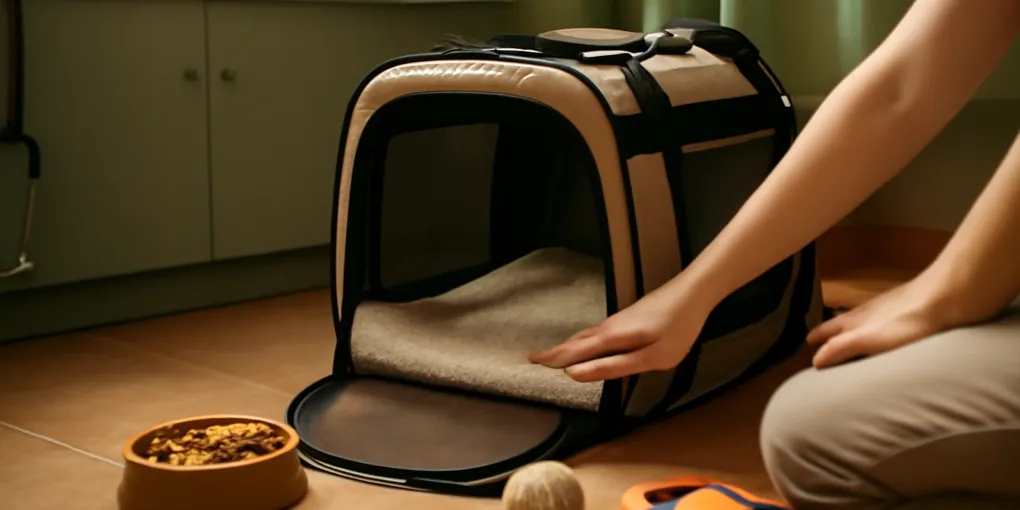
Start with the carrier open in a normal living area. Remove the door or tie it open if that is safe. Put familiar bedding inside and do nothing else for the first day. The goal is simple exposure without pressure.
Next, feed treats near the carrier, then just inside the entrance, then farther back. Move only as fast as the cat stays loose-bodied: normal tail, normal ears, no frantic retreat. If the cat hesitates, place the reward closer to the entrance and end the session while it is still easy.
When the cat will enter, add a cue such as “carrier” before tossing the treat inside. Later, briefly touch the door, close it for one second, open it, and reward. Build to five seconds, ten seconds, and one minute over several sessions. Then lift the carrier an inch, set it down, and reward. Only after those steps are calm should you practice walking to the car or sitting in a parked car.
Safety notes owners often miss
Never shake treats in the back of a carrier and then slam the door. That teaches the cat that entering voluntarily is punished. Do not chase the cat through the house before practice sessions. If you must transport an untrained cat, use a small room, move slowly, and avoid scruffing unless a veterinary professional has specifically directed it for an emergency.
Line the carrier with a washable towel or absorbent pad. Bring a spare towel for the trip home. Secure the carrier on the vehicle floor behind a front seat or with a seatbelt only if the carrier design supports it. A loose carrier can slide during braking.
Product-by-product notes
Petmate Two Door Top Load Kennel
This is the practical clinic-visit pick. The top door can reduce the need to pull a cat out through a front opening, and the rigid base helps the cat feel supported. Check the latch style on the exact listing and choose the size by your cat’s measurements, not by breed labels.
Sherpa Original Deluxe Travel Carrier
The Sherpa carrier is better for owners who need a soft-sided option and have a cat who does not claw or push hard at seams. It can feel cozy when lined with familiar bedding, but zipper quality and airline-size claims should be checked carefully before travel.
Feliway Classic Calming Spray
Feliway is not a magic sedative. It is a support tool that may help some cats when sprayed on bedding before use and allowed to dry according to label directions. It should be paired with slow training, not used to justify rushing.
Evidence base and citations
The AAFP/ISFM feline environmental-needs guidelines support predictable resources and reduced threat exposure for cats: https://journals.sagepub.com/doi/10.1177/1098612X13477537. The AAFP Cat Friendly Homes program provides practical carrier and veterinary-visit guidance: https://catfriendly.com. The American Veterinary Medical Association emphasizes safe transport and veterinary consultation for behavior or health concerns: https://www.avma.org/resources-tools/pet-owners. For fear-reduction principles, veterinary behavior resources from Fear Free Pets are also relevant: https://www.fearfreehappyhomes.com.
Internal reading
If travel stress overlaps with other handling issues, read our cat nail clipper guide and cat dental treats guide. They use the same calm-introduction principle: reduce force, build tolerance, and stop before fear escalates.
FAQ
How long does carrier training take?
Some cats improve in a few days, but many need two to three weeks of short sessions. The timeline is less important than the cat’s body language. Calm repetition beats one long stressful session.
Should I leave the carrier out all year?
Yes, if you have space. A carrier used as a resting spot is less threatening than a carrier that appears only before the vet. Put bedding inside and occasionally drop treats there without closing the door.
Can calming spray replace training?
No. Pheromone products may support a good plan, but they cannot make a frightening loading process safe by themselves. Training, carrier design, and owner handling matter more.
What should I do if my cat panics when the carrier door closes?
Open the door before the cat escalates, then return to entering with the door secured open. At the next session, reward a small door movement without closing it. Build back to a one-second closure only when the cat stays loose-bodied and continues taking treats.
Practice calendar
Day one is carrier-out day: open carrier, familiar towel, no door movement. Days two and three are treat-at-entrance days. Days four through six move rewards deeper inside only if the cat is entering voluntarily. During the second week, add door touches, one-second closures, and short lifts. In the third week, practice walking to the door, sitting in the parked car, and returning inside before the cat escalates.
Keep sessions short enough that the cat wants another repetition. Two calm minutes are better than fifteen minutes that end in hiding. If a session goes badly, return to the last step that looked easy. Training is not linear, especially after a noisy delivery, a dog barking, or a previous stressful appointment.
Clinic-day checklist
Prepare the carrier the night before. Add absorbent bedding, pack a spare towel, and confirm the latch or zipper works. Spray pheromone products only according to label directions and allow them to dry before the cat enters. Load the cat in a closed room so there is no chase through the house if they hesitate.
During the drive, keep the carrier level and quiet. Avoid loud music, open windows, and unnecessary stops. At the clinic, ask whether you can wait in the car or in a cat-only area if the lobby has barking dogs. Small handling choices compound; a calm arrival protects the training you built at home.
Carrier training progress log
After each practice session, record the hardest carrier step the cat completed comfortably: approaching the entrance, putting all four paws inside, staying while the door moved, remaining settled with the door latched, tolerating a lift, or riding in the parked or moving car. Note how many seconds the door stayed closed and whether the cat still took a treat. Also record carrier-specific stress signals such as backing out, flattening the ears, crouching, panting, drooling, yowling, striking the door, or pushing at the latch. These details show whether to repeat the step or return to an easier one.
For the first real veterinary trip, add when the cat began to escalate: at loading, when the carrier was lifted, during the drive, in the lobby, or during removal in the exam room. Record urine or stool accidents, vomiting, open-mouth breathing, recovery time after returning home, and whether front, top, or removable-top access made handling easier. Share repeated panic, prolonged panting, self-injury, or aggression with the veterinarian before the next appointment; the log can help them decide whether a different carrier setup, quieter arrival plan, or prescription pre-visit medication is appropriate.
Troubleshooting setbacks
If the cat stops entering, lower the difficulty immediately. Move the reward back to the carrier entrance, remove the door movement, and shorten the session. A setback is information, not disobedience. The most common causes are moving too fast, practicing when the household is noisy, using a carrier that smells like a previous stressful trip, or accidentally closing the door for too long.
Clean old carriers with unscented products and let them air out before training. If the carrier still smells like fear urine, medication, or disinfectant, replace the bedding and consider a new carrier. Cats rely heavily on scent, and a carrier that smells threatening can undermine otherwise good technique.
Bottom line
Make the carrier boring, familiar, and rewarding before you need it. A secure top-entry carrier plus short voluntary practice can turn an annual struggle into a manageable routine.