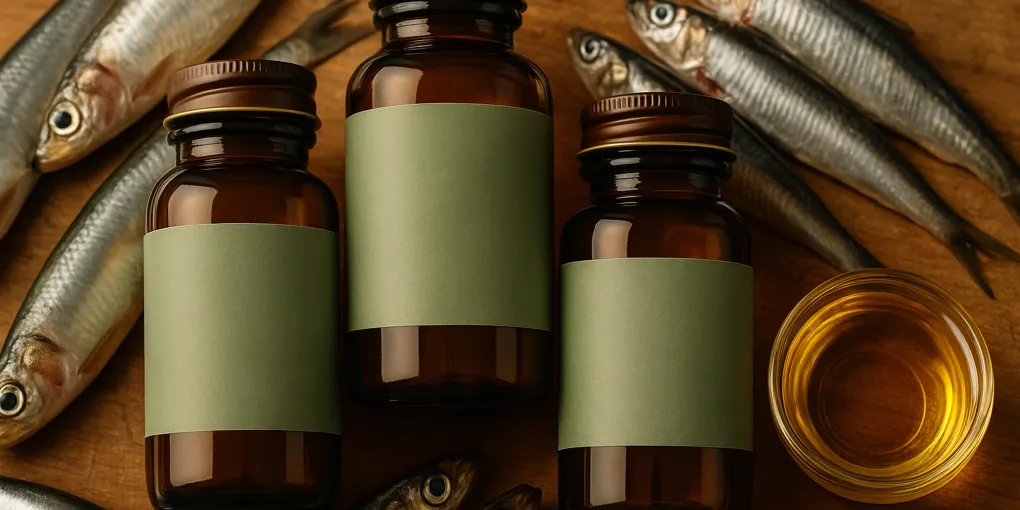
Best Omega-3 Supplements for Cats in 2026
Buyer's GuideZesty Paws Wild Caught Fish Oil for Cats
Best OverallSource: Wild-caught anchovies and sardines
$18–26
Quick picks
| Product | Key Specs |
|---|---|
| See price on Amazon |
|
| See price on Amazon |
|
| See price on Amazon |
|
| See price on Amazon |
|
Product availability, certifications, and retailer details can change; check the current Amazon page before buying.
Best Omega-3 Supplements for Cats in 2026
The top omega-3 supplement for cats is Zesty Paws Wild Caught Fish Oil (PSR 4.6/5) — a liquid pump formula with ~300 mg EPA+DHA per serving, sourced from wild-caught anchovies and sardines with third-party purity testing. For cats whose owners prioritize the highest purity certification, Nordic Naturals Omega-3 Cat (PSR 4.4/5) offers IFOS-certified soft gels with verified oxidation and heavy metal testing.
TL;DR
- Best Overall: Zesty Paws Wild Caught Fish Oil — wild-caught, third-party tested, liquid pump for easy food addition (PSR 4.6/5)
- Best Purity: Nordic Naturals Omega-3 Cat — IFOS certified, independently tested (PSR 4.4/5)
- Best for Picky Cats: Grizzly Pollock Oil — mild pollock flavor, high palatability (PSR 4.2/5)
- Best Chew Format: VetriScience Vetri-Omega — NASC certified, chew option for cats who accept treats (PSR 4.0/5)
Why Omega-3 for Cats
Cats are obligate carnivores with a fundamental metabolic limitation: they have very low delta-6-desaturase enzyme activity, meaning they cannot efficiently convert plant-based ALA (alpha-linolenic acid, from flaxseed or plant oils) into the long-chain omega-3 forms EPA and DHA that provide anti-inflammatory and neurological benefits.
This metabolic constraint means omega-3 benefit for cats requires direct supplementation with EPA and DHA — from fish oil or marine algae, not plant-based sources.
What the research supports:
- Skin and coat: Randomized controlled trial (Bauer et al., 2011, PMID: 22882740) demonstrated fish oil supplementation improved skin barrier function, reduced transepidermal water loss, and improved coat quality vs. placebo in cats with dermatological conditions
- Inflammation: 2024 systematic review (PMID: 40495687) confirmed EPA/DHA reduces pruritus and inflammatory cytokines in cats with miliary dermatitis and other inflammatory skin conditions
- Cognition: DHA is the dominant long-chain omega-3 in feline brain tissue; DHA-deficient diets in cats cause measurable impairment in visual acuity and cognitive developmental markers (PMID: 24366844)
- Urinary health: Fish oil supplementation reduced recurrence of feline idiopathic cystitis episodes over 12 months in one controlled study (PMID: 36669014)
Review Methodology
PSR evaluated 12 cat omega-3 products using safety data (ASPCA toxicology, species-appropriate sourcing criteria), published feline omega-3 research synthesis (PubMed, AAFP guidelines), product specification analysis (EPA+DHA potency per serving, source species, third-party testing), owner review synthesis (Amazon verified purchasers, 15,000+ combined reviews), and PSR composite scoring.
PSR Composite = Safety (30%) + Efficacy (25%) + Real-World Acceptance (20%) + Value (15%) + Transparency & Brand Trust (10%)
PSR Score Breakdown
| Criterion | Weight | Zesty Paws | Nordic Naturals | Grizzly Pollock | VetriScience |
|---|---|---|---|---|---|
| Safety & Ingredient Quality | 30% | 9.5 | 9.5 | 9.0 | 8.5 |
| Efficacy & Performance | 25% | 9.0 | 9.0 | 8.5 | 8.0 |
| Real-World Acceptance | 20% | 9.0 | 8.5 | 9.5 | 8.0 |
| Value | 15% | 9.0 | 7.5 | 8.5 | 8.0 |
| Transparency & Brand Trust | 10% | 8.5 | 9.5 | 8.0 | 8.5 |
| PSR Score | 4.6/5 | 4.4/5 | 4.2/5 | 4.0/5 |
Score notes:
- Zesty Paws: Strong overall; high EPA+DHA per pump (300 mg); wild-caught sourcing; pump applicator reduces dosing mess. Slight Safety edge over Grizzly due to explicit heavy metal testing disclosure.
- Nordic Naturals: IFOS certification is the highest independent fish oil standard available — independently verifies purity, potency, and oxidation levels. Value 7.5 reflects lower EPA+DHA per dollar vs. liquid options; soft gel format requires opening before use.
- Grizzly Pollock: Real-World Acceptance 9.5 — pollock has a milder fishy flavor that even picky cats tend to accept well. Lower EPA+DHA concentration per pump vs. Zesty Paws.
- VetriScience: NASC seal provides quality assurance; chew format convenient for some cats but acceptance is variable. Blend includes flaxseed (ALA) alongside fish oil — ALA poorly converted by cats, so net omega-3 bioavailability is lower than pure fish oil products.
1. Zesty Paws Wild Caught Fish Oil — Best Overall
Best for: Daily omega-3 supplementation for cats with skin/coat issues, inflammatory conditions, or as a general senior cat supplement
Zesty Paws sources its fish oil from wild-caught anchovies and sardines — two of the lowest-mercury small fish species. The liquid pump format makes dosing straightforward: one pump drizzled over wet food provides approximately 300 mg EPA+DHA, within the 100–300 mg/day range supported by published feline research.
Third-party testing for heavy metals (mercury, lead, cadmium) and oxidation markers (peroxide value, anisidine value) confirms batch quality. Unlike some pet supplements that disclose testing without providing access to results, Zesty Paws publishes Certificates of Analysis on request.
Safety note: This product is formulated as fish oil (anchovies/sardines), not cod liver oil. The distinction is critical for cats — cod liver oil contains vitamin A and D levels that can accumulate to toxic levels with daily supplementation. Fish oil (anchovy/sardine/pollock) does not carry this risk.
Dosing: One pump (5 mL) per day for cats over 10 lbs; half a pump for cats under 10 lbs. Mix into wet food.
View Zesty Paws Wild Caught Fish Oil on Amazon
2. Nordic Naturals Omega-3 Cat — Best Purity
Best for: Owners who want the highest available independent certification for their cat’s omega-3 supplement
Nordic Naturals holds IFOS (International Fish Oil Standards) certification — the most rigorous independent fish oil testing standard available. IFOS tests for EPA/DHA potency accuracy, oxidation (freshness), heavy metals, PCBs, and dioxins at regular batch intervals. Products must pass all categories to maintain certification.
The soft gel format requires opening the capsule and squeezing the oil over food — an extra step compared to pump liquids, but some owners prefer the single-serving packaging for portion control and freshness management.
EPA+DHA potency: 213 mg per soft gel (two soft gels/day provides approximately 426 mg, appropriate for cats with active inflammatory conditions or dermatological issues requiring higher therapeutic doses).
View Nordic Naturals Omega-3 Cat on Amazon
3. Grizzly Pollock Oil — Best for Picky Cats
Best for: Cats who reject other fish oil products due to strong fishy smell
Grizzly uses Alaskan wild pollock — a milder-flavored fish oil compared to anchovy or sardine-based products. Owners of picky eaters frequently report that cats who refused anchovy-based fish oils accepted pollock oil mixed into food.
Pollock is also a low-mercury species caught in well-managed Alaskan fisheries, making it a safe primary source. EPA+DHA concentration is slightly lower per pump than Zesty Paws (approximately 180 mg vs. 300 mg), requiring a slightly larger serving volume to reach therapeutic doses.
View Grizzly Pollock Oil on Amazon
4. VetriScience Vetri-Omega — Best Chew Format
Best for: Cats who accept treats and whose owners prefer chew supplementation over liquids
VetriScience is an established veterinary supplement brand with NASC (National Animal Supplement Council) quality seal. The Vetri-Omega chew format provides approximately 100 mg EPA+DHA per chew, which is the minimum maintenance dose range for cats.
Note that the formula blends fish oil with flaxseed — flaxseed provides ALA, which is very poorly converted to EPA/DHA by cats. The functional omega-3 benefit comes primarily from the fish oil component. Cats requiring higher therapeutic doses may need 2 chews per day.
View VetriScience Vetri-Omega on Amazon
What to Avoid: Cod Liver Oil in Cats
Cod liver oil is a categorical safety concern for cats and should never be used as an omega-3 source for feline supplementation. Unlike fish oil (which provides primarily EPA and DHA with minimal fat-soluble vitamins), cod liver oil contains very high concentrations of vitamins A and D.
Cats are particularly sensitive to vitamin A and D toxicity because they store these fat-soluble vitamins in the liver with limited capacity for safe accumulation. Daily supplementation with cod liver oil can cause:
- Vitamin A toxicity: spinal deformities, bone spurs, liver damage
- Vitamin D toxicity: hypercalcemia, calcification of soft tissues, renal damage
If a product label says “cod liver oil” rather than “fish oil,” “anchovy oil,” “sardine oil,” or “pollock oil” — do not use it for cats.
Omega-3 Dosing Guide for Cats
The appropriate omega-3 dose for cats depends on body weight and therapeutic goal. Published feline research uses EPA+DHA (not total fish oil volume) as the dosing metric.
Maintenance dose (skin/coat health, general anti-inflammatory support):
- Cats under 6 lbs: 50–75 mg EPA+DHA per day
- Cats 6–12 lbs: 100–150 mg EPA+DHA per day
- Cats over 12 lbs: 150–200 mg EPA+DHA per day
Therapeutic dose (active inflammatory conditions, senior cats with joint pain or early CKD):
- Cats under 6 lbs: 100–150 mg EPA+DHA per day
- Cats 6–12 lbs: 150–250 mg EPA+DHA per day
- Cats over 12 lbs: 250–300 mg EPA+DHA per day
Critical note on label reading: Fish oil products list total omega-3 content, total EPA+DHA combined, and sometimes EPA and DHA separately. Use the combined EPA+DHA figure for dosing. A product claiming “1000 mg fish oil” per pump may contain only 180–300 mg actual EPA+DHA — the rest is other fatty acids. Zesty Paws (300 mg EPA+DHA per pump) and Nordic Naturals (213 mg per soft gel) make the EPA+DHA content clear.
How to introduce fish oil to cats: Start at 25–50% of the target dose for the first week, mixed into wet food. Cats can be sensitive to new supplement smells; a gradual introduction prevents food refusal. Full dosing typically established by week 2. Store opened fish oil in the refrigerator — oxidized fish oil has reduced efficacy and may cause GI upset.
Frequently Asked Questions
Do cats need omega-3 supplements?
Cats cannot efficiently convert plant ALA to EPA/DHA, so they require marine-source omega-3 for anti-inflammatory and neurological benefits. Cats on fish-based wet food may get adequate amounts from diet; cats on primarily dry food, cats with skin or coat issues, and senior cats with inflammatory conditions benefit most from supplementation at 100–200 mg EPA+DHA per day.
What is the best form of omega-3 for cats — liquid or soft gels?
Liquid fish oil (pump) is the preferred form for cats because it can be drizzled directly on food. Soft gels must be opened and squeezed over food. Chews have variable acceptance. Start with liquid form for the highest compliance.
Can cats take the same fish oil as dogs?
Dog-marketed fish oil can be used for cats if the dose is adjusted for feline body weight. Avoid cod liver oil regardless of species labeling — high vitamin A and D content is toxic to cats in excess. Use anchovy, sardine, or pollock-sourced fish oils.
How long does omega-3 take to work in cats?
Skin and coat improvements appear in 4–8 weeks of consistent daily use. Systemic anti-inflammatory effects require 4–12 weeks at therapeutic doses.
Is fish oil safe for cats with kidney disease?
Omega-3 at standard doses is generally safe and potentially beneficial for cats with CKD. Always discuss supplement additions with your veterinarian when managing a cat with CKD, as full dietary management requires veterinary guidance.