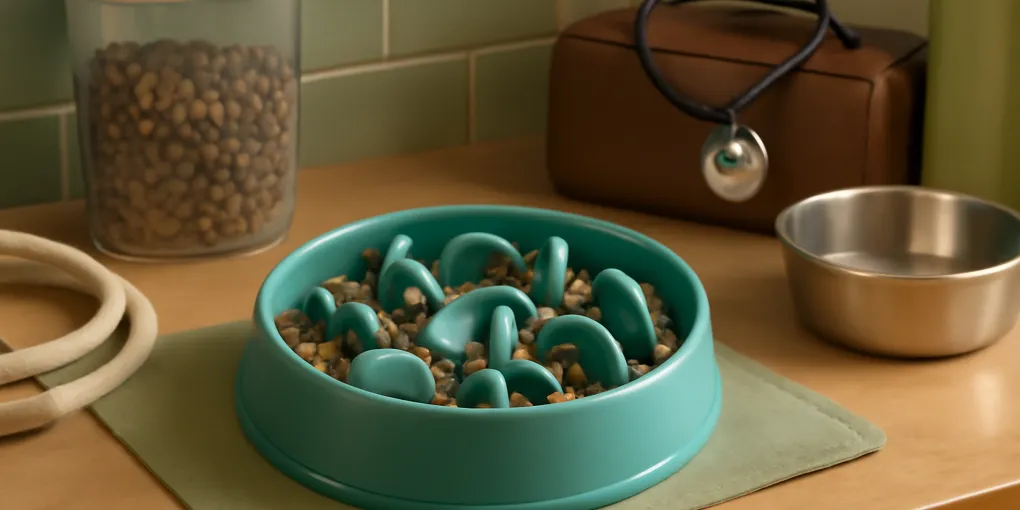
Best Slow Feeder Bowls for Dogs in 2026: Evidence-Informed Picks for Safer Meals
Buyer's GuideOutward Hound Fun Feeder
Best fitBest for: | Outward Hound Fun Feeder | Most adult dogs needing moderate slowdown | Choose size carefully; inspect ridges for chewi
Varies
Quick picks
| Product | Key Specs |
|---|---|
| See price on Amazon |
|
| See price on Amazon |
|
| See price on Amazon |
|
Product availability, certifications, and retailer details can change; check the current Amazon page before buying.
Quick verdict
The best slow feeder bowl is not the maze with the most dramatic ridges. It is the bowl that slows a specific dog without causing tooth scraping, frantic pawing, resource guarding, or skipped meals. For many dogs, a moderately challenging dishwasher-safe bowl used under supervision is safer than a complicated puzzle that turns dinner into a struggle.
Fast eating can be a habit, a competition response, or a sign that the feeding setup is stressful. It can also appear alongside vomiting, weight change, pain, or other medical signs. A slow feeder may help with pace, but it is not a diagnosis or treatment plan. Sudden changes in appetite or digestion deserve veterinary advice.
How we evaluated the options
| Factor | Weight | What we looked for | Slow-feeder interpretation |
|---|---|---|---|
| Research | 30% | Aligns with veterinary nutrition and welfare guidance | Slowing access should preserve normal posture and reduce stress. |
| Evidence Quality | 25% | Avoids unsupported claims about bloat or medical prevention | Use as a management tool, not a disease-prevention promise. |
| Value | 20% | Durable, cleanable, correctly sized | Cheap bowls fail if they crack, slide, or cannot be washed. |
| User Signals | 15% | Repeated reports on slipping, chewing, and cleaning | Reviews help reveal real-world failure points. |
| Transparency | 10% | Materials, dimensions, dishwasher guidance, warnings | Vague plastic and missing dimensions lower confidence. |
Picks and shopping links
| Check price | Pick | Best for | Watch-outs |
|---|---|---|---|
| Search Amazon | Outward Hound Fun Feeder | Most adult dogs needing moderate slowdown | Choose size carefully; inspect ridges for chewing damage |
| Search Amazon | Neater Slow Feeder | Homes that need a stable, simple insert-style option | Confirm it fits the existing feeding station |
| Search Amazon | LickiMat Wobble | Wet food, licking, and lower-intensity enrichment | Not for unsupervised chewing or gulp-prone dry meals |
| Search Amazon | West Paw Toppl as meal feeder | Enrichment feeding with supervised difficulty | Higher cost; must be sized to muzzle and food type |
Compare current sizing, materials, seller details, and return policies before buying.
How to choose the right difficulty
Start with the dog’s muzzle shape, tooth condition, and frustration tolerance. Flat-faced dogs, seniors, puppies, and dogs with dental pain may need a shallow pattern or a different feeding method. A bowl that forces hard jaw angles or repeated tooth contact is not a welfare upgrade. For dry kibble, look for channels wide enough that the dog can remove food without scraping. For wet food, a licking mat or shallow pattern may be better.
The first week should be a trial. Time a normal meal, then time the slow-feeder meal. The goal is meaningful slowing without distress. If the dog paws frantically, flips the bowl, guards it from other pets, or leaves food because the task is too hard, reduce the challenge. Feeding should be calmer, not merely slower.
Cleaning and material checks
Food-contact products need frequent washing. Ridges that slow food also trap saliva and residue. Dishwasher-safe designs are convenient, but only if the dishwasher reaches the crevices and the material tolerates repeated cycles. Inspect plastic for scratches, cracks, and odor. Retire bowls that develop rough surfaces because residue becomes harder to remove.
Non-slip bases are useful but can hide grime. Remove rubber rings if the manufacturer allows it and clean underneath. If the dog chews, choose a tougher design or supervise closely; swallowed pieces are a bigger risk than fast eating.
Feeding setup matters
A slow feeder cannot fix competition. In multi-dog homes, feed separately so the fast eater is not racing another animal. Give each dog enough space and time. Avoid placing a challenging bowl in a hallway or busy kitchen where people step over the dog. Stress can make gulping worse.
Consider simpler alternatives too. Dividing meals, scattering kibble on a clean mat, using a snuffle mat with supervision, or hand-feeding during training may slow intake without a rigid bowl. The best tool is the one that fits the dog and the caregiver’s routine.
When to call the veterinarian
Call a veterinarian if fast eating is new, if meals are followed by repeated vomiting or retching, if the dog shows abdominal distension, lethargy, weight change, diarrhea, pain, or sudden behavior change. Do not use a bowl purchase to delay care. Also ask for guidance if the dog has known gastrointestinal disease, dental disease, anxiety, or a history of foreign-body ingestion.
Bottom line
Choose a slow feeder that is easy to clean, appropriately sized, stable, and only moderately challenging. Use it as one part of a calmer feeding plan: separate pets, observe the first meals, keep the pattern clean, and stop if the dog becomes distressed. Marketing claims matter less than the dog’s posture, pace, and comfort at dinner.
Seven-day trial plan
Day one is for observation, not optimization. Serve the normal portion in the slow feeder while you stand nearby. Note how long the meal takes, whether the dog uses the tongue calmly, whether the bowl slides, and whether any pieces are left behind. If the dog looks tense or starts biting the plastic, stop the trial and use an easier method at the next meal.
On days two and three, adjust only one variable. You might add a non-slip mat, reduce the amount of kibble in the maze, or soak food slightly if your veterinarian says the diet allows it. Do not add toppers simply to make the bowl more exciting; richer food can change digestion and make it harder to interpret vomiting or stool changes.
By the end of the week, compare notes against the baseline. A good result is a calmer meal, no new guarding, no damaged bowl, and normal stools. A poor result is a dog that eats slower only because the task is frustrating. In that case, try divided meals, scattered feeding on a washable mat, or training-based hand feeding.
Household fit checklist
Measure the feeding station before buying. A bowl that rocks against a cabinet or sits where another dog can hover may increase stress. Check whether the dishwasher can hold the bowl flat, whether the ridges block a sponge, and whether the base grips your floor. If a caregiver with limited hand strength will wash it, simple ridges are better than deep spirals.
Puppies need extra caution because chewing and exploration are normal. Senior dogs need attention to neck comfort, dental disease, and slippery floors. Dogs with long ears or beards may need wider, shallower designs that do not leave wet food on the face. Large deep-chested breeds should have feeding plans discussed with a veterinarian, especially when owners are worried about bloat; no bowl should be sold as a guaranteed prevention device.
Related Pet Science Review guides
For adjacent safety routines, see how to fit a dog harness safely and how to use pumpkin for dog diarrhea safely. Both reinforce the same principle: product choices should support observation and veterinary care, not replace them.
FAQ
Do slow feeder bowls prevent bloat?
Do not rely on a slow feeder as bloat prevention. It may slow some meals, but bloat risk is complex and breed, history, symptoms, and veterinary guidance matter. Ask your veterinarian about risk reduction if you own a high-risk dog.
Can I leave a dog alone with a slow feeder?
Supervision is safest during the first uses and for any dog that chews, guards, flips bowls, or swallows non-food objects. Retire damaged products immediately.
Is plastic or stainless steel better?
Cleanability and condition matter more than the label. Stainless can be durable, but many slow feeders are plastic because molded ridges are easier to make. Replace scratched, cracked, smelly, or chewed plastic.
Scenario notes
For a Labrador that finishes meals in seconds, choose a broad bowl that spreads kibble without forcing the jaw between narrow towers. For a small terrier, a shallow pattern may work better than a deep spiral meant for larger muzzles. For a dog on wet food, a lick-style surface may slow intake while reducing the choking-like coughing that can happen when sticky food is packed into deep corners.
For households that travel, keep a backup feeding plan. A sitter may not know how to inspect a damaged maze or clean residue from every ridge. In that case, pre-measured divided meals in a simple bowl can be safer for a weekend than a complex feeder nobody understands. The best product choice includes the humans who will actually use it.
What we would not buy
We would avoid bowls with sharp internal corners, mystery plastic, strong chemical odor, tiny channels that cannot be brushed, or marketing that promises medical outcomes. We would also avoid products that are so light a dog can flip them immediately. A non-slip mat can help, but it should not be the only thing keeping a bowl usable.
A slow feeder also loses value if the only compatible cleaning method is hand washing and the household cannot do it daily. Food residue is not a cosmetic issue. It is part of the safety profile for any object that contacts saliva and meals.
Final pre-purchase checklist
Before buying, write down the animal’s current routine, the problem you are trying to solve, and the maintenance you are willing to do every week. Confirm dimensions, materials, cleaning instructions, return terms, and replacement-part availability from the seller page or manufacturer. Save the manual, inspect the product on arrival, and introduce it while the household is calm.
After seven days, keep the product only if the animal uses it comfortably and the caregiver can maintain it without skipped steps. If the product creates avoidance, chewing, guarding, difficult cleaning, or reduced access to food, water, litter, or hay, the better decision is to return it and use a simpler setup.
Review cadence
Recheck the setup after the novelty period ends. Many pet products look successful on day one because the animal is curious and the caregiver is attentive. The more useful test is week three, when the product has been washed several times and the routine has become ordinary. If cleaning is slipping, replacement parts are annoying, or the animal uses the item less than expected, simplify the setup before small problems become normal.
Keep notes short: date, cleaning done, animal response, damage, and any health signs. Those notes help separate product problems from medical or behavior changes that need professional support.
Sources
- American Veterinary Medical Association. Pet care and preventive care resources. https://www.avma.org/resources-tools/pet-owners
- AAHA. Nutrition, pain, senior care, and preventive health guidance. https://www.aaha.org/resources/
- WSAVA Global Nutrition Committee. Nutrition toolkit. https://wsava.org/global-guidelines/global-nutrition-guidelines/
- Cornell Feline Health Center. Cat health and behavior resources. https://www.vet.cornell.edu/departments-centers-and-institutes/cornell-feline-health-center
- AAFP/ISFM. Environmental needs guidelines for cats. https://journals.sagepub.com/doi/10.1177/1098612X13477537
- Merck Veterinary Manual. Rabbit and small mammal care references. https://www.merckvetmanual.com/
- House Rabbit Society. Hay, housing, and health education. https://rabbit.org/