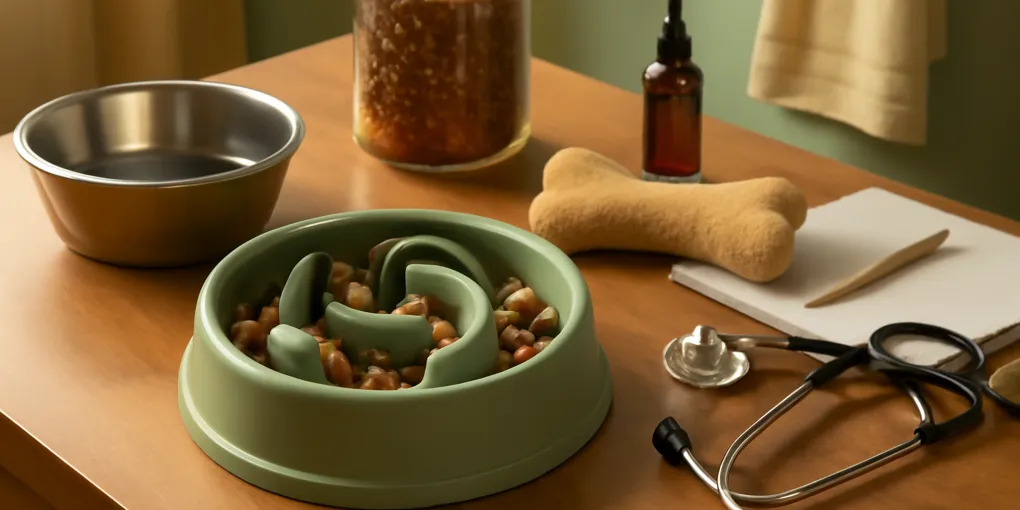
Best Slow Feeder Bowls for Dogs: How to Choose Safely
Buyer's GuideOutward Hound Fun Feeder Dog Bowl
Top PickBest fit: dogs that gulp meals
Check current price
Quick picks
| Product | Key Specs |
|---|---|
| See price on Amazon |
|
| See price on Amazon |
|
| See price on Amazon |
|
| See price on Amazon |
|
Product availability, certifications, and retailer details can change; check the current Amazon page before buying.
Quick verdict by pet and setup
A slow feeder bowl can help some dogs eat more slowly, but it should be selected around muzzle shape, anxiety level, cleaning, and the feeding plan rather than bought as a one-size-fits-all fix. It is not a treatment for bloat, vomiting, food guarding, or medical appetite problems. Dogs that gulp, cough, vomit, guard food, or seem distressed around meals need a veterinary and behavior-aware plan.
Use this guide alongside our automatic feeder review if your goal is meal timing as well as eating speed. Scheduled feeding and slower eating solve different problems and can fail in different ways.
How we evaluated the options
| Factor | Weight | What we looked for | How it affected this article |
|---|---|---|---|
| Research | 30% | Alignment with veterinary, behavior, and welfare guidance | We prioritized tools that support normal feeding behavior without claiming medical benefits. |
| Evidence Quality | 25% | Claims tied to credible sources and clear limits | Health claims were restricted to guidance from veterinary or welfare sources. |
| Value | 20% | Daily usefulness relative to cost and maintenance | Simple, washable, measurable products scored above novelty features. |
| User Signals | 15% | Repeated owner reports about failure points | We used user reports only to identify sizing, cleaning, chewing, noise, and durability risks. |
| Transparency | 10% | Materials, dimensions, instructions, and warnings | Products with clear specs and conservative labels earned more confidence. |
Quick picks by product type: Best slow feeder bowls
| Check price | Pick | Best fit | Watch-outs |
|---|---|---|---|
| View Amazon | Outward Hound Fun Feeder | Most healthy adult dogs needing slower kibble meals | Ridge depth may frustrate flat-faced dogs |
| View Amazon | Leashboss slow feeder insert | Existing bowls and travel | Fit depends on bowl size |
| View Amazon | Stainless slow feeder bowl | Chewers and dishwasher-focused homes | Designs can be less challenging |
| View Amazon | Lick mat for wet food | Calm enrichment and soft food | Supervise chewers |
| View Amazon | Snuffle mat | Nose work and scattered kibble | Needs washing; not for shredders |
| View Amazon | Raised wide slow feeder | Large dogs needing stable access | Height should not strain posture |
Why eating speed matters
Fast eating can lead to coughing, regurgitation, air swallowing, food stealing, and caregiver stress. A slower bowl creates small barriers that make the dog work around ridges or pockets. For dry kibble, an Outward Hound Fun Feeder-style maze can stretch a meal without adding calories; for wet food, a LickiMat-style surface slows licking without forcing the muzzle through plastic ridges. The goal is not to make dinner frustrating. The goal is to stretch a meal enough that the dog breathes, chews more normally, and leaves the bowl calmer.
The product should match the dog. A deep maze bowl may be fine for a long-nosed Labrador and unfair for a brachycephalic dog that cannot reach food in corners. A flimsy plastic bowl may be unsafe for a chewer; a stainless option is easier to inspect but often less challenging. A snuffle mat may be excellent for a calm dog and a shredding hazard for another. Use a stopwatch on the first three meals: if the bowl turns a 30-second gulp into a two- to five-minute meal without pawing, flipping, or guarding, it is doing the right job.
What slow feeders cannot promise
No bowl can guarantee prevention of gastric dilatation-volvulus, vomiting, or choking. Risk depends on breed, anatomy, health status, meal size, exercise timing, stress, and medical history. If your dog has repeated vomiting, retching, abdominal swelling, collapse, weight loss, coughing while eating, or sudden appetite change, the answer is veterinary care, not a harder maze.
Slow feeders can also worsen conflict. In multi-dog homes, the slow dog may still be eating while another dog finishes and hovers. Feed dogs separately until everyone has finished and bowls are removed.
How to choose the design
Start with difficulty level. For a dog that inhales kibble but is not anxious, a shallow maze bowl is usually enough. For a dog that becomes frantic when blocked from food, begin with a wider bowl, a scattered-kibble towel game, or several mini meals rather than the most complicated puzzle. For wet food, a lick mat can slow intake without forcing the muzzle through ridges.
Material matters. Stainless steel is durable and easier to inspect, but many stainless slow feeders have simpler patterns. Plastic can offer more shapes but should be BPA-free, intact, and replaced when scratched. Silicone inserts are flexible but can be chewed. Dishwasher-safe claims help only if your household actually washes the product after sticky meals.
Fit and posture
Watch the dog from the side. The neck should not twist sharply, the paws should not pin the bowl in panic, and the dog should be able to access food without scraping the nose. Flat-faced dogs, seniors, and dogs with dental pain may need wide shallow options. Large dogs may need a stable non-slip base so the bowl does not slide across the floor.
Do a first test with part of the meal, not the full dinner. If the dog solves it calmly, continue. If the dog barks, paws violently, flips the bowl, or walks away hungry, simplify.
Cleaning and food safety
Ridges collect saliva, crumbs, oil, and wet-food residue. Wash after every wet-food meal and frequently for dry food. Look into corners and under silicone inserts. If the bowl smells sour after washing, replace it. If scratches appear in plastic, retire it because grooves can hold grime.
A slow feeder that cannot be cleaned well is not a bargain. Sometimes the best choice is two simple bowls, a kitchen scale, and smaller meals.
Feeding protocol
Measure the meal in grams, especially if weight control is part of the plan. Pour half into the slow feeder and keep half as hand-delivered training rewards, a scatter game, or a second small meal. This lowers pressure around the bowl and gives the dog a chance to succeed.
Keep other pets away. Remove the bowl when the meal ends. Check stool, vomiting, burping, begging, and body condition over several weeks. If slowing the meal does not improve the problem you are tracking, stop assuming the bowl is the answer and ask your veterinary team what to evaluate next.
FAQ
Are slow feeder bowls good for all dogs?
No. They are useful for many fast eaters but can frustrate flat-faced dogs, anxious dogs, seniors with pain, and destructive chewers. Match the design to the dog.
Can a slow feeder prevent bloat?
It cannot guarantee prevention. It may reduce gulping for some dogs, but bloat risk is multifactorial and emergency signs require immediate veterinary care.
How often should I wash it?
Wash after wet-food use and regularly for dry kibble. Deep ridges and inserts need more attention than a plain bowl because food residue hides in corners.
Sources and evidence notes
- American Kennel Club Canine Health Foundation. Bloat/GDV resources. Used for conservative bloat-risk wording.
- Merck Veterinary Manual. Gastric dilatation-volvulus in small animals. Used for emergency-sign framing.
- WSAVA Global Nutrition Committee. Nutrition toolkit. Used for weighing meals and body-condition context.
- AAHA. Canine life stage guidelines. Used for age- and health-aware feeding context.
Compare current slow-feeder listings by material, groove depth, bowl size, cleaning ease, recent reviews, and return policy before buying.
Match the bowl to the behavior
Fast eating has different patterns. Some dogs vacuum food because meals are exciting. Some compete with other pets. Some have learned scarcity from a previous home. Some are genuinely hungry because the diet, calorie target, or medical status needs review. A slow feeder helps most when the main issue is mechanics: the dog can eat safely but needs a structure that prevents one huge mouthful after another.
If the dog guards food, separates from the household, growls, freezes, or stiffens when people approach, choose management and professional guidance over a harder bowl. Making food slower can increase frustration and guarding if the dog already feels threatened. Feed in a quiet closed room and discuss the behavior with a qualified professional.
If the dog vomits soon after meals, note whether it is true vomiting, regurgitation, coughing, or gagging. Those are different medical clues. A slow feeder may reduce gulping, but repeated episodes deserve a veterinary exam, especially with weight loss, lethargy, diarrhea, blood, or pain.
Alternatives to a maze bowl
A slow feeder is only one tool. Scattering kibble across a clean mat can slow intake without forcing the muzzle into ridges. A snuffle mat adds scent work but must be washed and supervised. Several mini meals can reduce urgency. Hand-feeding part of the meal during training can turn calories into calm practice. Wet food spread thinly on a lick mat may work better for dogs that swallow canned food in chunks.
For dogs on prescription diets or strict calorie plans, weigh every option. Treat-dispensing toys and snuffle games can accidentally add calories if the household treats them as extras. Put the entire daily ration in a container each morning and distribute from that container so enrichment does not become overfeeding.
First-week test plan
Day one: put one-third of the normal meal in the slow feeder while the dog is alone and relaxed. Time the meal, watch posture, and remove the bowl when finished. Day two: use half the meal if day one was calm. Day three: try the full portion only if the dog did not paw violently, flip the bowl, cough, or abandon food.
During the week, record meal time, burping, coughing, vomiting, stool quality, and begging. A useful bowl usually changes meal pace without creating a new problem. If the dog becomes frantic, choose a simpler design. If the dog solves the bowl in thirty seconds, use a different pattern or combine it with measured scatter feeding.
Replacement signs
Replace plastic when ridges are scratched, chewed, cloudy, or smelly after washing. Replace silicone inserts when they tear or no longer grip the bowl. Replace any design that slides, tips, or makes the dog twist awkwardly. A cheap bowl replaced at the right time is safer than an expensive bowl kept too long.
The best slow feeder is the one that creates calm, clean, measurable meals in your actual home. If a plain bowl plus smaller portions does that better, use the plain bowl and spend the saved money on veterinary care, training, or higher-quality food storage.
Final buying filter
Before checkout, compare the product against three household realities: who will clean it, where it will live, and what you will do if the pet dislikes it. A good pet product should make the safe routine easier on an ordinary tired weekday. If it requires perfect supervision, unusual cleaning discipline, or a room layout you do not have, choose the simpler option.
Look for transparent dimensions, material descriptions, replacement-part availability, and a return window. Read negative reviews for patterns rather than drama: repeated reports of leaking, pump failure, chewing, staining, sharp edges, unstable bases, or impossible cleaning deserve attention. Positive reviews are useful when they describe the pet’s size, age, behavior, and setup because that lets you compare the reviewer’s home to yours.
Introduce one new product at a time. Keep the old routine available during the transition, take notes for a week, and decide based on the animal’s behavior rather than the product page. If the pet is calmer, safer, cleaner, and easier to monitor, the purchase is doing its job. If the product hides symptoms, increases conflict, or adds maintenance that no one completes, it is not evidence-based care.
A conservative plan also includes a stop rule. Decide in advance what would make you remove the product, call the veterinary team, or return to the previous routine. Stop rules keep normal trial-and-error from becoming weeks of avoidable stress. Useful stop rules include refusal to eat or drink, repeated vomiting, new house-soiling, destructive chewing, fear that lasts beyond the first introduction, guarding, limping, coughing, collapse, or any sudden change in appetite, thirst, weight, stool, urine, or behavior.
For households with several caregivers, write the rule where everyone can see it. Pet products often fail because one person understands the caution and another person only sees the convenience. Shared notes about cleaning, placement, refill dates, and behavior observations make the product safer and make veterinary conversations more specific if the plan does not work.