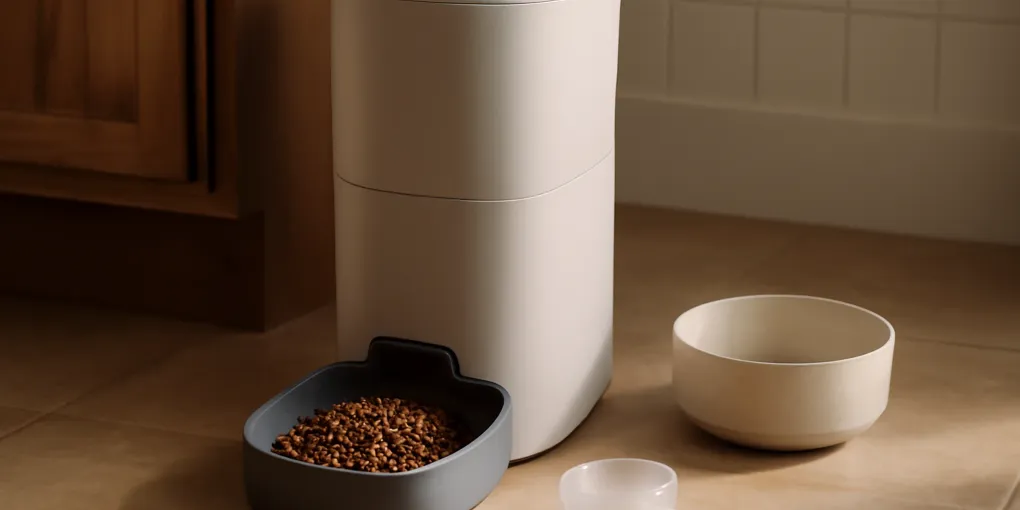
PetSafe Smart Feed automatic feeder
Best fitBest for: | PetSafe Smart Feed automatic feeder | Scheduled dry-food portions for healthy pets | Test portion accuracy with your k
Varies
Quick picks
| Product | Key Specs |
|---|---|
| See price on Amazon |
|
| See price on Amazon |
|
| See price on Amazon |
|
Product availability, certifications, and retailer details can change; check the current Amazon page before buying.
Quick verdict
The PetSafe Smart Feed is most useful for healthy pets that need predictable dry-food portions when the caregiver is home but busy. It is not a replacement for medical monitoring, wet-food care, or daily human observation, and it should not be the only feeding plan for pets with unstable appetite or disease. This guide treats products as management tools, not medical treatment. If a pet has pain, appetite change, vomiting, diarrhea, heat stress, urinary changes, sudden fear, or any other concerning sign, use a veterinarian rather than a shopping list as the first intervention.
How we evaluated the options
| Factor | Weight | What we looked for | How it applies here |
|---|---|---|---|
| Research | 30% | Fit with veterinary, welfare, and behavior guidance | We favored setups that reduce risk while preserving normal species behavior. |
| Evidence Quality | 25% | Specific claims tied to credible sources | We avoided cure-style promises and separated evidence from marketing. |
| Value | 20% | Useful daily function for the cost | Durable, washable, repairable products scored higher than novelty items. |
| User Signals | 15% | Repeated owner reports about failure points | Reviews were used to identify slipping, cleaning, noise, chewing, and sizing issues. |
| Transparency | 10% | Materials, dimensions, limits, and warnings | Clear specifications and conservative safety language improved confidence. |
Product shortlist and shopping links
| Check price | Option | Best fit | Watch-outs |
|---|---|---|---|
| Check price on Amazon | PetSafe Smart Feed automatic feeder | Scheduled dry-food portions for healthy pets | Test portion accuracy with your kibble |
| Search Amazon | PetSafe Healthy Pet Simply Feed | Non-Wi-Fi scheduled feeding | Less remote control |
| Search Amazon | WOPET automatic pet feeder | Budget scheduled feeding comparison | Check cleaning and app reviews |
| Search Amazon | Kitchen food scale | Calorie-plan verification | Requires manual weighing |
Use the comparison table as a starting point for your household routine: portion size, kibble shape, cleaning access, backup feeding plan, and app reliability matter more than headline convenience. Test any feeder for several days while you are home before trusting it during travel or long work shifts.
What it does well
An automatic feeder can reduce missed meals, smooth early-morning begging, and help caregivers divide dry food into smaller portions. The PetSafe Smart Feed category is appealing because scheduling is easier than hand-measuring every meal during a hectic day. The real value is consistency, not replacing care.
For cats that graze too heavily or dogs that inhale one large meal, scheduled portions can support a veterinarian-approved plan. The feeder also creates a written routine: what time food is offered and roughly how much. That can help when several household members share care. A useful way to evaluate the setup is to write down the baseline before changing anything. Note where the pet eats, rests, plays, drinks, hides, and asks for attention. Then change one variable at a time and observe the result for several days. This makes it easier to tell whether the product helped or merely looked organized in the room. It also prevents the common mistake of adding three new items at once and not knowing which one caused avoidance, chewing, overexcitement, or better calm.
Cleaning is part of safety, not a cosmetic detail. Food residue, saliva, dust, fur, and moisture change how a product performs over time. Smooth surfaces, removable parts, manufacturer cleaning instructions, and visible wear points matter more than a dramatic feature list. If an item cannot be cleaned at the frequency your household realistically maintains, choose a simpler option.
Supervision is still necessary during the first uses. Watch body language: loose posture, normal breathing, willingness to disengage, and normal appetite are reassuring. Hard staring, frantic pawing, repeated startle responses, guarding, panting unrelated to temperature, or refusal to approach suggest the setup needs to be easier, quieter, cooler, farther from traffic, or removed entirely.
Where it can fail
Kibble shape matters. Large, oily, irregular, or fragile pieces may bridge, jam, or crumble. Portion accuracy can vary by food density. Pets may paw at the chute, knock the unit, chew cords, or guard the feeding area. Wi-Fi features can fail, apps can change, and power interruptions happen. A backup plan is mandatory.
The biggest welfare failure is assuming that food delivery equals pet care. Someone still needs to check whether the pet ate, whether vomiting occurred, whether water intake changed, and whether the feeder is dirty or blocked.
Who should avoid relying on it
Avoid sole reliance for pets with diabetes, kidney disease, gastrointestinal disease, medication-timed meals, recent appetite change, food guarding, destructive chewing, or a history of foreign-body ingestion. Multi-pet homes need separation or microchip-controlled feeding; one feeder can become a conflict point if a dominant pet steals meals.
If weight loss is the goal, use the feeder only under a veterinary calorie plan. Measuring by cup volume is less accurate than weighing food in grams, and treats or stolen food can erase the intended deficit.
Cleaning and setup
Before first use, wash removable food-contact parts according to the manual and run several test portions into a measuring cup or kitchen scale. Record variance across at least ten dispenses. Place the feeder on a stable surface, protect cords, and avoid humid rooms. Empty and clean the hopper regularly; stale kibble and crumbs can attract pests and change odor.
During the first week, be present for several scheduled meals. Confirm the pet approaches calmly, eats normally, and does not attack the device. If the feeder creates anxiety, move it, simplify the schedule, or return to hand feeding.
Portion accuracy test
The PetSafe Smart Feed category only helps if the amount dispensed matches the feeding plan. Before trusting it, run at least ten test dispenses with the exact kibble your pet eats and weigh each serving in grams. Round kibble, flat kibble, oily coatings, and broken pieces can move differently through the chute, so cup settings are less reliable than a scale.
If the goal is weight control, ask the veterinary team for a daily calorie target and translate that target into grams of the specific food. Then split that amount across scheduled meals and treats. Do not use app convenience to make portion changes without checking body condition, appetite, stool, and stolen food from other pets.
Reliability and backup plan
An automatic feeder is a convenience device, not a caregiver. Wi-Fi outages, app changes, power loss, jammed kibble, tipped bowls, and curious pets can all interrupt feeding. Use batteries if the model supports them, keep the feeder where it cannot be knocked down easily, and verify actual meals during the first week.
A good backup plan names the human who checks the hopper, the bowl, and the pet. For travel, a feeder can support a pet sitter, but it should not replace one. The sitter still needs to confirm eating, water intake, litter-box or yard output, vomiting, and whether the machine is clean.
Who should not rely on it
Do not make an automatic feeder the primary plan for pets with diabetes, kidney disease, gastrointestinal disease, recent appetite changes, medication-timed meals, food guarding, destructive chewing, or a history of foreign-body ingestion. Cats on wet-food hydration plans and pets that need close symptom monitoring usually require more human involvement than a dry-food feeder can provide.
Multi-pet homes need physical separation or a feeding system matched to each animal. One open bowl can let the fastest pet steal food while the slower pet loses calories. If the feeder increases conflict, it has failed even if the app works perfectly.
Cleaning and kibble handling
Empty the hopper on a schedule rather than endlessly topping it off. Old kibble oxidizes, crumbs build up near the mechanism, and food-contact parts collect saliva and oil. Wash removable pieces according to the manual and let them dry fully before refilling. Keep the feeder away from humid laundry rooms and splash zones.
Setup test before daily use
Start with a dry run while you are home for the whole day. Program the smallest practical schedule, dispense meals into the normal bowl position, and watch whether the sound startles the pet. Some cats approach the machine only after the motor stops; some dogs rush the bowl and may shove the unit. Adjust placement before the habit forms.
Next, test the hopper with three days of normal kibble but do not leave it unchecked. Look for bridging, dust accumulation, crumbs near the chute, and whether portion size changes as the hopper becomes less full. If pieces are large, soft, oily, or irregular, the feeder may work on day one and jam later. Record the kibble brand and shape in your notes so a future diet change triggers a new test.
Then test the human workflow. Who refills it, who cleans it, who receives app alerts, and who notices if the pet did not eat? A feeder that depends on one person’s phone can fail when that person travels, changes devices, or ignores notifications. Shared care households should keep the schedule visible outside the app.
Finally, test the pet’s behavior around anticipation. If the pet begins guarding the machine, waking everyone before dispense time, or hovering anxiously, reduce schedule complexity and add human-delivered meals. Convenience should not make feeding feel unpredictable or socially isolating for the animal.
Keep a written manual override beside the feeder. If the app fails, another caregiver should know how to pause schedules, dispense one meal, remove the bowl, and return to hand feeding without guessing.
FAQ
Is the PetSafe Smart Feed worth it?
It can be worth it for healthy pets eating dry food on a predictable schedule, especially when caregivers want smaller measured meals. It is a poor fit when medical monitoring, wet food, or direct observation is the main need.
Can it help with weight loss?
Only as part of a veterinary calorie plan. The feeder can deliver scheduled portions, but grams, treats, stolen food, and body-condition checks still determine whether the plan is working.
Which feeding routine pairs with the PetSafe Smart Feed?
Use this review with our automatic feeder introduction guide when transitioning a cat gradually instead of making the device appear at every meal overnight.
Evidence notes and sources
- WSAVA Global Nutrition Guidelines support body-condition scoring, diet-history review, and nutrition decisions tied to the individual pet: https://wsava.org/global-guidelines/global-nutrition-guidelines/
- AAHA weight-management guidance emphasizes measured feeding, follow-up, and veterinary calorie planning: https://www.aaha.org/resources/2021-aaha-weight-management-guidelines-for-dogs-and-cats/
- Cornell Feline Health Center explains appetite changes as clinically important in cats, which is why automated feeding still needs observation: https://www.vet.cornell.edu/departments-centers-and-institutes/cornell-feline-health-center/health-information/feline-health-topics/feeding-your-cat
- PetSafe’s Smart Feed product information and manuals are the starting point for model-specific cleaning, portion, power, and app limitations: https://www.petsafe.com/product/smart-feed-automatic-pet-feeder/
Bottom line
The PetSafe Smart Feed is a useful scheduler for stable dry-food routines, not a medical monitor or pet sitter. Buy it only if you will test portion accuracy, clean it consistently, and keep a human backup plan in place.