Best Dog Cooling Mats for Heat Safety: Evidence-Based Buying Guide
Buyer's GuideGreen Pet Dog Cooling Mat
Top PickBest fit: supervised cool resting spot
Check current price
Quick picks
| Product | Key Specs |
|---|---|
| See price on Amazon |
|
| See price on Amazon |
|
| See price on Amazon |
|
| See price on Amazon |
|
Product availability, certifications, and retailer details can change; check the current Amazon page before buying.
Quick verdict by pet and setup
A dog cooling mat can be useful as one layer in a heat-safety plan, especially for supervised indoor rest after walks, but it is not a treatment for overheating and it cannot make hot cars, direct sun, humid rooms, or intense exercise safe. The safest mats are easy to clean, large enough for the dog’s chest and belly, resistant to chewing, and introduced before the hottest part of the day. If a dog is panting hard, drooling, weak, vomiting, confused, collapsing, or unable to settle, stop shopping and contact a veterinarian or emergency clinic.
Use this guide with our dog heatstroke prevention guide when an older dog has arthritis, heart disease, airway disease, obesity, or medication changes that affect heat tolerance. A cooling mat is only a surface. The real protocol is shade, water, timing, air movement, shorter outings, and a human who checks the dog instead of assuming a product solved the risk.
How we evaluated the options
| Factor | Weight | What we looked for | How it affected this article |
|---|---|---|---|
| Research | 30% | Alignment with veterinary, behavior, and welfare guidance | We prioritized tools that support normal cool-rest behavior without claiming medical benefits. |
| Evidence Quality | 25% | Claims tied to credible sources and clear limits | Health claims were restricted to guidance from veterinary or welfare sources. |
| Value | 20% | Daily usefulness relative to cost and maintenance | Simple, washable, measurable products scored above novelty features. |
| User Signals | 15% | Repeated owner reports about failure points | We used user reports only to identify sizing, cleaning, chewing, noise, and durability risks. |
| Transparency | 10% | Materials, dimensions, instructions, and warnings | Products with clear specs and conservative labels earned more confidence. |
Quick picks by product type: Best dog cooling mats
| Check price | Pick | Best fit | Watch-outs |
|---|---|---|---|
| View Amazon | Green Pet Shop pressure-activated cooling mat | Indoor supervised rest after walks | Gel mats require chew supervision |
| View Amazon | Arf Pets self-cooling solid gel mat | Dogs that need a firm washable surface | Check seams and size |
| View Amazon | K&H Cool Bed water-filled dog bed | Crate-free indoor lounging | Heavy when filled; leaks are possible |
| View Amazon | Elevated mesh cot | Airflow under the dog outdoors in shade | Not enough during dangerous heat |
| View Amazon | Cooling crate pad with removable cover | Short supervised crate rest in climate control | Avoid if the dog chews bedding |
| View Amazon | Washable cotton mat plus fan | Budget cooling station indoors | Less cooling effect than gel/water designs |
Gel, water, and mesh solve different problems
A pressure-activated gel mat is the simplest portable option: unfold it on a hard, shaded floor and the dog can use it without a freezer, hose, or outlet. Its limits are equally practical. The gel warms during a long rest, folded seams can become chew targets, and a puncture ends the product’s useful life. Check the label for the recommended rest or recharge interval rather than assuming “self-cooling” means continuously cold. A gel mat is the better match for a non-chewing dog that changes resting spots during the day, not for an unsupervised puppy or a dog that digs before lying down.
A water-filled bed spreads the dog’s weight over a broad surface and can suit heavier dogs that dislike the crinkle or firmness of gel. It is also cumbersome: choose its permanent location before filling it, follow the manufacturer’s fill instructions, and place it where a slow leak cannot damage wood flooring. Water beds are poor travel mats and a risky choice for dogs that scratch bedding. The K&H Cool Bed category makes the most sense for a dog that uses one predictable indoor resting station.
An elevated mesh cot cools differently. Air can move beneath the dog’s trunk, but the cot does not provide the cool contact surface of gel or water. It works best on a shaded patio or beside a fan, with all four legs stable and enough deck area for the dog to turn without stepping off an edge. Check the fabric tension and frame joints for a senior dog: a sagging center or tall rail can make getting up harder. A cot left in direct sun can still become hot, and airflow does not make dangerous outdoor temperatures safe.
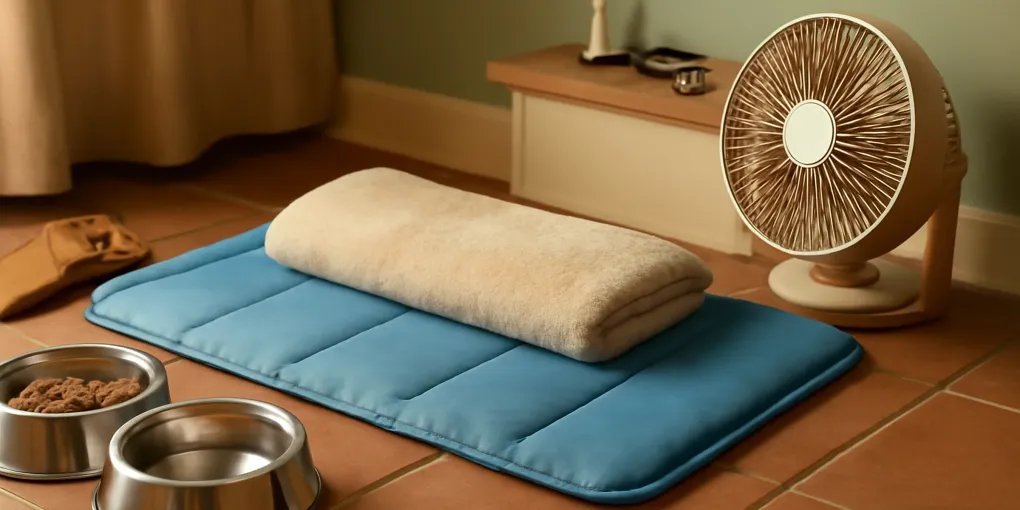
A thin washable pad plus a fan is the lowest-risk choice for a bedding chewer because there is no gel or water chamber to puncture. It offers less cooling, but the cover can go through a normal wash cycle and the station is easy to duplicate in another room. Keep electrical cords outside the dog’s reach and never position a fan so it blocks the only path away from the bed.
Test cooling performance in the room where it will live
Do the first trial on a mild day. Note how the surface feels before use, let the dog choose it, and check again after 10 to 15 minutes. The useful observations are whether the mat stays flat, the dog can rise without slipping, seams remain intact, and the surface recovers after the manufacturer’s stated recharge period. A mat that feels cold in an air-conditioned shop may behave differently beside a sunny window or on a warm car floor.
For crate use, confirm that the mat lies flat without curling against the door, blocking vents, or reducing the dog’s ability to stand and turn. Remove it at the first bite mark or exposed filling. For travel, keep the normal heat controls in place: climate control while driving, water stops, and never leaving the dog in a parked vehicle. The mat is cargo and comfort gear, not a reason to accept a warmer cabin.
What a cooling mat can and cannot do
A cooling mat helps by giving the dog a cooler contact surface. That can make a resting spot more appealing after a warm walk or during a stuffy afternoon. It does not lower body temperature reliably during heatstroke, does not protect a dog left outside in direct sun, and does not replace water, ventilation, or veterinary care. Dogs cool themselves differently than people, and short-nosed, overweight, very young, very old, dark-coated, anxious, or medically fragile dogs may struggle sooner than a caregiver expects.
The practical question is not whether the surface feels cool in your hand. The question is whether the dog chooses it voluntarily, breathes normally on it, gets up easily, and leaves it without guarding or chewing. A mat that the dog avoids is clutter. A mat the dog shreds can become an ingestion hazard. A mat that tricks the household into walking at noon is worse than no mat.
Look for a product that fits your actual routine. If you need a hallway station after morning walks, a thin gel mat may work. If you need patio airflow during shaded coffee breaks, an elevated mesh cot plus water may be safer. If the dog sleeps in a crate, use only bedding that the dog does not chew and that does not block airflow.
Sizing and placement
Measure the dog’s shoulder-to-tail resting length and buy large enough for the chest, abdomen, and inner thighs to contact the surface. Tiny mats only cool elbows. For long-bodied dogs, two mats side by side may work better than one undersized premium product. Place the mat where the dog already rests: near a fan, away from sun patches, and not in a traffic lane where children or other pets step over the dog.
Test the mat before you need it. Put it down on a mild day, reward calm investigation, and let the dog leave. Do not lure a heat-stressed dog onto a strange slippery surface while everyone is worried. If the dog has mobility issues, avoid slick covers and raised edges that make standing harder.
Chewing, cleaning, and durability
Chewing is the main reason to avoid gel mats for some dogs. Puppies, anxious dogs, and known fabric shredders should be supervised closely or given a non-gel alternative. Inspect corners, seams, and surface scratches weekly. If the cover leaks, smells strange, or develops sticky residue, remove it.
Cleaning matters because cooling mats sit under sweaty paws, drool, shed hair, and outdoor dust. Prefer smooth wipeable surfaces or removable covers that can be washed and dried fully. A product that cannot be cleaned often enough will become unpleasant, especially in humid homes.
A safe cooling-station protocol
Choose the coolest indoor room, add water within easy reach, and use a fan or air conditioner when available. After warm walks, offer the mat before the dog is frantic. Watch breathing rate, gum color, coordination, willingness to drink, and ability to settle. End outdoor sessions earlier than you think, especially on humid days.
If your dog seems overheated, move to shade or air conditioning, offer small amounts of water if alert, begin gentle cooling with cool water as advised by veterinary emergency guidance, and call a veterinarian. Do not rely on a mat as the intervention.
Sources and evidence notes
- American Veterinary Medical Association. Hot weather pet safety. Used for heat-stress warning signs and the recommendation to treat heat illness as urgent veterinary care.
- Merck Veterinary Manual. Heatstroke in dogs. Used for conservative language around cooling, collapse, and immediate care.
- WSAVA Global Nutrition Committee. Nutrition toolkit. Used for body-condition and feeding-plan framing.
- AAHA. Canine life stage guidelines. Used for preventive-care framing rather than product-first claims.
This article does not diagnose, treat, or replace a veterinarian. Compare current cooling technology, sizing, chewing risk, and label details directly before buying.
Frequently Asked Questions
- They can be safe for supervised dogs that do not chew bedding. They are a poor fit for dogs with a history of shredding, swallowing fabric, or guarding resting spots. Inspect the mat regularly.
- No. It may support comfort during rest, but heatstroke prevention depends on timing walks, avoiding hot cars and direct sun, providing water and shade, using climate control, and recognizing warning signs early.
- Only if the dog is comfortable, the crate stays climate controlled, airflow remains good, and the dog does not chew bedding. Never use crate bedding to justify leaving a dog in heat.