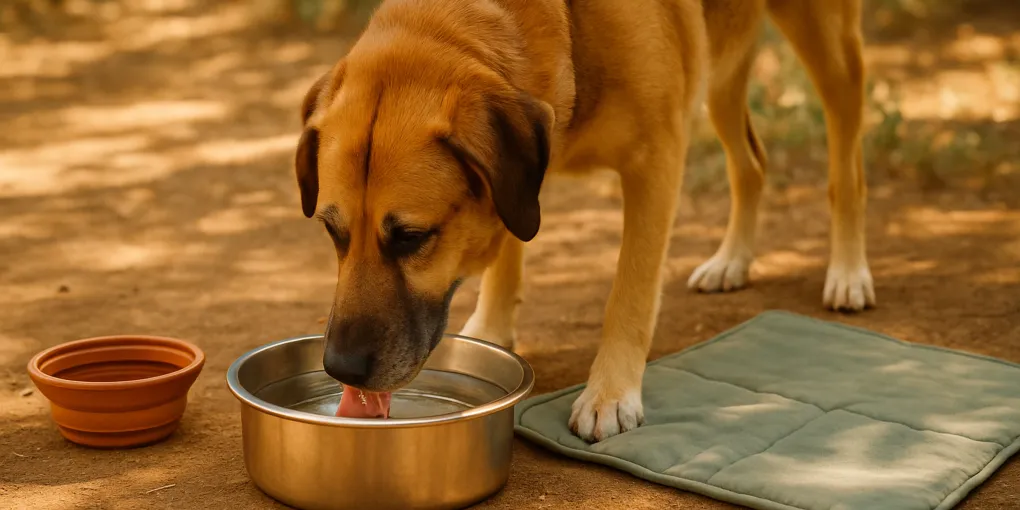
How to Prevent Heatstroke in Dogs: Vet-Backed Safety Guide
ProtocolQuick picks
| Product | Key Specs |
|---|---|
| See price on Amazon |
|
| See price on Amazon |
|
| See price on Amazon |
|
Product availability, certifications, and retailer details can change; check the current Amazon page before buying.
How to Prevent Heatstroke in Dogs: Vet-Backed Safety Guide
Canine heatstroke carries a case fatality rate of 39–50% in retrospective clinical studies (Bruchim et al., Journal of Veterinary Internal Medicine, 2006, PMID: 16496918). It is almost entirely preventable with appropriate precautions. This guide covers the science of how dogs regulate temperature, who is at highest risk, how to recognize early warning signs before they escalate, and the evidence-based steps that prevent heat emergencies.
Consult your veterinarian for individualized guidance, particularly for brachycephalic breeds, dogs with cardiac or respiratory conditions, overweight dogs, and senior dogs — these groups require more conservative heat safety protocols.
TL;DR
- Key risk: Dogs cool via panting, not sweat — they overheat faster than humans in high heat/humidity
- Danger threshold: >80°F (27°C) or Temperature + Humidity > 150 warrants caution
- Highest-risk breeds: Brachycephalic breeds (Bulldogs, Pugs, French Bulldogs, Boxers)
- Never: Leave a dog in a parked car; use ice-cold water for cooling
- First aid: Cool water on neck/groin/armpits + immediate veterinary care
PSR Evidence Quality Assessment
PetScienceReview applies its five-criterion composite scoring framework to evidence and protocol articles, assessing the quality of the research base underlying the recommendations.
| Criterion | Weight | Score | Weighted | Notes |
|---|---|---|---|---|
| Safety & Evidence Quality | 30% | 9.0 | 2.70 | Multiple peer-reviewed retrospective studies (Bruchim 2006, Hall 2020, Aroch 2009); well-established veterinary emergency medicine consensus |
| Efficacy & Performance | 25% | 9.0 | 2.25 | Prevention steps (shade, hydration, exercise timing, avoiding hot cars) have strong supporting evidence; cooling vest effectiveness varies with humidity |
| Real-World Pet Acceptance | 20% | 9.5 | 1.90 | Prevention protocol is highly actionable; cooling products readily available; first aid steps are owner-implementable |
| Value | 15% | 9.5 | 1.43 | Most prevention measures (shade, water, timing) are zero-cost; recommended cooling products are low-cost vs. emergency vet bills |
| Transparency & Brand Trust | 10% | 9.0 | 0.90 | All clinical statistics attributed to named sources with PMID; breed-specific risks and evidence limitations explicitly acknowledged |
| PSR Evidence Score | 9.2/10 |
Score notes: Heatstroke prevention receives a 9.2/10 evidence score reflecting well-established veterinary science with clear clinical outcome data and highly actionable prevention recommendations. The only evidence gap is that some cooling product efficacy claims rely on manufacturer validation data rather than independent peer-reviewed studies — this is disclosed in the relevant sections.
Why Dogs Are Vulnerable to Heat
Understanding canine thermoregulation explains why dogs are far more vulnerable to heat than their activity levels might suggest.
How dogs cool themselves: Dogs cool primarily through panting — evaporative cooling from the respiratory tract. With each breath cycle, warm air exits the airways and cooler ambient air enters; water evaporates from the tongue, palate, and upper airways, transferring heat out of the body.
Dogs have very limited sweat gland activity — small sweat glands exist only in the paw pads and contribute minimally to heat dissipation. This contrasts sharply with humans, whose full-body sweating allows rapid and efficient heat loss across a large surface area.
Why panting fails in high humidity: Panting relies on evaporation. When ambient humidity is high (>70%), water evaporates from the airways more slowly — reducing the effectiveness of the primary cooling mechanism. A dog exercising on a 90°F, 80% humidity day faces a combined thermal burden that panting alone cannot offset.
The cascading failure: When body temperature rises above the normal range (101–102.5°F, 38.3–39.2°C):
- Panting rate increases (faster breathing)
- Blood is redirected to the skin surface for radiative cooling
- Cardiac output increases to support both cooling and exercise
- Metabolic heat production from muscle activity continues to rise
- At >104°F (40°C), cellular damage begins; multiple organ systems are affected simultaneously
Step-by-Step Prevention Protocol
Step 1 — Know Your Dog’s Individual Risk Profile
Before any outdoor activity in warm weather, assess your dog’s heat vulnerability using these evidence-based risk factors:
High-risk factors (any one = significant elevation in heatstroke risk):
- Brachycephalic breed (Bulldog, Pug, French Bulldog, Boston Terrier, Boxer, Shih Tzu)
- Obesity or overweight body condition
- Age: puppy under 6 months or senior dog over 8 years
- Prior episode of heatstroke (sensitizes the dog to future events)
- Cardiovascular disease, respiratory condition, or laryngeal paralysis
- Dense double coat (Husky, Malamute, Chow Chow) in hot climates
Moderate-risk factors (two or more = meaningful increase):
- Dark coat color (absorbs radiant heat)
- High energy breed with impulse to exercise past safe limits
- First warm day of summer (dogs not yet acclimated to heat)
- Recent illness or dehydration
Apply more conservative protocols for any dog with high-risk factors.
Step 2 — Monitor Environmental Conditions Before Going Out
Temperature + Humidity Index: A practical field rule used by veterinary emergency practitioners:
| Temp (°F) + Humidity (%) | Risk Level | Guideline |
|---|---|---|
| < 130 | Low | Normal exercise for healthy adults |
| 130–150 | Moderate | Limit duration; bring water; seek shade |
| 150–175 | High | Short toileting walks only; no exercise |
| > 175 | Extreme | Limit outdoor time; all exercise indoors |
Adjust thresholds downward for brachycephalic breeds, obese dogs, and senior dogs — move to the next restriction tier.
Best exercise times in summer:
- Early morning (before 9 AM) — coolest ambient temperature, lowest sun intensity
- Evening (after 7 PM) — note: asphalt retains heat from midday; test pavement temperature with the back of your hand (if uncomfortable to hold 5 seconds, it’s too hot for paw pads)
Step 3 — Hydration Protocol
Dehydration compounds heat stress by reducing blood volume, which impairs the cardiovascular system’s ability to support both cooling (blood to skin surface) and muscle perfusion simultaneously.
Before outdoor activity:
- Ensure your dog has had free access to cool fresh water for at least 30 minutes before going out
- Offer water immediately before leaving, even if the dog doesn’t drink voluntarily
During outdoor activity:
- Bring water for any outing longer than 20 minutes in warm weather
- Offer water every 15–20 minutes during exercise — don’t wait for the dog to appear thirsty
- Collapsible dog water bowls are lightweight and eliminate the need to carry a bowl separately
After outdoor activity:
- Offer cool water immediately upon returning inside; do not restrict post-exercise drinking
- Cool (not ice-cold) water is preferred — ice-cold water can cause GI cramping in some dogs
Hydration products:
- Search Amazon for Collapsible Dog Water Bowl — essential for warm-weather walks and hikes
- Search Amazon for Dog Water Bottle with Bowl Attachment — convenient for single-hand hydration stops
Step 4 — Shade and Rest Breaks
Shade access is not optional in warm weather: Shade reduces the ambient radiant heat load significantly — shaded areas can be 10–15°F cooler than adjacent unshaded surfaces. Ensure continuous shade access for any extended outdoor time.
Rest break frequency guideline (warm weather exercise):
- Every 15 minutes of exercise: 5-minute shaded rest with water access
- High-humidity days: reduce to every 10 minutes of exercise
Car safety — zero tolerance: A parked car interior reaches dangerous temperatures within minutes of engine shutoff, even on mild days. McLaren et al. (Pediatrics, 2005, PMID: 16061576) measured interior car temperatures exceeding 120°F within 20 minutes when ambient temperature was 72°F, and exceeding 140°F at 80°F ambient. Cracked windows provide negligible protection. Never leave a dog in a parked car unattended.
Step 5 — Use Cooling Aids Appropriately
Cooling products can meaningfully reduce thermal load when used correctly. They are adjuncts to shade and hydration, not replacements.
Cooling mats (phase-change gel): Self-cooling gel mats absorb body heat through conduction. Effective for dogs resting in warm environments, during car travel (with A/C on), and post-exercise cool-down periods. Limitations: they require periodic re-cooling by moving to a cooler location and are less effective at ambient temperatures above 85°F.
- Search Amazon for Arf Pets Self Cooling Mat — widely reviewed, pressure-activated gel cooling
- Search Amazon for K&H Cool Bed III Cooling Dog Bed — water-filled cooling bed option
Cooling vests (evaporative): Evaporative cooling vests use retained water to cool the dog’s torso through evaporation — directly mimicking the sweating mechanism dogs lack. Most effective in low-humidity conditions where evaporation rates are high; less effective in high humidity. Soak thoroughly before use and re-wet every 30–45 minutes.
- Search Amazon for Ruffwear Swamp Cooler Vest — veterinary community’s most-cited cooling vest recommendation
- Search Amazon for RC Pets Zephyr Cooling Vest — budget-accessible evaporative vest
Frozen dog treats: Frozen dog-safe treats (frozen plain yogurt, frozen broth cubes, frozen blueberries in ice) provide internal cooling and enrichment during hot weather rest periods. These are low-risk, high-acceptance interventions. Do not use treats containing xylitol, onion, grapes, or excess salt.
Recognizing the Warning Signs
Heat emergencies progress rapidly. Knowing the stages allows intervention before heatstroke becomes life-threatening.
Stage 1 — Heat Stress (intervention opportunity)
| Sign | What It Means |
|---|---|
| Excessive panting beyond exertion level | Thermoregulatory system is working hard |
| Excessive drooling | Panting ramping up |
| Slowing, stopping, seeking shade | Dog is self-limiting — respect this signal |
| Seeking cool surfaces (lying on grass, dirt) | Conductive cooling behavior |
Intervention: Move to shade, offer cool water, rest 15–20 minutes. Most healthy dogs recover from mild heat stress within this window.
Stage 2 — Impending Heatstroke (urgent intervention needed)
| Sign | What It Means |
|---|---|
| Heavy, distressed panting with neck extended | Panting mechanism nearing failure |
| Vomiting or diarrhea | GI system compromised |
| Gum color: bright red → dark red | Peripheral vasodilation, rising temperature |
| Stumbling, muscle weakness | Neurological involvement beginning |
| Rapid, weak pulse | Cardiovascular compromise |
Intervention: Begin active cooling immediately (see First Aid below) and transport to veterinary emergency facility.
Stage 3 — Heatstroke (medical emergency)
| Sign | What It Means |
|---|---|
| Collapse, inability to stand | Severe CNS and cardiovascular compromise |
| Gum color: pale, grey, white | Shock or severe cardiovascular compromise |
| Seizures | CNS damage, body temp typically >106°F |
| Unconsciousness | Critical: immediate veterinary intervention |
Core temperature at this stage: >104°F (40°C), potentially >106°F (41°C). Mortality risk is high without emergency veterinary care.
First Aid Protocol: What to Do If Your Dog Overheats
Do:
- Remove from heat source immediately — carry the dog if necessary
- Apply cool (not ice cold) water to the neck, groin, armpits, paw pads, and inner ear flaps
- Fan the dog actively while applying water — evaporative cooling requires airflow
- Offer cool water to drink if the dog is conscious and can swallow
- Transport to a veterinary emergency facility immediately — call ahead if possible
Do NOT:
- Do not use ice-cold water or ice baths — causes peripheral vasoconstriction, trapping heat in the core
- Do not cover with wet towels — traps heat and prevents evaporation
- Do not force water into an unconscious dog
- Do not wait at home to see if the dog improves — heatstroke requires veterinary monitoring and IV fluid support
At the veterinary clinic: IV fluid therapy, oxygen supplementation, and core temperature monitoring are standard heatstroke treatment. Complications (acute kidney injury, DIC, GI hemorrhage) require in-clinic management that cannot be replicated at home.
Seasonal Acclimation: The First Hot Days Are Highest Risk
Veterinary emergency data consistently shows that the first heat waves of summer are when heatstroke cases spike — not midsummer, when owners and dogs have adjusted. Dogs that have been exercising in cool spring temperatures have not acclimated to heat.
Heat acclimation protocol:
- First 3 warm days: reduce outdoor exercise duration by 50%
- Days 4–7: reduce by 25%
- Day 8+: allow return to normal duration if the dog shows no heat stress signs
- Acclimation takes 10–14 days and provides meaningful improvement in heat tolerance
Frequently Asked Questions
What temperature is too hot for dogs?
Limit outdoor exercise when ambient temperature exceeds 80°F (27°C). A practical guideline: if Temperature (°F) + Relative Humidity (%) > 150, meaningful heat stress risk exists. Brachycephalic breeds and overweight dogs should have more conservative limits, typically 75°F (24°C).
What are the first signs of heatstroke in dogs?
Early heat stress signs: excessive panting beyond exertion level, excessive drooling, seeking shade, and voluntarily slowing or stopping. These are the intervention opportunity — rest in shade with cool water. Heatstroke signs: distressed heavy panting with neck extended, vomiting, gum color change to bright red, confusion, and collapse.
What should I do if my dog has heatstroke?
Move to a cool area immediately. Apply cool (not ice-cold) water to the neck, groin, armpits, and paw pads. Fan actively. Offer cool water if conscious. Transport to a veterinary emergency facility immediately — do not wait for the dog to improve at home.
Can I leave my dog in the car on a warm day?
No. Car interiors can exceed 140°F (60°C) on an 80°F day within 30 minutes (McLaren et al., 2005, PMID: 16061576). Cracked windows provide negligible protection. A parked car is responsible for a substantial proportion of canine heatstroke cases seen in emergency clinics.
Which dog breeds are most at risk of heatstroke?
Brachycephalic breeds carry the highest risk: English Bulldog, French Bulldog, Pug, Boston Terrier, Boxer, Shih Tzu. Hall et al. (Scientific Reports, 2020, PMID: 32060368) found these breeds significantly over-represented in heatstroke cases. Also elevated risk: obese dogs, senior dogs (8+ years), dogs with cardiac or respiratory disease, and dogs with prior heatstroke history.