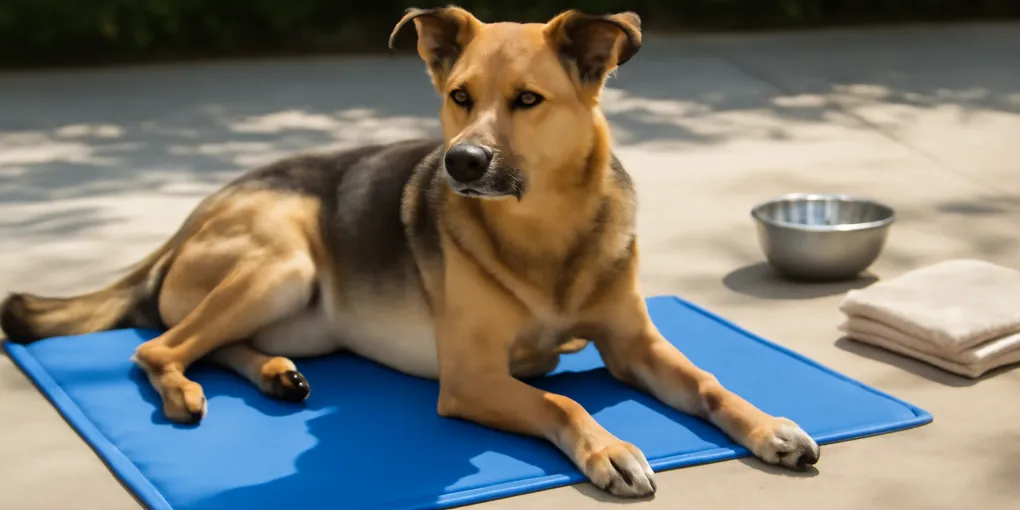
Dog Cooling Mat Safety Guide 2026: What Actually Helps in Hot Weather
Buyer's Guidepressure-activated dog cooling mat
Best fitBest for: for short supervised indoor or shaded rests.
Varies
Quick picks
| Product | Key Specs |
|---|---|
| See price on Amazon |
|
| See price on Amazon |
|
| See price on Amazon |
|
Product availability, certifications, and retailer details can change; check the current Amazon page before buying.
Medical Disclaimer
Heat illness can be life-threatening. If a dog has heavy uncontrolled panting, weakness, collapse, vomiting, diarrhea, confusion, seizures, dark red or pale gums, or a rectal temperature in a dangerous range, seek emergency veterinary care. Do not rely on a cooling mat as treatment.
How We Score This Buyer Guide
| Criterion | Weight | Score | Weighted | Why it matters for cooling mats |
|---|---|---|---|---|
| Research | 30% | 8.5 | 2.55 | Heat illness guidance is well established, while mat performance varies by design and environment. |
| Evidence Quality | 25% | 8.0 | 2.00 | Veterinary and animal-welfare sources support prevention priorities: shade, water, airflow, rest, and urgent care for red flags. |
| Value | 20% | 8.0 | 1.60 | A mat is useful only when paired with safer routines and realistic supervision. |
| User Signals | 15% | 8.0 | 1.20 | Buyers compare gel pads, elevated cots, washable covers, and large-dog sizing every summer. |
| Transparency | 10% | 9.0 | 0.90 | The score rewards products with clear sizing, easy-to-clean surfaces, conservative chew warnings, and realistic return policies. |
| Composite Score | 8.3/10 | Helpful comfort gear, not a substitute for heat-risk management. |
Quick Picks
- Choose a Search Amazon for pressure-activated dog cooling mat for short supervised indoor or shaded rests.
- Choose an Search Amazon for elevated mesh dog cot when airflow and durable outdoor use matter.
- Choose a Search Amazon for washable-cover cooling mat if your dog sheds heavily or uses the mat daily.
- Choose a Search Amazon for dog travel shade and water kit before long park, beach, or sports-field outings.
The Core Rule: Cooling Gear Adds Margin, It Does Not Create Safety
A cooling mat can make a resting spot more comfortable, but it cannot make a hot car safe, cannot erase humidity, and cannot protect a dog that keeps running past its limits. The American Veterinary Medical Association and veterinary emergency groups emphasize prevention: avoid hot vehicles, provide shade and water, exercise during cooler hours, and respond quickly to heat-illness signs.
That framing matters because summer pet products are easy to overtrust. A mat that feels cool in an air-conditioned room may warm quickly under a panting 80-pound dog on a humid patio. An elevated cot may improve airflow but still sits in hot ambient air. A gel pad may be useful for a calm senior dog but risky for a young dog that chews seams.
Buy the product that fits your dog’s behavior, then build a heat plan around it.
Comparison: Cooling Mat, Cot, or Shade Kit?
| Shop this option | Cooling option | Best use | Main limitation |
|---|---|---|---|
| Search Amazon for Gel cooling mat | Pressure-activated pad | Indoor rest, crate-adjacent lounge spot, shaded porch | Chew damage and warming during long use |
| Search Amazon for Elevated mesh cot | Raised breathable bed | Outdoor airflow and large dogs | Not truly cold; needs shade |
| Search Amazon for Washable cooling pad | Fabric-covered pad | Daily household use | Cooling effect may be milder |
| Search Amazon for Dog shade canopy | Portable shade | Sports sidelines and beach trips | Wind, setup, and supervision required |
| Search Amazon for Collapsible dog water bowl | Hydration support | Walks and car stops | Must be refilled and cleaned |
Sizing and Surface Checks
The mat should let the dog rest chest, abdomen, and thighs on the cooling surface without curling into a tight ball. For large dogs, two medium mats may work better than one undersized pad if the seams are safe and the dog does not chew.
Before buying, check:
- Stated dimensions, not just breed photos.
- Weight limit for elevated cots.
- Chew warnings and material notes.
- Whether replacement covers or pumps are irrelevant; this is passive gear.
- Cleaning method and drying time.
- Return policy if the dog refuses the surface.
After arrival, do a hand check. Run your fingers over seams, corners, zippers, and plastic caps. If anything invites chewing, supervise or choose a different design.
Heat-Risk Dogs Need a Stricter Plan
Some dogs overheat faster. Brachycephalic dogs such as bulldogs and pugs, seniors, puppies, overweight dogs, dogs with airway or heart disease, and dogs with dense coats need conservative routines. Humidity is especially important because panting cools less effectively when evaporation is limited.
For high-risk dogs, use the mat as an indoor recovery surface, not as permission for midday exertion. Walk early, keep sessions short, bring water, skip intense fetch, and choose shade. If the dog is panting hard before the walk begins, the mat is not the first intervention; a cooler environment is.
Safe Use Protocol
Start with a five-minute introduction indoors. Let the dog sniff and step on the mat voluntarily. Reward calm use, but do not force the dog to stay on it. Some dogs dislike the slick or crinkly feel.
During warm weather:
- Place the mat in shade or an air-conditioned area.
- Keep water close but not spill-prone on the mat.
- Check the surface temperature during use.
- Rotate or remove the mat if it feels warm.
- Inspect for punctures before and after use.
- Do not leave known chewers alone with gel-filled products.
For elevated cots, confirm all legs are locked and the cot does not wobble. Put it on a stable surface, not hot asphalt.
What to Do If Your Dog Gets Too Hot
Move the dog to shade or air conditioning. Offer cool water if the dog is alert enough to drink safely. Use cool, not ice-cold, water on the body and airflow while contacting a veterinarian or emergency clinic for guidance. Severe signs require urgent care.
Do not spend critical minutes searching for a cooling mat. Heat illness is a medical emergency when signs escalate.
FAQ
Can a dog cooling mat prevent heat stroke by itself?
No. It can support comfort during rest, but prevention depends on cooler timing, shade, water, airflow, stopping activity early, and never leaving dogs in hot cars.
Are gel cooling mats safe for chewers?
They are not a good unsupervised choice for chewers. Pick a tougher cot or covered design, supervise, and discard any punctured or leaking mat.
How do I know a cooling mat is too warm to help?
Touch the mat during use. If it feels warm and the dog is still panting hard, relocate the dog to a cooler environment and use proven cooling and veterinary guidance rather than assuming the mat is working.
Which dogs need extra heat precautions even with cooling gear?
Flat-faced breeds, senior dogs, puppies, overweight dogs, dogs with respiratory or heart disease, heavily exercised dogs, and dogs in humid weather need stricter limits.
Sources
- Humane Society of the United States: Keep pets safe in the heat
- VCA Animal Hospitals: Heat stroke in dogs
- PetMD: Heatstroke in dogs
- ASPCA: Hot weather safety tips
Pair Cooling Gear With a Daily Heat Routine
The most reliable summer system is boring and repeatable. Check the forecast before the long walk, move exercise to morning or evening, and shorten sessions when humidity rises. If your dog is older or already reluctant to move, combine this guide with our senior dog cooling mat guide so heat precautions do not accidentally push a sore dog into harder surfaces, stairs, or awkward car jumps.
For apartment dogs, plan potty trips before the pavement heats up. Put your own palm on the walking surface for several seconds. If it is uncomfortable for you, it is not a surface for lingering paws. A cooling mat by the door may help after the walk, but it does not protect paw pads outside.
Testing a Mat Before the First Hot Day
Do not wait for a heat advisory to learn whether the dog will use the mat. Introduce it indoors on a mild day. Put it beside an existing bed, reward investigation, and let the dog leave. After a few sessions, you should know whether the dog lies on it naturally, scratches it, tries to chew it, or avoids the texture.
For gel mats, press along the seams and corners. For cots, check leg locks and fabric tension. For washable covers, run one wash cycle before heavy use so you know whether the cover shrinks, bunches, or becomes slippery. Any product that becomes unstable after cleaning is not a good daily safety tool.
Car and Travel Use
Cooling mats are often marketed for cars, but cars are where owners must be most conservative. A mat in the cargo area does not make a parked vehicle safe. Use it only as a comfort surface while the dog is supervised, the vehicle is actively cooled, and water is available. During road trips, pack a backup towel, water bowl, shade, and the phone number of an emergency clinic near your destination.
Dogs at sports fields need breaks before they look desperate. If the dog is seeking shade, lagging, or refusing cues, end the session. The mat is a recovery aid, not a reason to continue.
Owner Review After Two Weeks
Revisit the setup after two weeks instead of assuming the first purchase solved the problem. Look for a specific improvement: easier drinking, calmer resting, safer movement, slower eating, or fewer avoided areas. If you cannot name the improvement, adjust the plan before buying more accessories.
A useful review asks four questions. Did the pet use the item voluntarily? Did the owner keep it clean and available? Did any new stress, guarding, chewing, slipping, or avoidance appear? Did the change reveal a medical concern that deserves a veterinary call? This habit keeps the article’s shopping advice grounded in welfare rather than novelty.
Document one photo of the setup for yourself, not for social media. The photo helps you notice cord placement, cramped corners, slippery gaps, water near food crumbs, or toys that migrated into the wrong zone. Small layout changes often outperform a second purchase.
Maintenance Calendar
Set one recurring reminder for the item or routine you chose. Weekly reminders work for cleaning, surface inspection, and checking whether the pet still uses the setup. Monthly reminders work for measuring fit, replacing worn parts, and comparing the plan with current veterinary advice. If the reminder feels annoying, simplify the setup rather than ignoring it; a product that depends on heroic maintenance is rarely the right product for a normal household.
Keep notes plain: used, avoided, cleaned, replaced, or call vet. Those five words catch most problems early. They also help different family members follow the same routine instead of each person assuming someone else checked the bowl, mat, ramp, or feeder.
When to Replace the Mat
Replace a cooling mat when seams split, gel shifts into hard lumps, the cover no longer washes clean, the dog starts chewing it, or the surface warms too quickly to be useful. Replace an elevated cot when the fabric sags, feet wobble, bolts loosen, or the dog hesitates because the platform feels unstable. Summer gear should lower risk and stress; worn gear does the opposite.