Do Cat Pheromone Diffusers Work? What the Evidence Actually Supports
Evidence ExplainerQuick picks
| Product | Key Specs |
|---|---|
| See price on Amazon |
|
| See price on Amazon |
|
| See price on Amazon |
|
Product availability, certifications, and retailer details can change; check the current Amazon page before buying.
Cat pheromone diffusers can help some cats feel more secure, especially during marking, introductions, travel recovery, or multi-cat tension. The evidence is mixed rather than magical. Use them as one layer in a behavior plan that also checks pain, litter access, territory, hiding places, and conflict.
How We Score This Evidence
| Criterion | Weight | Score | Weighted | Why it matters here |
|---|---|---|---|---|
| Research | 30% | 7.0 | 2.10 | Controlled studies and veterinary behavior guidance exist, but outcomes vary by problem and home setup. |
| Evidence Quality | 25% | 6.5 | 1.63 | Some trials show improvement in marking or stress signs, while other work finds modest or inconsistent effects. |
| Value | 20% | 7.5 | 1.50 | A diffuser is low effort for a 30-day trial, but costs add up if it is used without environmental changes. |
| User Signals | 15% | 7.0 | 1.05 | Owner reports are polarized because the product works best when the trigger is stress, not medical disease or bad litter logistics. |
| Transparency | 10% | 9.0 | 0.90 | The safest recommendation is conditional: try it, measure behavior, and do not ignore veterinary red flags. |
| Composite Score | 7.2/10 | Worth a structured trial for stress-linked behavior, not a stand-alone cure. |
What Pheromone Diffusers Are Trying to Do
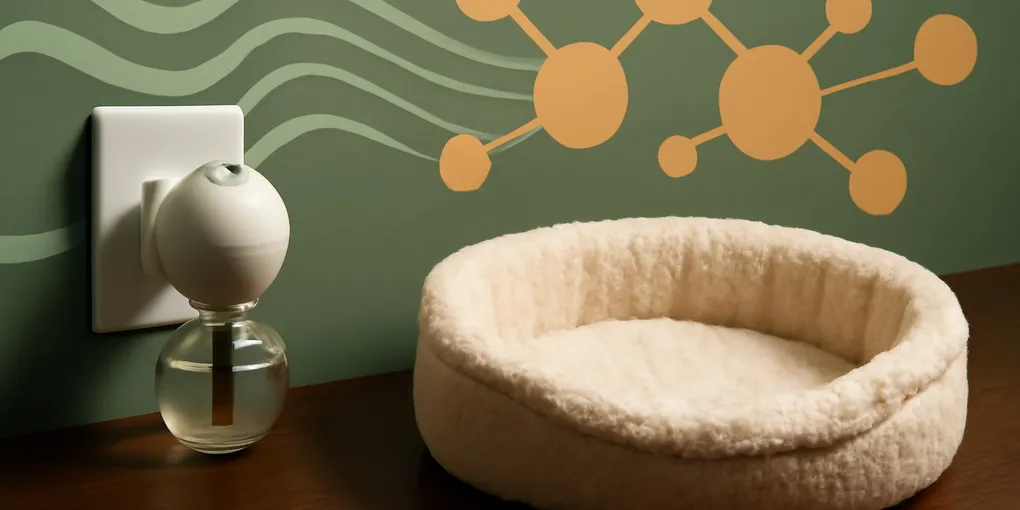
Synthetic feline facial pheromone products are designed to mimic chemical signals cats deposit when they rub their cheeks on safe objects. The commercial idea is simple: if a room smells more familiar to the cat, the cat may be less likely to mark, hide, fight, or panic in that space. Other products target appeasing pheromone signals associated with nursing and social comfort.
That mechanism is plausible, but it does not mean every behavior problem is pheromone-responsive. A cat that urinates because of bladder inflammation, kidney disease, diabetes, arthritis, or a blocked urethra needs veterinary care. A cat that attacks another cat because the home has one food station, no escape routes, and a single covered litter box needs territory redesign. Pheromones may lower the emotional temperature; they do not remove the fire.
Where the Evidence Is Most Useful
The best use case is stress-linked urine marking after medical causes have been ruled out. Veterinary behavior resources commonly place pheromones alongside box hygiene, vertical territory, cleaning with enzymatic products, and conflict reduction. Some studies and field reports suggest reductions in marking frequency, but response is not universal and the home environment matters.
A second reasonable use is transition support. Moving, remodeling, a new baby, a boarding stay, or a veterinary visit can make a cat act unsettled even when no single major behavior problem exists. A diffuser in the main safe room may help when paired with hiding spaces, predictable feeding, and quiet routines.
A third use is multi-cat tension. Pheromone products may help lower vigilance, but they cannot compensate for crowded resources. Multi-cat homes need one litter box per cat plus one extra, multiple water points, separate feeding options, high resting spaces, and routes that prevent one cat from trapping another.
When a Diffuser Is the Wrong First Step
Do not start with a diffuser if the cat is straining, crying in the box, passing blood, producing tiny clumps, vomiting, refusing food, losing weight, or suddenly hiding. Those are medical signals. Male cats with urinary obstruction can become critically ill quickly.
Do not expect a diffuser to solve a dirty or frightening litter setup. Covered boxes, perfumed litter, loud laundry rooms, too few boxes, aggressive ambushes, and boxes placed beside noisy appliances can all create avoidance. Fix the physical problem first.
Do not use pheromones as a substitute for a slow introduction. Cats that have fought need separation, scent swapping, controlled visual access, and gradual reintroduction. A plug-in can run during that process, but it is not the process.
How to Run a Fair 30-Day Trial
Pick one target behavior before you plug anything in. Useful targets include number of urine marks per week, number of hissing episodes near a doorway, time spent hiding after visitors leave, or number of carrier sessions without panic. If you do not track the behavior, you will judge by memory, and memory is biased by the worst incident.
Place the diffuser in the room where the cat spends time, not behind furniture, under an open window, or beside an air purifier. Most plug-ins are designed for an open outlet with airflow. Replace refills on schedule and avoid moving the diffuser from room to room every day.
Pair the trial with obvious environmental fixes. Add an uncovered litter box in a quiet location. Put a water bowl away from food. Add a tall perch or cardboard hide. Clean old urine with an enzymatic cleaner. Give the anxious cat predictable play and feeding. If the behavior improves, you will not know which single piece did the work, but the cat does not care. The goal is a better system.
Useful product searches:
- Search Amazon for cat pheromone diffuser multi cat
- Search Amazon for cat calming pheromone spray carrier
- Search Amazon for enzymatic cat urine cleaner
- Search Amazon for cat wall perch no drilling
Match the refill to the exact diffuser model, room size, plug orientation, and current product instructions before buying; do not mix brands unless the manufacturer says they are compatible.
What Improvement Should Look Like
A realistic win is partial reduction, not instant personality change. A cat that marks five times per week and drops to one or two times while the litter and cleaning plan improves is responding. A cat that still marks daily, fights near the same doorway, or hides all day after four weeks needs a deeper behavior and medical review.
Watch for displacement. If spraying stops in one room but starts beside a different window where outdoor cats are visible, the trigger is probably territorial stress. Block the sightline, clean the area, and consider motion-activated deterrents outside where legal and humane.
Room Setup Mistakes That Make Diffusers Look Ineffective
Many failed trials are placement failures. A diffuser behind a sofa, next to a constantly open window, or in a hallway the cat avoids is unlikely to affect the cat’s main resting territory. Put it in the room where the target behavior actually happens, then make that room easier to use. For marking near a sliding glass door, reduce outdoor-cat visibility. For a cat hiding in a bedroom, add a second safe bed and keep visitors out during the trial.
Resource layout is just as important. If two cats share one covered litter box in a laundry room, a pheromone diffuser cannot make that setup fair. Add boxes in separate locations, increase vertical routes, and separate feeding stations. In behavior terms, the diffuser may reduce arousal, but the environment still has to give each cat a way to avoid conflict.
Cleaning also changes results. Urine marks need enzymatic cleaning because residual odor can cue repeat marking. Avoid ammonia-heavy cleaners on urine spots because they can leave a smell profile that encourages more investigation. Once cleaned, change access to the spot with furniture, a feeding station, a scratcher, or a temporary barrier while the cat learns a new pattern.
How to Interpret a Partial Response
Partial improvement is useful data. If hissing decreases but chasing continues, the cats may feel less tense at rest but still lack safe movement routes. If spraying drops only when outdoor cats are absent, the trigger is territorial intrusion. If the cat relaxes in one room but remains fearful elsewhere, you may need additional environmental work rather than more refills.
Keep a simple log with dates, locations, and triggers. A one-line note is enough: “sprayed by patio door after neighbor cat appeared” or “hid for 20 minutes after delivery, down from two hours.” Patterns tell you whether the product is helping, whether the problem is seasonal, and what to discuss with your veterinarian.
When to Ask for Behavior Help
Get help sooner if cats are injuring each other, blocking resources, stalking, or causing one cat to stop eating or using the litter box. A veterinary behavior plan may include pain screening, anti-anxiety medication, reintroduction steps, resource mapping, and owner coaching. Pheromones can remain in the plan, but severe conflict needs more structure than a plug-in.
For elimination problems, ask for a medical workup before treating the issue as disobedience or spite. Cats do not urinate outside the box to punish people. Pain, fear, access problems, substrate preference, and territorial stress are more realistic explanations. That mindset leads to better fixes and less frustration.
Frequently Asked Questions
Can I use a cat pheromone diffuser all the time?
Some households use them long term during chronic multi-cat stress, but it is better to first identify whether the diffuser is doing measurable work. Run a 30-day trial, remove it only when the home is stable, and restart if the same stress pattern returns.
Do pheromone collars work better than diffusers?
A collar moves with the cat, while a diffuser treats a room. Collars may suit travel or whole-home movement, but many cats dislike collars, and any collar must be breakaway and correctly fitted.
Can pheromones make cats worse?
Most cats simply ignore them if they do not help. If conflict increases, remove the product, check for a new stressor, and ask a veterinarian or veterinary behavior professional for a structured plan.
Do pheromone diffusers replace anxiety medication?
No. Medication decisions belong with a veterinarian. Pheromones can be part of a lower-stress environment, but severe fear, compulsive marking, or dangerous aggression may need medical behavior care.
Related Calming Tools
If the target behavior is short-term travel or carrier stress rather than whole-room tension, our cat pheromone spray guide covers when a spray format may be more practical than a plug-in diffuser.
Bottom Line
Cat pheromone diffusers are best treated as a low-risk behavior support tool. They are most defensible when the problem is stress-linked, the home environment is also improved, and medical causes have been considered. If the problem is pain, resource conflict, or unsafe introductions, the diffuser is only an accessory to the real fix.
When a Diffuser Is Worth Trying
A pheromone diffuser is most reasonable when the problem is mild to moderate, the trigger is environmental, and you can pair it with changes the cat can actually feel. Examples include tension after moving furniture, low-level conflict in a multi-cat home, or stress during a gradual introduction. It is less appropriate as a stand-alone response to painful urination, sudden aggression, appetite loss, hiding that appears overnight, or any behavior change in an older cat. Those patterns need veterinary evaluation because medical problems can look like stress.
Set expectations before buying. Run the diffuser continuously in the room where the cat spends the most time, give it several weeks, and track one or two observable behaviors such as urine-marking frequency, doorway blocking, or hiding duration. If nothing changes, do not keep stacking products indefinitely. Move the budget toward veterinary behavior support, more litter boxes, blocked sight lines, vertical space, feeding separation, or a structured reintroduction plan.
Sources
- American Association of Feline Practitioners and International Society of Feline Medicine environmental needs guidelines for cats.
- Cornell Feline Health Center guidance on feline house-soiling and stress reduction.
- Merck Veterinary Manual overview of feline behavior problems and inappropriate elimination.
- AVMA pet-owner guidance on behavior changes and when to seek veterinary evaluation.
- Cozzi A, Pageat P. Synthetic feline facial pheromones and environmental management in veterinary behavior practice. Veterinary behavior literature review.