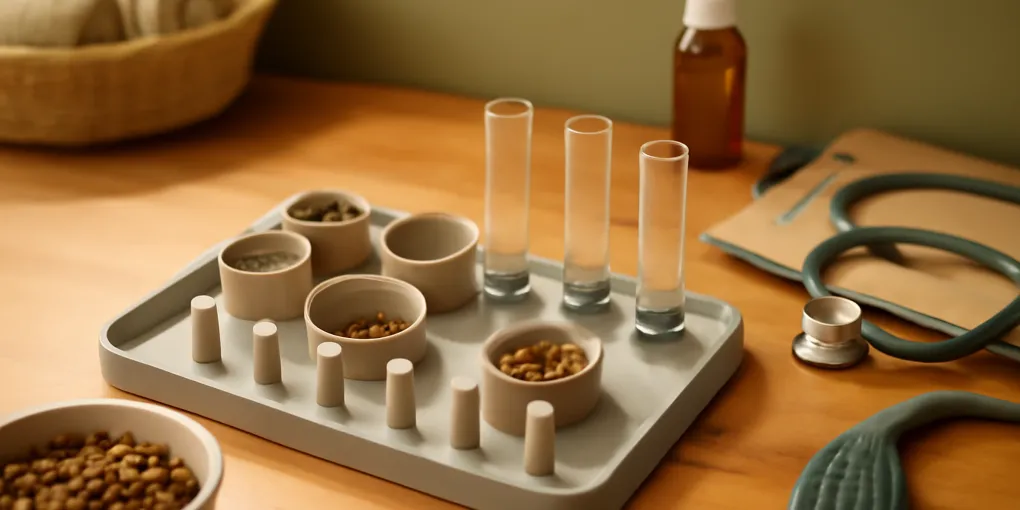
Indoor Cat Puzzle Feeder Plan: Enrichment Without Frustration or Weight Gain
Evidence ExplainerQuick picks
| Product | Key Specs |
|---|---|
| See price on Amazon |
|
| See price on Amazon |
|
| See price on Amazon |
|
Product availability, certifications, and retailer details can change; check the current Amazon page before buying.
Medical Disclaimer
A cat that is not eating, losing weight, vomiting, hiding, or showing sudden behavior change needs veterinary attention. Do not use puzzle feeders to force activity from a sick, painful, or food-avoidant cat. Weight-loss plans should be guided by a veterinarian.
How We Score This Explainer
| Criterion | Weight | Score | Weighted | Why it matters for puzzle feeders |
|---|---|---|---|---|
| Research | 30% | 8.0 | 2.40 | Feline enrichment, feeding behavior, and obesity prevention are well-supported welfare topics. |
| Evidence Quality | 25% | 7.5 | 1.88 | Research supports environmental enrichment broadly, while individual feeder performance depends on cat temperament and owner setup. |
| Value | 20% | 8.5 | 1.70 | Low-cost puzzles can improve routine and slow meals when introduced correctly. |
| User Signals | 15% | 8.0 | 1.20 | Owners search for boredom, night activity, scarf-and-barf eating, and indoor cat stimulation. |
| Transparency | 10% | 9.0 | 0.90 | The score favors feeders with visible starter difficulty, washable surfaces, portion-control support, and low-frustration setup for the specific cat. |
| Composite Score | 8.1/10 | Useful enrichment when success is easy at first and food intake stays safe. |
The Short Version
Puzzle feeders are not intelligence tests for cats. They are enrichment tools that should make food-seeking more natural without making meals stressful. The best plan is simple:
- Start easier than you think.
- Use a small measured portion.
- Keep the puzzle clean.
- Watch body weight and appetite.
- Separate cats that compete.
- Increase difficulty only after calm success.
Good first options are an Search Amazon for easy cat puzzle feeder with visible food wells, a Search Amazon for cat slow feeder tray for fast kibble meals, an Search Amazon for adjustable cat treat ball for active cats, or a Search Amazon for cat lick mat for small wet-food portions.
Why Puzzle Feeders Can Help Indoor Cats
Indoor cats often have safe homes but predictable routines. Food appears in a bowl, movement is optional, and hunting behavior has few outlets. Environmental enrichment guidance from feline welfare groups encourages opportunities for play, foraging, hiding, scratching, and control over resources.
A puzzle feeder can add a small foraging task to the day. It may slow rapid eating, create a pre-bed routine, or give a bored cat a legal problem to solve. Some cats become more confident when they learn they can manipulate an object and get food from it.
The goal is not to make dinner difficult. A frustrated cat may walk away, guard the feeder, knock it under furniture, or inhale food later. Success should look calm: sniffing, pawing, licking, eating, and returning voluntarily.
Match the Puzzle to the Cat
For cautious beginners
Use visible food in a shallow tray, muffin tin, egg-carton style feeder, or mat with wide ridges. The cat should win within seconds. If the cat gives up, the puzzle is too hard or the reward is not motivating.
For fast eaters
A slow feeder tray or lick mat may be better than a rolling ball. The goal is pacing, not chasing. Wet-food mats must be washed promptly and should not be left out for long periods.
For energetic cats
Treat balls and adjustable dispensers can add movement. Start with a wide opening so food falls out easily. Use them on a floor where the toy will not disappear under appliances.
For seniors or cats with mobility limits
Keep the feeder low, stable, and easy to reach. Avoid puzzles that require hard swatting, jumping, or crouching in painful positions. If arthritis or dental pain is possible, involve the veterinarian.
Comparison: Puzzle Types and Best Uses
| Shop this feeder | Puzzle type | Best fit | Cleaning note |
|---|---|---|---|
| Search Amazon for Easy cat puzzle feeder | Open tray or board | First-time users | Choose wide openings and smooth surfaces |
| Search Amazon for Cat slow feeder tray | Shallow ridged tray | Fast dry-food meals | Wash crumbs and oils from grooves |
| Search Amazon for Cat lick mat | Silicone or rubber mat | Wet food, paste treats, calming routines | Wash after each wet-food session |
| Search Amazon for Adjustable cat treat ball | Rolling dispenser | Active cats and small portions | Check for cracks and stuck kibble |
| Search Amazon for Multi-cat feeding station | Separate station setup | Competitive homes | Distance matters more than gadget complexity |
The Two-Week Introduction Plan
Days 1-3: Make it almost too easy
Put a teaspoon of the normal food on or in the simplest puzzle. Let the cat eat without pressure. If the cat is nervous, sprinkle food around the puzzle first, then place a few pieces on the edge.
Do not withhold the normal meal to force participation. Hunger can create stress and food guarding.
Days 4-7: Add a routine cue
Use the puzzle at the same predictable time, such as the pre-bed snack or afternoon activity window. Cats often engage more when the context is consistent. Keep sessions short and end while the cat is still successful.
Week 2: Adjust difficulty slowly
Make one change at a time: slightly narrower opening, a few more pieces, or a second easy puzzle in another room. If the cat starts tipping the feeder aggressively, walking away, or meowing in frustration, make it easier again.
Weight and Portion Control
Puzzle feeders can accidentally increase calories if owners add treats on top of normal meals. Measure the daily food first, then allocate part of it to the puzzle. For weight loss, ask the veterinarian for a calorie target and body-condition monitoring plan.
The WSAVA nutrition resources and veterinary obesity guidance emphasize measured feeding and body condition. A puzzle feeder supports the routine; it does not replace the math.
Multi-Cat Homes
Resource competition can turn enrichment into stress. Use separate feeders far apart, ideally with visual barriers. Watch for blocking, staring, chasing, or one cat finishing both portions. Microchip feeders may help some homes, but simple separation often works better.
If one cat needs prescription food, do not use a shared puzzle. Keep medical diets controlled.
Hygiene and Safety
Food residue becomes odor, bacteria, and refusal. Wash dry-food puzzles regularly and wet-food mats after each use. Avoid puzzles with tiny cracks that trap food. Inspect treat balls for loose parts.
Skip puzzle feeding when a cat is sick, recovering from dental work, newly adopted and not eating reliably, or stressed by household changes. Appetite is medically important in cats; do not make food harder to access when intake is uncertain.
FAQ
What is the easiest puzzle feeder for a cat that has never used one?
Start with a shallow tray, open board, muffin tin, or lick mat where food is visible. The first session should be easy enough that the cat succeeds almost immediately.
Can puzzle feeders help an overweight indoor cat lose weight?
They can slow eating and add activity, but weight loss still requires measured portions, veterinary calorie guidance, and body-condition checks.
Should every meal go in a puzzle feeder?
No, not at first. Begin with a small portion or snack. Keep normal food access appropriate for the cat’s health, and never use puzzles to pressure a cat that is not eating well.
How do I use puzzle feeders in a multi-cat home?
Create separate stations with distance and supervision. The goal is calm foraging, not competition over one high-value object.
Sources
- AAFP/ISFM: Feline environmental needs guidelines
- International Cat Care: Indoor cats
- WSAVA Global Nutrition Committee: Nutrition toolkit
- Ohio State University Indoor Pet Initiative: Feline enrichment and feeding resources
Troubleshooting Common Puzzle Problems
If the cat flips the puzzle, make it heavier, lower, or simpler. Flipping is not always a problem-solving victory; sometimes it means the feeder is unstable or the openings are too frustrating. Put the puzzle on a washable mat and choose a design with rubber feet if sliding is the issue.
If the cat ignores the puzzle, increase food value and decrease difficulty. Use a few pieces of the normal favorite food on top of the puzzle rather than hidden inside it. Some cats need several days of seeing easy wins before they paw at moving parts.
If the cat becomes pushy or vocal, use smaller sessions. A puzzle should not create a daily argument. Put it away after the measured portion is gone and keep routines predictable.
Combining Food and Water Enrichment
Puzzle feeders should not crowd the water station. Cats often prefer water away from food, and a busy puzzle area may collect crumbs. If you are also evaluating fountains, see cat puzzle toy guide for placement and cleaning criteria. In many homes, the best arrangement is food enrichment in one activity zone and water in a quieter traffic lane.
Special Cases
Kittens can use very easy puzzles, but they need reliable calories for growth and should not work hard for every meal. Senior cats may enjoy lick mats or shallow trays more than rolling toys. Cats with dental disease may avoid hard kibble puzzles because chewing hurts. Cats on prescription diets need controlled access so housemates do not steal the food.
During illness recovery, prioritize intake. If a veterinarian is monitoring appetite, do not introduce a difficult feeder that makes it harder to tell whether the cat feels better. Enrichment can return when eating is stable.
A Simple Rotation Plan
Use one easy tray on weekdays, a rolling dispenser for a small weekend snack, and a lick mat for occasional wet-food enrichment. Wash each tool before it smells stale. Rotation keeps novelty without forcing you to buy a drawer full of gadgets.
Owner Review After Two Weeks
Revisit the setup after two weeks instead of assuming the first purchase solved the problem. Look for a specific improvement: easier drinking, calmer resting, safer movement, slower eating, or fewer avoided areas. If you cannot name the improvement, adjust the plan before buying more accessories.
A useful review asks four questions. Did the pet use the item voluntarily? Did the owner keep it clean and available? Did any new stress, guarding, chewing, slipping, or avoidance appear? Did the change reveal a medical concern that deserves a veterinary call? This habit keeps the article’s shopping advice grounded in welfare rather than novelty.
Document one photo of the setup for yourself, not for social media. The photo helps you notice cord placement, cramped corners, slippery gaps, water near food crumbs, or toys that migrated into the wrong zone. Small layout changes often outperform a second purchase.
Maintenance Calendar
Set one recurring reminder for the item or routine you chose. Weekly reminders work for cleaning, surface inspection, and checking whether the pet still uses the setup. Monthly reminders work for measuring fit, replacing worn parts, and comparing the plan with current veterinary advice. If the reminder feels annoying, simplify the setup rather than ignoring it; a product that depends on heroic maintenance is rarely the right product for a normal household.
Keep notes plain: used, avoided, cleaned, replaced, or call vet. Those five words catch most problems early. They also help different family members follow the same routine instead of each person assuming someone else checked the bowl, mat, ramp, or feeder.