Dog Collar Care Labels: When “Machine Washable” Still Means Check the Product Instructions
The laundry is ready, the collar is visibly due for a clean, and its listing says “machine washable.” Pause at the tag or the product instructions before choosing a cycle. That phrase does not replace the care directions for the collar in your hands; it only tells you that its maker may permit a machine method under stated conditions.
The quick routine is simple: find the collar’s instructions, identify the wash method, note any stated temperature and drying directions, then follow those details. Ruffwear, for example, directs readers to hand wash its collars, while Sprenger’s care guidance says to follow the instructions for the collar being cleaned. They show why the label matters more than a broad laundry rule.
Start with the collar, not the material guess
It is tempting to decide from the webbing alone: woven fabric feels familiar, so it must wash like another woven collar. But a collar is more than a strip of fabric. Buckles, rings, adjustment hardware, stitching, padding, and the way parts are joined can all be part of the product the maker wrote care directions for.
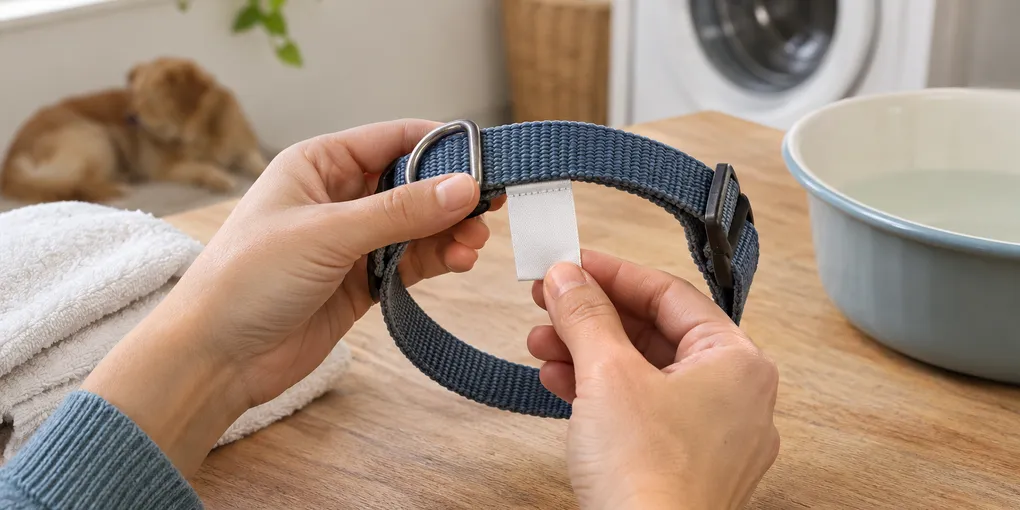
Look first at the sewn-in tag. If it has been removed, faded, or is too small to read, look for the collar on the maker’s product page or support information. Use the model or product name if you have it rather than a broad search for the material.
Ask, “What does this collar’s maker say to do?” That keeps a familiar-looking collar from becoming a stand-in for another product’s instructions.
Turn the instructions into four checks
Once you have the product directions open, pull out four details before you start:
- Wash method: Does it say hand wash, machine wash, or something else?
- Water instruction: Is a temperature or water setting named?
- Cycle or treatment details: Does the maker name a cycle, bag, soap restriction, or step to avoid?
- Drying direction: Does it give a drying method or say what not to do after washing?
Not every product page will answer all four. Do not fill in a missing detail with a rule from another collar. Follow the details that are stated and use the maker’s support information when the care directions are incomplete.
“Machine washable” may still have a narrower meaning
On a product page, “machine washable” is often a short feature label. The instructions are where the care method lives. They may narrow the claim to a named wash setting, a preparation step, or a drying approach.
Read the feature label and the care instructions together. The label can help you find the care section; the product instructions tell you what the maker means by it. If the two seem to conflict, use the more detailed care directions and seek clarification from the maker instead of trying to reconcile them by guesswork.
Ruffwear’s guidance illustrates the point from the other direction: although its gear-cleaning article discusses cleaning routines, it says its collars are best hand washed. A general laundry plan therefore cannot outrank the instruction for the product.
Keep the instruction with the collar
Before the collar goes into the laundry area, take a clear photo of the care tag or save the product-support link in a household note. A short note can be enough: the collar name, where the instructions live, the stated wash method, and the drying direction.
This is especially helpful when multiple collars look alike. The saved reference lets you check the right instructions next time without relying on memory or on the last collar you cleaned.
If the directions are not available
An unreadable tag does not create a default wash method. Search the maker’s official product page or support area using the collar name. If that does not turn up instructions, ask the maker for the care guidance for that collar before washing it.
Avoid turning a recommendation for one brand or one style into a rule for all collars. Product instructions can change by model, construction, and maker, so the evidence here supports the reading process—not a universal temperature, cycle, or drying method.
Keep the examples in their lane
Ruffwear and Sprenger provide examples of product-specific guidance, not one wash routine for every dog collar. Use the process here to find and read the directions for the collar you have.
FAQ
Does machine washable mean I can use any wash cycle for a dog collar?
No. Read that collar’s care label or product instructions first. The stated wash method and drying directions are the ones to follow.
What should I look for in dog collar care instructions?
Look for the stated wash method, any temperature instruction, whether it calls for hand washing or machine washing, and the drying directions.
What if the care label is missing?
Check the product page or the maker’s support information for that specific collar before choosing a wash method.
Can similar-looking collars use the same care directions?
No. Treat each collar’s own label or product instructions as the source for its care directions.
Sources
- Ruffwear. How to Clean a Dirty Dog’s Dirty Gear.
- Sprenger. How to Look After Your Dog’s Equipment.