How to Count a Dog’s Resting Respiratory Rate Without Guessing
Evidence ExplainerQuick picks
Digital pet thermometer for dogs and cats
★ Top pick Useful companion data only- Note: It does not measure breathing rate. Use it only with veterinary instruction and never delay care to collect another reading.
A resting respiratory rate is a count of breaths when a dog is genuinely quiet, not panting after a walk or watching a doorbell. One rise and fall of the chest counts as one breath. The value is most useful when the same person counts it under similar conditions and writes down what the dog was doing.
The useful purchase is not a respiratory gadget
See price on Amazon for a digital pet thermometer if a veterinarian has included temperature in a home-monitoring plan, but it does not measure respiratory rate and should not turn a breathing concern into a home diagnostic project. For this task, a quiet minute and a written log are the important tools.
Count only during real rest
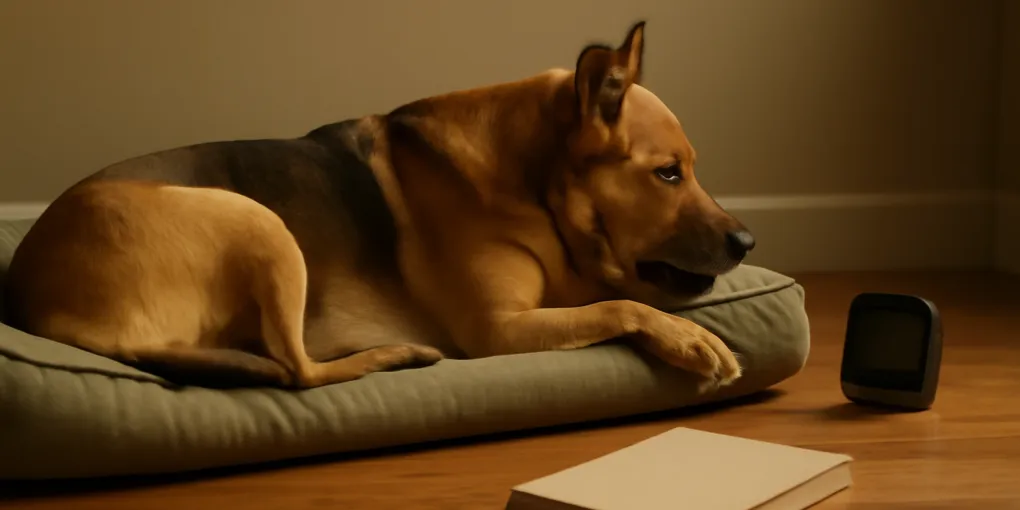
Wait until your dog is lying quietly or asleep in a comfortable room. Do not count during panting, play, heat exposure, car travel, meals, or excitement. Watch the rib cage or flank for 30 seconds and multiply by two, or count a full minute if the pattern is uneven. Record the time, position, recent activity, room temperature, and whether the dog was asleep.
Repeat the count once if you lost track, rather than averaging a restless reading into a number that looks precise. Compare your dog with its own usual log. Breed, age, health history, and the exact resting state all affect what a veterinarian will consider meaningful.
Make the count repeatable
Use the same position whenever practical: many households find the side of the chest is easiest to watch when a dog is asleep on its side or quietly resting on a bed. Set a silent timer, but keep your hands off the dog. Counting while touching the chest can wake or excite some animals and changes the thing you are trying to observe.
If another person helps, agree on what counts as one breath before you compare numbers. A complete in-and-out chest movement is one breath, not two. Write the raw 30-second count if you used a half-minute method so the clinician can understand how the final number was calculated. Do not use a smartwatch estimate or a camera app as a replacement for watching the dog’s actual effort.
Distinguish rate from effort
The number is only one part of a breathing observation. Look from a comfortable distance for nostril flare, a stretched neck, the belly working hard, unusual noise, an inability to lie down, or a change in gum color. These signs may matter even when the count is incomplete. Conversely, a dog that briefly moves, dreams, or reacts to a sound may create a high count that settles once it is truly at rest.
Write down new coughs, collapse, fainting, reduced walks, appetite changes, and medication changes alongside the count. This does not establish a diagnosis; it gives the veterinary team a timeline. Keep prior records rather than deleting an inconvenient value, but label a reading as unreliable if the dog was not actually settled.
A simple seven-day baseline
For a healthy dog whose veterinarian has not requested a different schedule, take one quiet reading on several different days at a similar time and location, such as an evening nap on the usual bed. Note whether the dog had exercised, eaten, been outdoors in heat, or been startled in the previous 20 to 30 minutes. Do not wake a sleeping dog to fill a chart. Stop the routine if it makes the dog anxious. A baseline is useful because a later change can be described as a change from that dog’s normal pattern rather than from an internet number.
Dogs with diagnosed heart or lung disease may have a specific threshold, timing, or contact plan from their veterinary team. Follow that plan rather than this general guide. Ask which changes warrant a same-day call, which need emergency care, and whether the clinic wants photos or video.
What changes need a call
Call a veterinarian promptly for breathing that is persistently faster at rest than your dog’s normal trend, visibly effortful, noisy, accompanied by repeated coughing, or paired with reduced appetite or energy. Emergency care is appropriate for open-mouth breathing at rest, marked abdominal effort, blue, gray, or very pale gums, collapse, inability to settle, or severe distress.
Do not press on the chest, force a dog to lie down, give human medicine, or start leftover medication because a count changed. Keep the dog calm, cool but not chilled, and follow the clinic’s transport directions. If it is safe, a short video of the breathing pattern can help the clinical team more than a remembered description.
Keep the log small enough to use
Use one line per calm reading:
- date and time;
- breaths counted and how long you counted;
- asleep, quiet awake, or recovering from activity;
- cough, appetite, energy, and medication changes;
- the clinic advice and follow-up plan when applicable.
This guide is about the count itself. Our pet thermometer protocol covers safe temperature-taking limits, which is a different measurement with a different risk profile.
Dog resting respiratory rate FAQ
Can I use an app to count breaths?
An app can act as a timer or log, but it cannot confirm whether a dog is truly resting or interpret a medical change. A consistent manual count is often easier to explain to a veterinarian.
Why does my dog breathe faster while dreaming?
Sleep stages can change movement and breathing. Note that your dog was dreaming or twitching and repeat the count when it is quietly settled. Seek veterinary advice if unusual breathing persists when awake and resting.
Sources
- Merck Veterinary Manual, respiratory disorders in dogs: https://www.merckvetmanual.com/dog-owners/lung-and-airway-disorders-of-dogs
Frequently Asked Questions
- No. Count only when your dog is quietly resting or asleep and not hot, excited, exercising, or recovering from activity. Note the conditions if the reading is unusual.
- A single number can be affected by movement or stress, but persistent fast, effortful, noisy, or changed breathing needs prompt veterinary advice, especially with weakness, collapse, pale or blue gums, or coughing.