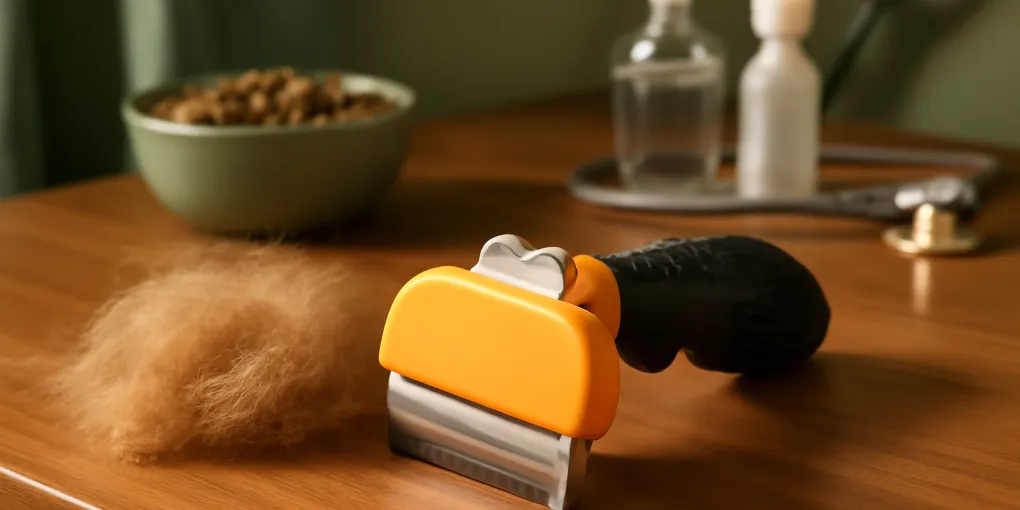
FURminator Undercoat Deshedding Tool Review: Helpful Brush or Too Easy to Overuse?
ReviewFURminator Undercoat Deshedding Tool
Reviewed pickBest for: Double-coated dogs and cats that shed loose undercoat
$20-$45
Quick picks
| Product | Key Specs |
|---|---|
| See price on Amazon |
|
| See price on Amazon |
|
Product availability, certifications, and retailer details can change; check the current Amazon page before buying.
Verdict
The FURminator Undercoat Deshedding Tool is worth considering for double-coated dogs and cats that drop loose undercoat in seasonal waves. It can remove a surprising amount of dead coat quickly. That speed is also the risk: owners can over-brush, scrape skin, break coat, or use the tool on pets that need a different grooming plan.
This is not a daily comfort brush. Treat it like a high-impact shedding tool for short sessions on appropriate coats. If your pet has mats, skin disease, pain, fleas, hot spots, or a coat type you do not understand, ask a groomer or veterinarian before dragging a deshedding edge through the fur.
The American Veterinary Medical Association notes that skin and coat problems can show up as itching, hair loss, redness, odor, lumps, and other changes that may need veterinary care (AVMA skin and coat problems). VCA’s grooming guidance also emphasizes matching grooming to coat needs and keeping dogs comfortable rather than forceful (VCA grooming and coat care).
What the FURminator does well
It removes loose undercoat fast
On a shedding Labrador, husky mix, German shepherd, long-haired cat, or thick-coated senior pet, the tool can pull loose undercoat that a soft brush leaves behind. That can reduce tumbleweeds in the house and help the coat feel less packed.
The best sessions are short and boring: a few gentle passes with the coat direction, then stop while the skin looks normal and the pet is relaxed. More fur coming out does not always mean you should keep going.
It gives owners a measurable routine
Because the tool collects fur visibly, owners can tell whether a session did something. That is helpful during seasonal coat blowouts. It also makes it easier to set a limit: one small pile of loose undercoat, then switch to a softer brush or reward break.
It comes in pet-specific versions
The product line includes dog/cat, size, and hair-length versions. That matters. A tool sized for a large long-haired dog is not the right first choice for a small cat or toy breed.
Search Amazon for FURminator deshedding tools, then match the current model to your pet’s species, weight, and coat length rather than buying the cheapest listing.
Where it falls short
It is too intense for some coats
Curly low-shedding coats, very short single coats, silky coats, damaged coats, and thin senior coats may not need this tool. Pressing harder can scratch skin or snap guard hairs. If the coat looks choppy after use, the tool or technique is wrong.
For frequent grooming, search Amazon for soft slicker brushes, greyhound combs, rubber curry tools, or bristle brushes that match the coat type; these may be safer depending on the pet.
It does not remove mats safely
A mat is not just extra shedding. It is tangled hair close to skin, and pulling through it can hurt. Do not use the FURminator as a mat ripper. For mats behind ears, under legs, under collars, or near the tail, use a professional groomer or veterinary team.
It can hide a medical problem
If shedding suddenly changes, the coat becomes patchy, the pet scratches constantly, or the skin smells bad, brushing is not the solution. Parasites, allergies, endocrine disease, infection, pain, and nutrition issues can all show up in the coat.
Who should buy it
Consider the FURminator if your pet has a true shedding undercoat, tolerates brushing, has healthy skin, and leaves loose fur on furniture despite routine grooming. It is especially useful during seasonal shed periods when a regular brush fills too slowly.
Skip it for pets with skin irritation, mats, open sores, recent surgery, severe anxiety around grooming, or unknown coat needs. Also skip it if your goal is puppy or kitten handling practice; start with soft tools and rewards first.
Our cat grooming brush guide is a better starting point for cats that need general brush selection rather than undercoat removal.
Safer use protocol
Brush only on dry fur. Start with your fingers or a comb to find mats. Use light pressure with the coat direction. Keep the session under a few minutes at first. Check the skin after every few passes. Stop if the skin reddens, the pet flinches, or the coat starts looking thin.
Reward between passes. For cats, use one or two strokes, then a break. For dogs, work one body section at a time. Do not use the tool repeatedly on bony areas, belly skin, armpits, genitals, or irritated spots.
Clean the tool after use and store it where the edge is protected. A dull or damaged edge belongs in the trash, not on a pet.
Plan a softer follow-up brush for the next day instead of using the deshedding edge again. If the coat still releases huge amounts after several careful sessions, schedule a grooming visit and ask whether compacted undercoat, bathing technique, diet, parasites, or skin disease is contributing.
FURminator FAQ
Does the FURminator cut hair?
It is designed to remove loose undercoat, but the edge can damage or break coat if used with too much pressure, too often, or on the wrong coat type.
Can I use the same FURminator on my dog and cat?
It is better to buy the correct species and size version. A tool that feels efficient on a large dog may be too wide or intense for a cat.
What should I use before a deshedding tool?
Use your hands, a comb, or a soft brush to check for mats and sensitive areas. If you find mats, do not force the deshedding tool through them.
Frequently Asked Questions
- No. It is mainly for shedding undercoat. Skip it on irritated skin, mats, very thin coats, curly non-shedding coats, and pets that find it painful.
- Use it sparingly and follow the product directions. For many pets, short sessions during shedding season are safer than frequent long sessions.