Quick picks
| Product | Key Specs |
|---|---|
| See price on Amazon |
|
| See price on Amazon |
|
| See price on Amazon |
|
Product availability, certifications, and retailer details can change; check the current Amazon page before buying.
How PetScienceReview Evaluates Recommendations
Use this cat enrichment station product comparison as the buying shortlist, then match the sizes, materials, cleaning demands, and pet-safety caveats against the setup described below.
Pet products are useful only when they solve a real animal-care problem without creating a new safety problem. For every recommendation in this article, we weigh five factors: veterinary alignment, material or ingredient safety, ease of use for a stressed or distracted owner, fit for the animal’s normal behavior, and long-term value. We prefer products that make good care easier rather than products that promise to replace veterinary judgment.
When an item can be bought in many equivalent versions, we link to an Amazon search page instead of pretending that one unverified listing is the only acceptable choice. That keeps the recommendation honest and lets you choose the right size, flavor, or replacement-part bundle for your pet. Always confirm sizing, ingredients, and current seller details before ordering.
If your immediate project is organizing grooming tools and cleanup supplies rather than arranging toys and activities, our cat grooming station guide focuses on that separate storage setup.
How We Score
Our composite score uses a consistent 100-point framework: Research alignment 30%, Evidence Quality 25%, Value 20%, User Signals 15%, and Transparency 10%. Research alignment measures fit with veterinary or animal-welfare guidance. Evidence Quality weighs clinical research, professional standards, and source credibility. Value considers durability, replacement costs, and whether the product solves a meaningful problem. User Signals capture real-world usability for pets and owners. Transparency rewards clear labeling, instructions, materials, and limitations.
Composite scoring breakdown
When this article compares or recommends products, the PetScienceReview composite score uses this weighted framework: Research 30% (alignment with veterinary guidance, animal-behavior science, and manufacturer documentation), Evidence Quality 25% (strength and relevance of studies, standards, and expert consensus), Value 20% (price, durability, refills, and realistic long-term cost), User Signals 15% (owner usability patterns, maintenance burden, and pet acceptance signals), and Transparency 10% (clear labeling, specifications, testing, replacement parts, and company support). Products that cannot be evaluated against these criteria are discussed as shopping categories rather than presented as verified winners.
Why Indoor Cats Need Planned Enrichment
Indoor cats are safer from cars, predators, parasites, and many infectious risks, but indoor life can also flatten the normal feline day. Cats are built to stalk, pounce, scratch, climb, sniff, hide, watch, and rest in secure places. When those needs are not met, owners may see overgrooming, night activity, destructive scratching, food obsession, inter-cat tension, or general restlessness.
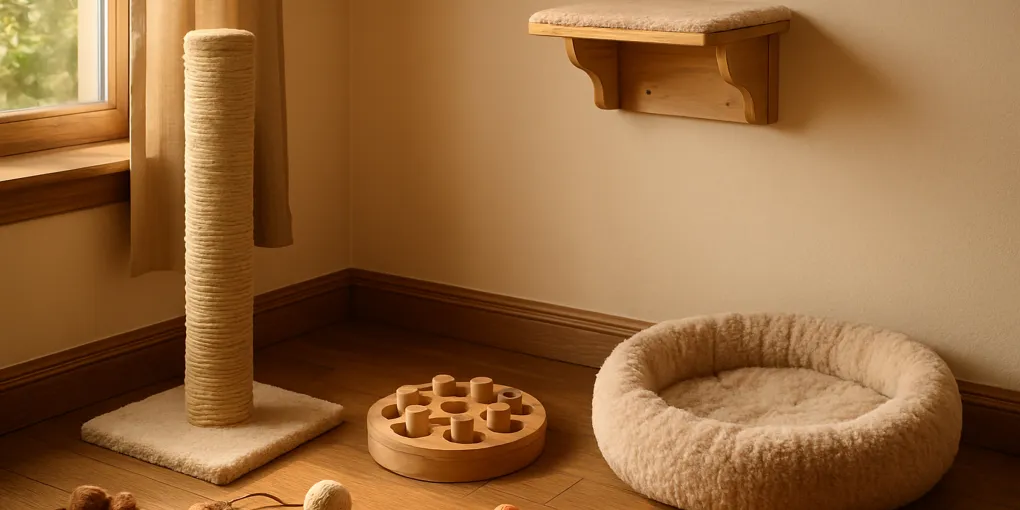
A cat enrichment station is a practical answer: one intentionally designed area that concentrates several healthy outlets. It does not need to be expensive or large. A window perch, scratcher, puzzle feeder, toy basket, scent mat, and hiding bed can transform an underused corner into a daily routine.
Before You Buy Anything: Map Your Cat’s Preferences
Watch your cat for two days and write down the answers:
- Does your cat prefer high shelves or low covered spaces?
- Does scratching happen on vertical furniture arms, horizontal rugs, or cardboard?
- Does your cat chase flying toys, ground prey, or food puzzles?
- Which room already attracts your cat during calm hours?
- Are there dogs, toddlers, loud appliances, or rival cats nearby?
This observation prevents the common mistake of buying a tall tree for a floor-loving cat or a sisal post for a cat that only scratches cardboard.
Shopping searches:
- Shop cat puzzle feeders on Amazon
- Shop vertical cat scratching posts on Amazon
- Shop window cat perches on Amazon
- Shop cat tunnels and hideouts on Amazon
The Core Station: Six Modules
1. Scratching module
Provide at least one stable scratching surface long enough for a full-body stretch. Many cats reject short posts because they wobble or do not allow extension. Put the scratcher near existing scratch targets or near the cat’s resting place; cats often scratch after waking. Reward use with treats or play. Do not punish scratching, because scratching is normal communication and nail maintenance.
2. Vertical or hiding module
Confident cats often like vertical space. Shy cats may prefer a covered bed or tunnel. Multi-cat households need both escape height and visual barriers. The goal is choice: a cat should be able to observe without being cornered.
3. Food-puzzle module
Food puzzles convert part of the meal into hunting work. Start easy. Sprinkle kibble in an open egg carton, use a slow feeder, or place a few treats in a rolling puzzle. If the puzzle is too hard, the cat learns frustration, not enrichment. Gradually increase difficulty as the cat succeeds.
4. Play-prey module
Keep wand toys, soft kickers, and small toss toys nearby, but rotate them. The best play imitates prey: movement away from the cat, pauses behind objects, and a final catch. End with a small meal or treat so the sequence feels complete. Laser pointers can be used carefully, but many cats do better when the chase ends on a physical toy they can grab.
5. Scent and novelty module
Scent is enrichment. Catnip, silver vine, valerian, cardboard boxes, paper bags with handles removed, and safe outdoor scents on a cloth can all add novelty. Offer scent items briefly and rotate them. Constant exposure makes them boring.
6. Rest module
Enrichment is not constant stimulation. Include a soft bed or mat where the cat can stop. For seniors, choose low-entry beds and avoid forcing jumps. For arthritic cats, ramps and heated pet-safe beds may be more useful than tall furniture.
Room-by-Room Setup
Living room
Use the living room if your cat wants social presence. Put a scratcher near the sofa, a puzzle feeder away from foot traffic, and a bed with a view of the room. This setup helps redirect furniture scratching because the legal scratching target is exactly where the cat already wants to mark.
Bedroom
Use the bedroom for timid cats or cats that need a dog-free retreat. Add a covered bed, low scratcher, and quiet water bowl. Avoid noisy motorized toys here if the room is supposed to be a secure resting area.
Window area
A window perch can provide hours of visual stimulation. Make sure the perch is stable, the window screen is secure, and the cat cannot overheat in direct sun. Bird feeders outside windows can be enriching, but place them in a way that does not create predator access or window-strike risk for birds.
A Seven-Day Introduction Plan
Day 1: Place the station without forcing interaction. Let the cat investigate.
Day 2: Add treats near the scratcher and bed. Reward any approach.
Day 3: Run a two-minute wand session ending at the station.
Day 4: Serve a small portion of dinner in the easiest puzzle.
Day 5: Add one scent item for ten minutes, then remove it.
Day 6: Rotate one toy; keep the rest familiar.
Day 7: Evaluate what was used. Remove ignored clutter and double down on the favorite module.
Troubleshooting
If your cat ignores the station, move it closer to where the cat already spends time. If your cat fights with another cat near the station, duplicate resources in separate areas. If your cat becomes frantic around food puzzles, make them easier and feed part of the meal in a normal bowl.
Sudden behavior changes are not enrichment problems until medical issues are ruled out. Litter-box avoidance, hiding, aggression, increased thirst, appetite changes, or vocalization can signal pain or disease.
References
- AAFP and ISFM Feline Environmental Needs Guidelines.
- Ohio State University Indoor Pet Initiative, feline enrichment and resource distribution.
- International Cat Care, play, scratching, and environmental-choice guidance.
FAQ
Where should I put a cat enrichment station?
Choose a place your cat already likes, then make it safer and more useful. Avoid corners where dogs or other cats can trap the cat.
How many toys should be available?
A few visible toys plus a rotation box is better than a floor full of stale toys. Novelty matters. Rotate weekly or every few days.
Do senior cats still need enrichment?
Yes, but adapt it. Use low steps, soft bedding, gentle play, easy puzzles, and warm resting spots. Ask your veterinarian about arthritis if jumping or play declines.
Related reading: Do Cats Get Lonely? and How Cats Age.
Multi-Cat Adjustments
In multi-cat homes, one beautiful station can accidentally create a conflict zone. Cats may share space peacefully at some times and compete silently at others. Provide duplicate resources: more than one scratcher, more than one resting place, multiple water sources, and separate feeding opportunities. A confident cat should not be able to block the only route to the station. Use vertical pathways, open-sided beds, and stations in separate rooms so each cat can choose without confrontation.
Watch body language. Staring, blocking doorways, chasing away from resources, and one cat always using the station only when another is asleep are signs the setup needs spreading out. Enrichment should lower tension, not concentrate it.
Senior and Disabled Cat Modifications
Older cats still need novelty and choice, but the station should respect mobility. Replace tall jumps with steps or ramps. Use horizontal cardboard scratchers if shoulder or spine arthritis makes vertical stretching uncomfortable. Choose puzzle feeders that can be solved without batting aggressively. Keep beds warm, low, and easy to enter. Night lights can help cats with vision changes navigate to water and litter boxes.
If a senior cat stops climbing, grooming, playing, or using a favorite perch, do not assume laziness. Arthritis, dental disease, hyperthyroidism, kidney disease, hypertension, and cognitive changes can all alter behavior. Enrichment works best after pain and disease are addressed.
Dog and Child Safety
If dogs live in the home, the cat station needs an escape route and dog-proof food puzzles. Baby gates with cat doors, shelves, or rooms with latches can protect the station. Do not place catnip toys or small puzzle parts where dogs can swallow them.
For homes with children, teach that the station is the cat’s choice zone. A cat in the bed, tunnel, or perch should not be pulled out. This rule protects both the cat and the child because many scratches happen when a cat’s retreat is ignored.
Maintenance Schedule
Daily: remove broken toys, refresh water, and run one short play session.
Twice weekly: rotate a toy, reset puzzle feeders, and inspect scratchers for loose staples or sharp edges.
Weekly: wash soft mats if they collect hair, vacuum around the station, and change the scent item.
Monthly: reassess. If a module has not been used in a month, move it, simplify it, or replace it with a texture or height your cat already prefers.
Measuring Success
A successful enrichment station does not need to look busy on social media. It should produce more normal cat behavior: scratching the legal surface, resting confidently, playing in short bursts, exploring scent, and eating some meals more slowly. It should also be easy for the humans to maintain. If the station improves the cat’s day and survives your real schedule, it is working.
Bottom Line
Start with your cat’s existing habits, build one station with six modules, introduce it gradually, and adjust based on evidence. The best enrichment plan is not the fanciest; it is the one your cat uses and your household can keep fresh.
Editorial Note on Product Selection
PetScienceReview does not treat Amazon availability as proof of quality. Marketplace listings change, formulas change, sellers rotate, and review counts can be manipulated or become outdated. That is why this article emphasizes selection criteria over a single permanent winner. Before buying, check the current label, size chart, warnings, replacement parts, and seller information. If two products look similar, choose the one with clearer documentation and easier returns.
When a product affects health, comfort, feeding, medication, mobility, or behavior, involve your veterinarian sooner rather than later. Good products make a sound care plan easier to follow; they do not diagnose disease. Keep receipts, packaging, lot numbers, and photos until you know the product works for your pet. If a reaction occurs, that information can help your veterinarian and the manufacturer respond.
Final Buying Checklist
Use this quick checklist before you add anything to your cart:
- Is the product appropriate for my pet’s species, size, age, and medical history?
- Can I verify the important specifications from the label or manufacturer page?
- Is cleaning or maintenance realistic for my schedule?
- Are replacement parts, refills, filters, or accessories easy to obtain?
- Does the product solve a problem my pet actually has, or am I buying because the marketing is persuasive?
- Have I considered a lower-cost environmental or routine change first?
The best pet-care purchase is usually boring: safe materials, clear instructions, easy cleaning, and a design that respects normal animal behavior. If a product promises dramatic medical results, be more skeptical, not less.
A final practical rule: if a product makes your pet avoid normal routines, stop and reassess. Useful care should reduce friction for both the animal and the owner.