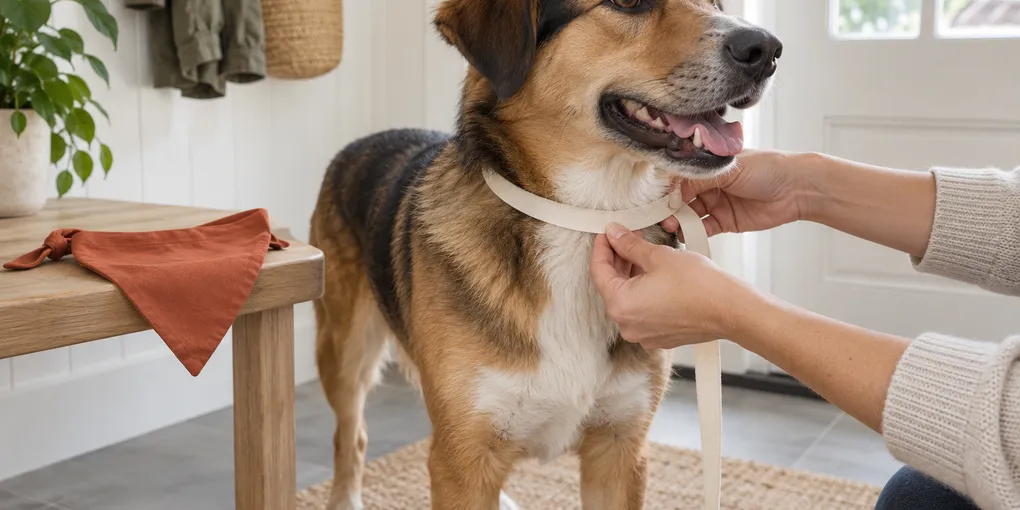
How to Measure a Dog for a Tie-On Bandana
ProtocolIf a tie-on bandana keeps looking too snug, too loose, or simply awkward once it is knotted, start with one number: the circumference around your dog’s neck where the bandana will sit. Measure that spot while your dog is standing, write the number down, and compare it with the bandana maker’s own tie-on guidance. A collar label and a guessed size describe something different.
For this small piece of apparel, begin with the neck measurement. The knot and fabric are the reason the listing’s instructions still matter: one maker may describe a finished neck range, while another may describe the length of the fabric before it is tied.
Gather a soft tape and one place to record the number
A flexible sewing tape is the easiest tool because it follows the curve of the neck. Keep a note on your phone or a scrap of paper nearby so the number does not turn into a rough memory by the time you open a sizing chart.
A piece of string, ribbon, or shoelace also works. The American Kennel Club suggests wrapping it around the spot you need, pinching or marking the overlap, then laying it flat on a ruler. The same neck loop matters more than the tool.
Have the bandana’s own size page ready before you begin. That makes it easier to see whether the maker is asking for neck circumference, a finished tied length, or something else. Keep the bandana itself out of the measurement loop; you are measuring the dog first.
Measure at the base of the neck
Ask your dog to stand in a natural position on a level floor. The AKC’s apparel guide recommends measuring a standing dog, which keeps the body in the position used for ordinary gear sizing.
Place the tape around the base of the neck, generally where a standard collar sits. Start near the withers, the ridge between the shoulder blades, bring the tape around the front of the neck, and meet the starting end. Keep the tape close to the fur without pulling it tight. The result is the neck circumference to record.
Write the measurement with its unit, such as 15.5 inches or 39 centimeters. A bare number is easy to misread later, especially when a size chart uses a different unit. If the maker’s chart uses the other unit, convert carefully or use a ruler that shows both.
Leave room in the measuring loop
The AKC advises using a two-finger gap when measuring neck circumference for clothing and gear. For a tie-on bandana, use that gap to keep the tape from pulling taut while you collect the starting measurement. The fabric, triangular cut, and tie instructions vary from one bandana to the next.
In practical terms, let the tape follow the neck without cinching it. If the dog shifts, the tape twists, or the two ends do not meet cleanly, start again. Taking a second reading is usually faster than interpreting a crooked one.
Match the number to the maker’s tie-on guidance
Now compare the recorded neck circumference with the specific sizing information for the bandana. Look for wording such as:
- neck circumference or neck range;
- maximum neck size after tying;
- finished length; or
- instructions to measure the dog or the fabric.
These terms describe different measurements. A fabric triangle can look generous when laid flat yet have a shorter usable tie range once its corners are brought together. A listing may give a finished neck range that already accounts for the tied shape. Follow the field the maker provides; a general small, medium, or large label varies across brands.
If your measurement sits near the edge of a range, read the next size’s stated range before deciding. The AKC’s collar guidance also emphasizes working from a recorded neck measurement instead of estimating from a label. Note the dog’s number, note the maker’s number, and then see how the two relate.
Do one quiet fit check after tying
Once you have selected a size, follow the maker’s tying instructions and look at the finished position. The bandana should sit in the area you measured, without drifting high toward the jaw or far down the chest. If the maker supplies a maximum tied-neck measurement, compare that number with the one you wrote down.
A size chart gives a starting point, not a promise. A simple tie-on bandana has variables the chart cannot show: fabric thickness, seam allowance, knot style, and the way a dog stands. This checklist helps you collect and compare a neck measurement; it cannot guarantee the finished fit of every bandana.
Keep a small apparel note for the next time
Save the neck measurement with the date and the size range you used. A short note such as neck: 15.5 inches; maker range: 14–17 inches beats keeping the size tag alone. When you look at a new tie-on style later, begin with the measurement.
If the next bandana uses a different chart format, measure again while the dog is standing and read that chart from the top. The repeatable part is simple: soft tape or string, base of the neck, recorded circumference, then the maker’s own instructions.
FAQ
Where should I measure a dog for a tie-on bandana?
Measure around the base of the neck, in the area where a standard collar usually sits. Record that neck circumference, then use the maker’s own tie-on sizing guidance.
Can I use string instead of a soft tape measure?
Yes. Wrap a string around the same spot, mark where the ends meet, then lay the string flat against a ruler to get the measurement.
Is collar length the same as a bandana measurement?
Use the dog’s neck measurement instead. Collar length and a tie-on bandana’s finished tie range are different numbers, so compare the neck measurement with the specific sizing chart.
What if my dog is between tie-on bandana sizes?
Read the maker’s size guidance first. If it lists a neck range or maximum finished neck size, compare your recorded measurement directly with that range rather than guessing from a general small, medium, or large label.
Sources
- American Kennel Club. How to Measure Your Dog for Clothes and Gear.
- American Kennel Club. Finding and Choosing the Right Dog Collar for Your Dog.