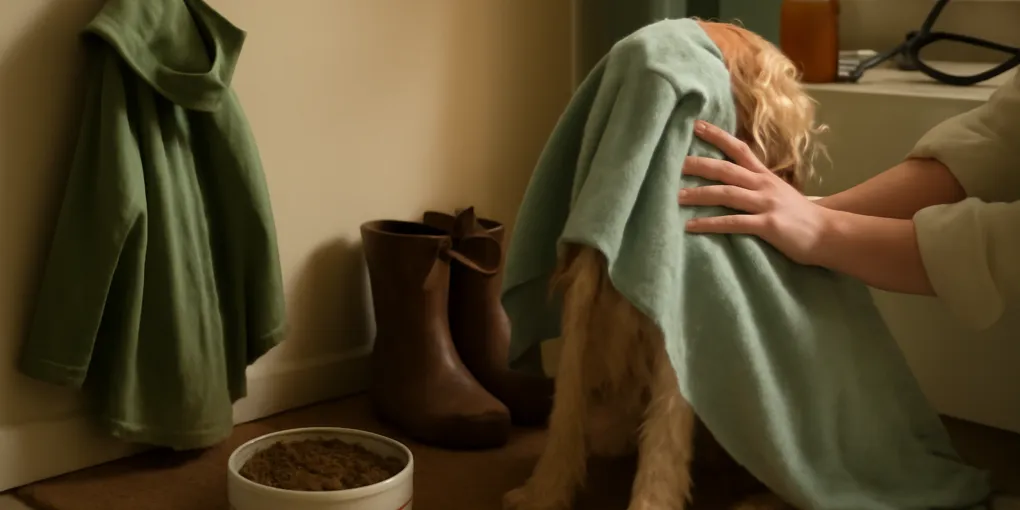
Dog Rain Walk Drying Station Protocol: Towels, Paw Checks, and Safer Entry Routines
ProtocolQuick picks
| Product | Key Specs |
|---|---|
| See price on Amazon |
|
| See price on Amazon |
|
Product availability, certifications, and retailer details can change; check the current Amazon page before buying.
Direct answer
A dog rain-walk drying station is a small entry routine: leash stays on, paws dry first, belly and chest come next, ears and skin folds get a gentle check, and wet towels go straight to laundry or a drying hook. The goal is not a perfectly polished dog. The goal is fewer slips on hard floors, less mud tracked indoors, and fewer damp spots sitting against skin.
Wet-weather care matters because rain can hide heat, cold, traffic, and footing risks. The AVMA’s warm-weather safety guidance reminds owners to protect pets from heat stress and environmental hazards during outdoor activity (AVMA). VCA’s grooming and coat-care guidance also stresses routine coat care, mat checks, and skin attention as part of dog health (VCA Hospitals). In rainy seasons, the same practical idea applies: manage the environment before a normal walk turns into paw irritation, a fall at the door, or a dog who bolts through the house while still soaked.
Step 1: set the station before the walk
Put a washable mat inside the door, hang two towels within reach, and keep a small trash or laundry bin nearby. One towel handles paws and belly. The second stays cleaner for the back, neck, or a dog who shakes water onto their face. If you have a long-coated dog, add a wide-tooth comb for checking mats after the coat is mostly dry.
Search Amazon for microfiber dog drying towels if thin kitchen towels are soaking through before all four paws are dry. Microfiber is useful because it absorbs more than a thin towel and is less bulky than a bath towel near the door. Search Amazon for washable dog mud mats when the dog needs a consistent grippy place to stand while you work.
Step 2: keep the leash on until the check is done
Do not unclip the dog the second the door closes. A wet excited dog can sprint across slick tile, jump on furniture, or shake water from a raincoat strap into outlets and rugs. Keep the leash short enough that all four paws stay on the mat, then ask for a simple stand, sit, or hand target. If the dog is young or frantic, feed a pea-size treat after each paw. For two-dog households, dry one dog behind a baby gate or closed interior door so the second dog is not bouncing into the towel routine.
Dry paws first. Cup each paw in the towel, press gently, and check between toes for gravel, road salt, lawn burrs, cracked pads, or a bent dewclaw. Do not twist toes or scrub raw skin. For dogs with hairy feet, lift the paw high enough to see the pads but keep the leg in a natural position. If mud is packed around the nails, use a damp corner of the towel before the final dry pass so grit is not rubbed into the skin.
Step 3: dry the belly, chest, and moisture traps
Rain splashes up from the ground, so the belly and chest may be wetter than the back. Dry the underside before the dog lies down. Short-legged dogs, senior dogs, and dogs with skin folds need extra attention because water can sit against warm skin. Pat folds dry; do not grind a towel into irritated areas.
For ears, dry the outer ear flap and surrounding fur only. Do not push towels, wipes, or cotton swabs into the ear canal. Dogs who swim, have floppy ears, or already get ear irritation may need a separate veterinarian-approved ear routine. For water-specific care, see the dog post-swim ear drying protocol.
Step 4: rotate gear so the station stays clean
A damp towel pile becomes an odor source quickly. Hang towels where they can dry or put them into laundry. Lift rubber-backed mats so moisture does not sit under them. If you use paw wipes, close the package tightly and throw used wipes away before the dog can chew them.
Keep the station simple. A towel, mat, leash hook, and waste bin beat a crowded shelf of sprays. If a product leaves fragrance on the coat or makes the floor slippery, it does not belong at the entry.
Coat-length adjustments
Short-coated dogs often need a fast paw and belly routine. Long-coated dogs need a second pass after the first towel removes surface water, because wet feathering behind the legs can mat as it dries. Double-coated dogs should be patted and separated with fingers rather than scrubbed into tangles.
If your dog wears a harness or raincoat, remove it at the mat and dry the contact points. Wet straps under the armpits or across the chest can rub during the next walk if they are hung up dirty and put back on damp.
What to avoid
Avoid hot hair dryers on wet skin. Heat can build fast, and the noise can make some dogs panic. If you use a dryer for a thick coat, use low or cool airflow, keep it moving, and stop if the dog is stressed. Avoid scented human wipes, harsh cleaners on paws, and any product your dog tries to lick aggressively.
Avoid skipping the walk entirely just because of light rain if your dog needs bathroom access, but adjust the route. Choose better footing, avoid deep puddles where you cannot see glass or metal, and shorten the loop during lightning, flooding, extreme cold, or extreme heat.
Dog rain walk drying station FAQ
What should I dry first after a rainy walk?
Dry paws first so the dog does not slip or track grit. Then dry the belly, chest, tail base, and any coat areas that stay wet against skin.
Are dog raincoats enough to skip drying?
No. Raincoats reduce soaked fur on the back, but paws, legs, belly, and ears can still be wet. Check fit too; a rubbing coat can create a new problem.
How many towels do I need?
For one small dog, two towels may work. For larger dogs or daily rain, keep a rotation so one towel can dry or be washed while another is ready at the door.
Internal next step
If your dog comes home muddy rather than just wet, compare this routine with the dog paw washer evidence explainer. If rain walks are difficult because of heat instead of mud, review dog cooling mat heat safety.
Sources
- AVMA: Warm weather pet safety
- VCA Hospitals: Grooming and coat care for your dog
Frequently Asked Questions
- Usually no. Towels and airflow are enough for many dogs. Use dryers cautiously, on low heat, and only if the dog is comfortable and the coat truly needs it.
- No. Wipes can remove surface grime, but towels remove water and help you inspect pads, nails, and skin between toes.