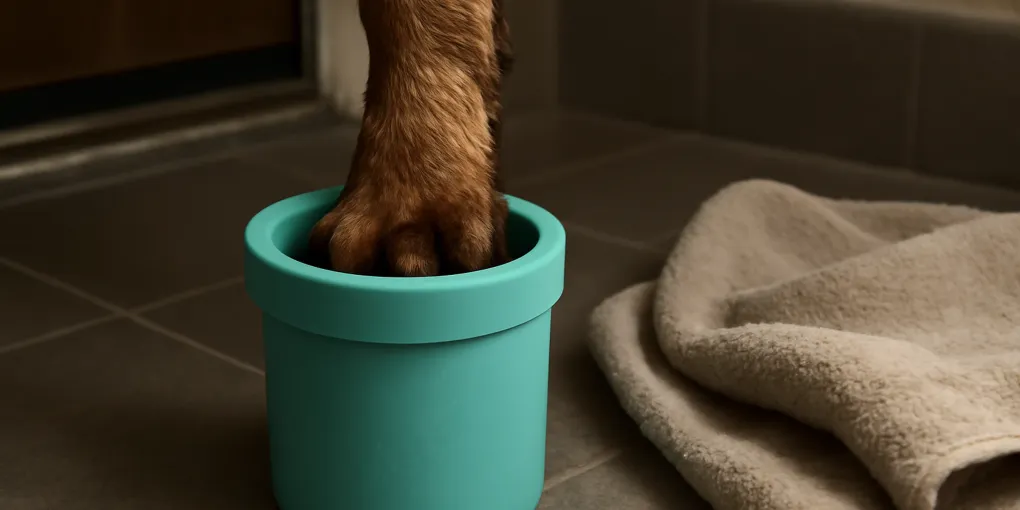
Do Dog Paw Washers Work? Mud, Allergens, Skin Risk, and Better Use Cases
Evidence ExplainerQuick picks
Dexas MudBuster Portable Dog Paw Cleaner
★ Top pick Best known paw-washer style- Why it is included: A silicone-bristle cup can rinse mud from paws before it dries into floors and bedding.
Unscented dog grooming wipes
Best light-duty alternative- Why it is included: Better for quick pollen or sidewalk residue cleanup when the paws are not packed with mud.
Dog paw washers work for one narrow job: loosening mud, grit, salt residue, and yard debris from the paw before it spreads through the house. They do not treat itchy skin, cure environmental allergies, disinfect wounds, or replace a veterinary exam when a dog is licking, limping, bleeding, or chewing paws raw.
That distinction matters. A paw washer can be a useful doorway tool after rainy walks, trail runs, or winter sidewalks. It can also become a wet, irritating chore if used too aggressively, left dirty, or treated as a medical solution.
If heat is the concern, start with our dog cooling mat safety guide and shade/water planning. Paw cleaning helps with surface debris; it does not make hot pavement safe.
Quick comparison: paw cup, wipes, or towel
- Choose a paw-washer cup for visible mud packed between pads after rainy walks, trail runs, or winter sidewalks.
- Choose unscented paw wipes for light pollen, dust, or car-seat cleanup when the paw is not muddy.
- Keep a microfiber towel at the door even if you buy a cup, because wet paws should be dried between toes.
- Skip cleaning-only fixes when paws are red, swollen, smelly, bleeding, or repeatedly chewed.
The evidence-informed answer
There are not many clinical trials on consumer paw-washer cups. The logic is mechanical: water plus flexible bristles can remove visible soil from fur and between toes. Veterinary dermatology guidance for itchy or irritated paws commonly emphasizes identifying triggers, controlling infection/inflammation when present, and avoiding harsh products. A rinse can help after exposure, but it is only one part of paw care.
A useful paw washer is therefore a hygiene tool, not a health claim. It is most valuable when you can see mud, sand, lawn chemicals, ice-melt residue, or pollen-heavy dust and when your dog tolerates gentle handling.
Paw-washer buying checks
A paw washer is useful for mud control only if it fits the dog and does not irritate the skin. Check:
- Cup size: the paw should fit without forcing toes against stiff bristles.
- Skin tolerance: wipe and dry thoroughly, especially between toes.
- Use case: buy for muddy walks; do not use it as a substitute for veterinary care when licking, redness, odor, or sores are present.
When a paw washer is worth buying
Buy a paw washer if your dog regularly returns with mud packed around the pads, if you live with winter sidewalk residue, or if towel-only cleaning leaves grit between toes. The best households keep the cup near the door with a towel, use lukewarm water, and empty it after each session.
A paw cup is less useful for dogs that only track a little dust. For those dogs, an absorbent mat, damp towel, or unscented wipe is faster and less stressful.
Product-led options
Dexas MudBuster Portable Dog Paw Cleaner
The MudBuster-style cup is the clearest fit for muddy walks. Flexible silicone bristles reach between toes better than a flat towel, and the cup shape contains dirty water. Choose the correct size so the paw fits without scraping the dewclaw or forcing the toes together.
- Best for: muddy yards, trail dogs, and rainy-season doorway cleanup.
- Caveat: empty and rinse the cup after every use; dirty standing water defeats the point.
- Current options: Search Amazon for Dexas MudBuster portable dog paw cleaner
Unscented dog grooming wipes
Wipes are the better choice when the dog has light dust, pollen on the coat, or minor sidewalk residue but not clumps of mud. Choose unscented products and stop if the skin becomes red or the dog objects strongly.
- Best for: apartment dogs, quick car cleanup, and light pollen-season paw wiping.
- Caveat: wipes can irritate some dogs; avoid fragrance and do not use on open skin.
- Current options: Search Amazon for unscented dog paw wipes
Microfiber paw towel
A towel is still the lowest-risk default. It dries the paw after rinsing, lets you inspect pads, and avoids product residue. Even if you buy a paw washer, keep a dedicated towel beside it because wet paws can soften skin if left damp.
- Best for: daily finishing step after any water-based cleaning.
- Caveat: launder often; a sour towel can irritate skin and smell worse than muddy paws.
- Current options: Search Amazon for microfiber dog paw towel
How to use a paw washer without making paws sore
Fill the cup with lukewarm water below the top, insert one paw gently, rotate or pulse the cup a few times, then remove and dry thoroughly. Do not scrub hard. Check between toes for burrs, foxtails, redness, cuts, cracked pads, or trapped ice.
Introduce the tool with treats and one paw at a time. If the dog pulls away, start with a damp towel and build tolerance gradually. A doorway battle four times per walk is not sustainable.
When paw licking means something else
Repeated licking, chewing, staining, swelling, odor, limping, or sores should not be managed with a cleaner alone. Dogs can lick paws because of allergies, yeast or bacterial infection, foreign material, injury, parasites, pain, or anxiety. Cleaning visible dirt is reasonable; delaying care for inflamed paws is not.
If your dog has ticks or burrs after outdoor time, see our tick removal protocol and inspect the whole body, not only the feet.
FAQ
Can a paw washer help with dog allergies?
It may reduce pollen or dust on the paw surface after exposure, but it does not treat allergic skin disease. Persistent itching, redness, odor, or sores need veterinary guidance.
Should I put soap in a dog paw washer?
For routine mud removal, plain lukewarm water is usually the safer starting point. Use medicated or antiseptic products only as directed by a veterinarian.
Do paw washers work for long-haired paws?
They can help, but long hair traps more water and debris. Dry between toes carefully and consider professional grooming if mats form around the pads.
Are paw washers safe for puppies?
Yes when used gently, sized correctly, and introduced slowly. Puppies may find the sensation strange, so start with a towel and one paw rather than forcing all four feet at once.
Sources
- VCA Animal Hospitals. Pododermatitis in dogs: https://vcahospitals.com/know-your-pet/pododermatitis-in-dogs
- VCA Animal Hospitals. Allergies in dogs: https://vcahospitals.com/know-your-pet/allergies-in-dogs
- ASPCA. Common dog diseases and owner warning signs: https://www.aspca.org/pet-care/dog-care/common-dog-diseases