Dexas MudBuster Paw Washer Review: Helpful for Muddy Dogs or One More Wet Mess?
ReviewDexas MudBuster portable dog paw washer
Best for repeat muddy-paw rinsesBest for: Dogs that tolerate one paw at a time after muddy walks
Budget to mid-range
Quick picks
| Product | Key Specs |
|---|---|
| See price on Amazon |
|
| See price on Amazon |
|
Product availability, certifications, and retailer details can change; check the current Amazon page before buying.
Verdict
The Dexas MudBuster is useful when your specific problem is wet mud packed around the pads after walks. It is not magic, and it is not a dry-paw solution. Think of it as a small rinse cup with soft internal scrubbers: helpful for repeat muddy entries, annoying if your dog hates paw handling, and incomplete unless you dry afterward.
For the broader category evidence, see our explainer on whether dog paw washers work. This review focuses on the MudBuster-style cup decision: buy it, use towels, or set up a rinse station.
Buy or skip
- Buy/search if your dog brings home wet mud several times a week: Search Amazon for Dexas MudBuster portable dog paw washer.
- Use towels first if your problem is rainwater, light grit, or a dog that dislikes restraint: Search Amazon for Bone Dry microfiber pet towels.
- Skip the cup if your dog has painful paws, foxtails, cracked pads, interdigital cysts, or panic around foot handling. Those are inspection or veterinary problems, not gadget problems.
How it works
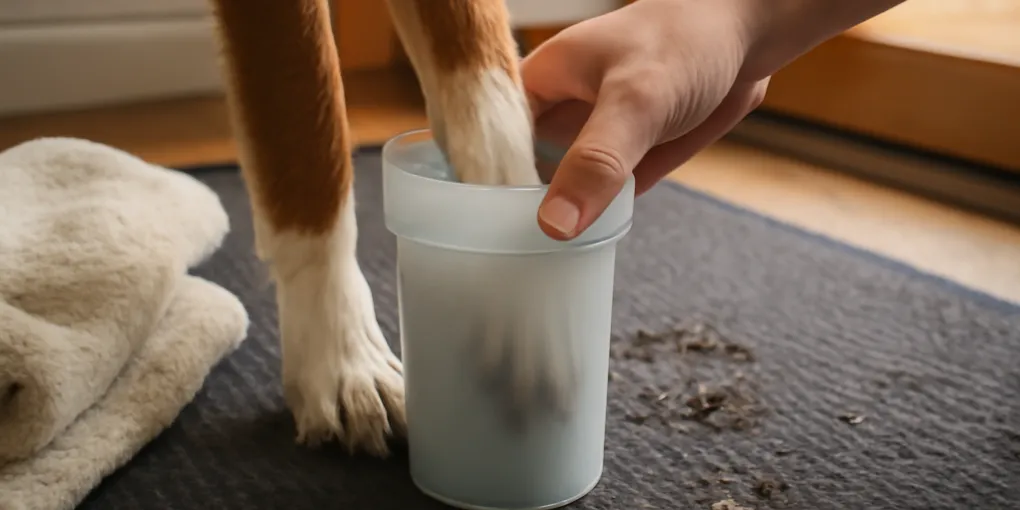
The MudBuster is a cup with a removable silicone-bristle insert. You add a small amount of water, insert one paw, twist or move the cup gently, then remove and towel-dry the paw. The bristles loosen mud around the nails and pads while the water captures grit.
That design is most useful when mud is wet enough to dissolve but not so heavy that the water turns opaque after one paw. For clay soil, dog-park sludge, and winter sidewalk grime, expect to refresh the water often. If you do not change dirty water, the fourth paw may be getting a brown rinse rather than a cleaning.
Fit and sizing matter
Do not choose the cup by breed alone. Measure the paw width across the pads and compare it with the current size chart. A cup that is too narrow presses toes together and can make the dog resist. A cup that is too large sloshes water, loses contact with the paw, and becomes harder to control at the door.
Long nails, dewclaws, and heavy paw furnishings can change the feel. Dogs with feathering between toes may need a comb and towel after the rinse. Short-coated dogs may be faster, but they still need the area between toes checked and dried.
Skin safety checks
The American Veterinary Medical Association’s basic grooming guidance emphasizes inspecting skin, coat, ears, teeth, and nails as part of routine care. That applies here: cleaning paws should reveal problems, not hide them under repeated wetting.
Source: AVMA pet grooming and skin care guidance
After every use, spread the toes gently and look for redness, cracks, lodged gravel, burrs, grass awns, swelling, or a sour odor. Moisture trapped between toes can irritate skin. If your dog licks after every wash, the issue may be residual dampness, cleaning friction, allergies, salt, or infection.
Training protocol
Introduce the empty cup first. Let the dog sniff it, touch it with a paw, and take a treat. Add a small amount of water only after the dog accepts the object. Start with one front paw, one gentle dip, and immediate drying.
Do not chase the dog with the cup. Put a mat near the door, keep treats nearby, and use the same sequence after each muddy walk: stand, paw, rinse, towel, treat, release. Predictability does more than force.
Cleaning and storage
Remove the silicone insert, rinse grit from the bristles, and let the parts dry separately. If the cup smells musty, it is not ready for the next use. Do not store dirty water in the cup between walks.
For multi-dog homes, empty and refill between dogs if the first dog leaves heavy mud, salt, or visible debris in the water. A paw washer should reduce what comes inside, not become a shared soup of yard bacteria and grit.
When towels or a rinse station are better
A microfiber towel is better for light rain, senior dogs that need careful balance, and dogs that dislike having paws enclosed. A low shower sprayer or outdoor rinse station is better for belly mud, sandy legs, skunk odor, or paws contaminated with chemicals.
If winter salt is the issue, a gentle rinse plus thorough drying matters more than the specific brand of cup. If grass seeds or foxtails are common in your area, inspect manually before twisting any bristle insert around the paw.
Reader test
Buy the MudBuster if you can name the cup size, doorway routine, drying towel, and water-change plan. Skip it if you only want fewer dirty floors but have not trained paw handling. The product helps when the dog cooperates and the mess is truly paw-level mud.
For apartment entries, pre-fill the cup before the walk if you know the route will be muddy. Keep the towel on the floor, not on a counter, so you do not have to hold a wet paw while reaching. For dogs with white paws, check the water after the first paw; if it is already dark, dump it before moving to the next foot.
Dexas MudBuster FAQ
Does it hurt dog paws?
It should not hurt when correctly sized and used gently, but dogs with sore paws, wounds, cracked pads, or foreign material between toes may react painfully. Inspect first.
Can I use soap in it?
Use plain water for routine mud unless your veterinarian recommends something else. Soap residue between toes can irritate skin if not rinsed completely.
Is it good for large dogs?
It can be if the large size matches the paw and the dog accepts the routine. Very large or paw-sensitive dogs may be easier to clean with a towel and low sprayer.
Frequently Asked Questions
- It can be worth it for dogs that tolerate paw handling and come home with wet mud between toes. It is less useful for dry dust, burrs, heavy matting, or dogs that need a full rinse.
- No. It rinses; it does not dry. You still need a towel and a quick skin check between toes.
- Choose by actual paw width and the product size chart, not just breed name or body weight.