Do Dogs Need Raised Beds for Cooling? Airflow, Joint Comfort, and Heat Limits Explained
Evidence ExplainerQuick picks
| Product | Key Specs |
|---|---|
| See price on Amazon |
|
| See price on Amazon |
|
Product availability, certifications, and retailer details can change; check the current Amazon page before buying.
Bottom line
A raised mesh dog bed can be useful cooling gear because it lets air move under the dog instead of trapping body heat against carpet, turf, or a padded bed. It is most helpful in shade, indoors with a fan, on camping trips, or as a washable rest spot for dogs that like firm surfaces. It is not a substitute for heat safety.
Dogs can overheat quickly in warm, humid, or poorly ventilated conditions. The AVMA warns that pets need shade, water, and protection from hot environments, and that heatstroke signs require urgent veterinary attention (AVMA hot weather pet safety). VCA also describes heat stroke as an emergency involving dangerous body-temperature elevation and signs such as excessive panting, drooling, weakness, collapse, vomiting, diarrhea, or mental dullness (VCA heat stroke in dogs).
What a raised bed actually changes
Airflow under the dog
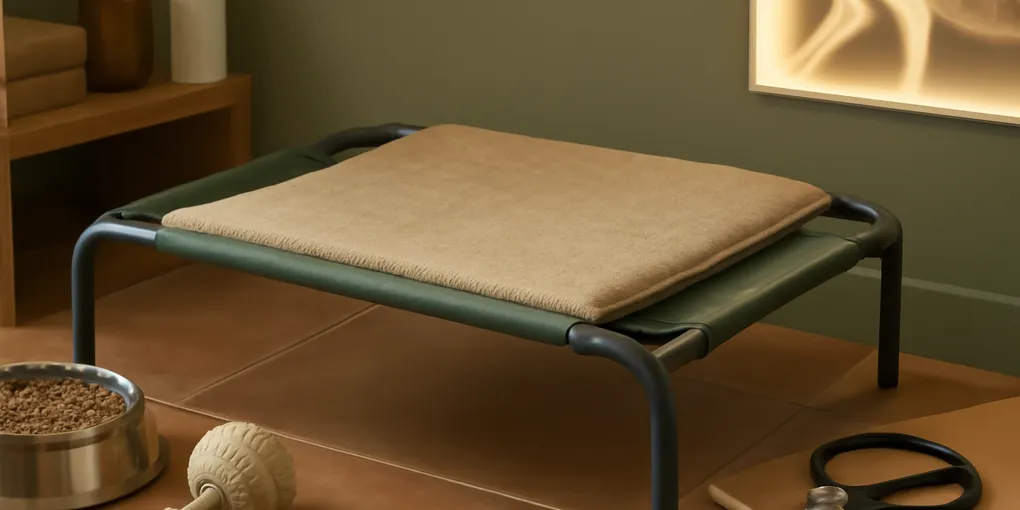
A cot-style bed lifts the dog off surfaces that hold heat. Mesh fabric also dries faster than plush foam after damp paws or a hose-down. That makes it a practical rest platform after a walk, swim, or yard session.
Airflow matters most when the surrounding air is reasonably safe. If the patio is blazing hot and windless, a raised bed is just a more breathable place in unsafe conditions. Move the dog indoors or into deep shade instead.
Contact with hot surfaces
Decking, artificial turf, pavement, and dark mats can become uncomfortable. A cot creates separation. It also keeps elbows and belly away from damp ground at campsites or muddy training fields.
Still check the frame and fabric. Metal and dark plastic can heat in sun. Touch the surface with your hand before asking the dog to lie down.
Rest behavior
Some dogs choose elevated cots because they are firm, defined, and easy to leave. Others dislike the bounce or fabric tension. If your dog avoids the cot, do not assume the dog is stubborn; the bed may be too high, too narrow, unstable, or slippery.
When a raised cot is worth buying
A raised mesh cot is worth considering if your dog rests outdoors with you in shade, overheats on plush beds, tracks dirt onto indoor cushions, camps often, or needs a washable place cue. Search Amazon for raised mesh dog cots.
Choose a cot with:
- Full-body length so the dog can sprawl.
- Low height for seniors, puppies, and short-legged dogs.
- Non-skid feet for tile or deck use.
- Replaceable fabric if the dog is rough on beds.
- No sharp frame corners near elbows or hocks.
For heavy chewers, skip soft plastic corners and supervise first sessions. For giant breeds, check the actual weight rating and fabric tension rather than relying on a product photo.
Raised cot versus cooling mat
A cooling mat can feel pleasant for short indoor rest breaks. It may be better for dogs that refuse cots or need a flat surface. The tradeoff is durability and supervision. Gel mats can be chewed, pressure mats can warm up, and fabric covers need washing. Search Amazon for dog cooling mats.
A raised cot is simpler: no gel, no freezing, no electrical parts. It improves airflow but does not actively cool the dog below ambient conditions. Many homes use both: cot in shade, mat indoors, and strict limits on activity.
Our separate dog cooling mat safety guide covers gel mat caveats in more detail.
When to skip the cot
Skip or delay a raised bed if your dog is unstable, blind and anxious on new surfaces, recovering from surgery, or likely to jump on and off repeatedly. Use a low orthopedic bed indoors instead and ask your veterinarian about mobility support.
Also skip outdoor cot use during dangerous heat. If the dog is panting hard, drooling, weak, confused, vomiting, or unwilling to move, cooling gear is not enough. Move to a cooler place and contact emergency veterinary care.
Raised bed setup checklist
Place the cot in shade, not beside a reflective wall or hot grill. Put water nearby. Test the surface temperature. Teach a calm place cue with treats. Start with short sessions and watch whether the dog stretches out, relaxes, and leaves comfortably.
If the cot is for a senior dog, add a non-slip approach path. If it is for a patio, choose a washable fabric and rinse pollen, dirt, and saliva regularly. If it is for camping, check the legs on uneven ground before the dog climbs on.
For multi-dog homes, buy based on the largest dog that will use the cot, then supervise the first week. Dogs that guard resting spots may need separate beds. A cot should lower heat and cleaning friction, not create a new conflict zone.
Raised dog bed FAQ
Is mesh better than canvas for cooling?
Usually yes for airflow, but mesh can sag or catch nails if it is cheap. Canvas may be sturdier but warmer. Pick based on the dog’s weight, nails, and chewing habits.
Can a raised cot help pressure points?
It can reduce contact with hard ground, but it is not the same as a thick orthopedic bed. Dogs with arthritis may prefer padded support indoors and a low cot only for supervised outdoor rests.
Should I put a cooling mat on top of a raised cot?
Only if the mat lies flat, the dog will not chew it, and the cot remains stable. Many mats block some airflow, so check whether the combination actually keeps the dog comfortable.
Frequently Asked Questions
- No. A raised cot can improve airflow under the body, but heatstroke prevention still depends on shade, water, rest, temperature, humidity, and stopping activity early.
- Some senior dogs like the firm support, but others struggle with the step-up height or fabric tension. Choose low, stable frames and watch gait and confidence.