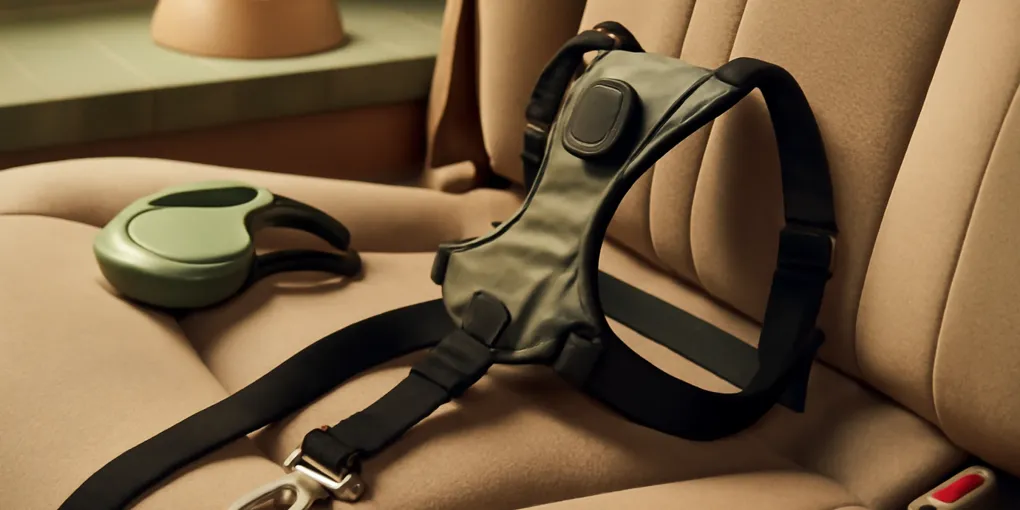
Best Dog Seat Belt Harnesses: Crash-Test Claims, Fit, and What to Avoid
Buyer's GuideSleepypod Clickit Sport harness
Crash-test focusedBest for: Owners prioritizing documented crash-testing over quick on/off convenience
$90-$120
Quick picks
| Product | Key Specs |
|---|---|
| See price on Amazon |
|
| See price on Amazon |
|
| See price on Amazon |
|
Product availability, certifications, and retailer details can change; check the current Amazon page before buying.
Direct answer
The best dog seat belt harness is one with credible crash-test documentation, a broad chest load area, strong metal hardware, and a fit that keeps force off the throat. Avoid attaching a car tether to a normal walking collar or a thin step-in harness. In a sudden stop, those products are not designed to manage crash forces.
A harness is only one safe travel option. Some dogs are better protected in a properly secured travel crate, especially small dogs that slip out of harnesses or anxious dogs that spin and tangle.
Quick picks for car restraint
- Search Amazon for Sleepypod Clickit Sport harnesses if documented crash testing is the top priority.
- Search Amazon for Kurgo enhanced strength harnesses for a more affordable car-and-walk option, after checking current size/testing details.
- Search Amazon for crash-tested dog travel crates if a crate is a safer match for your dog.
How we judged the options
| Criterion | Weight | Score | Why it matters for car restraint |
|---|---|---|---|
| Research | 30% | 8.0 | Vehicle-pet safety guidance supports restraint and warns against loose pets in cars. |
| Evidence Quality | 25% | 7.5 | Independent crash-test evidence is limited by product and model year, so claims need checking. |
| Value | 20% | 8.0 | A restraint can prevent driver distraction and reduce injury risk, but only if fitted correctly. |
| User Signals | 15% | 8.0 | Real-world complaints focus on sizing, twisting, chewing, and dogs escaping loose harnesses. |
| Transparency | 10% | 9.0 | No harness makes a back seat risk-free; crate or barrier setups may be better for some dogs. |
What “crash-tested” should mean to a buyer
Look for specific test information, not just the phrase on a package. Useful documentation names the test protocol, dog weight range, harness size, and whether the product passed or only participated. The Center for Pet Safety has shown that pet travel products vary widely in performance, so vague marketing is not enough.
Check the current model, not only old reviews. A harness can change materials, buckles, or sizing over time. If the brand publishes videos or reports, confirm they match the size you plan to buy.
Fit matters more than the tether
A safe car harness spreads force across the chest and shoulders. It should not ride high against the throat, gap behind the elbows, or twist around the body when the dog sits. Measure the dog standing, using the brand’s chest and neck instructions, and recheck after the first short ride.
Do not use a long tether that lets the dog hit the front seat or fall into the footwell before it tightens. The tether should allow sitting and lying down without giving a running start. If the dog chews webbing, supervise closely or use a crate instead.
Test the tether with the vehicle parked: it should remain untwisted when the dog changes between sitting and lying down.
Products and setups to avoid
Do not clip a seat belt strap to a collar. Do not use a retractable leash as a car restraint. Do not rely on a decorative vest harness with plastic side-release buckles unless the maker documents car-restraint use. Do not let the dog ride in the front seat, where airbags add risk.
Back-seat hammock covers can keep upholstery cleaner, but they are not restraints. Use them only with a harness or secured crate that actually limits movement.
When a crate is the better buy
Small dogs, puppies, anxious dogs, and dogs with narrow chests may fit more safely in a secured crate than in a harness. A crate should be strong, ventilated, and fastened so it does not become a projectile. It should be large enough for normal posture but not so large that the dog slides hard across it.
If your dog drools, vomits, or panics in the car, solve that with veterinary guidance and gradual conditioning rather than only tightening the restraint.
Size and shape checks before the first highway trip
Measure chest girth with the dog standing, then compare it with the maker’s chart for the exact model. Deep-chested dogs, very narrow dogs, and fluffy coats can make a harness look snug while the load-bearing panel is misplaced. After buckling in, ask the dog to sit and lie down. If the chest plate rides into the throat, the back strap twists, or the tether pulls the dog sideways, adjust or choose a different restraint before driving.
For long trips, practice on short neighborhood rides first. A dog that spends the entire ride turning, chewing, or bracing against the tether is not safely restrained yet, even if the hardware is strong.
Harness-by-harness fit notes
The Sleepypod-style approach is best for owners who are willing to treat the car harness as dedicated safety gear, not as the fastest walking harness in the drawer. The broad chest panel and seat-belt routing are the point. If the dog has a very short body, deep chest, or thick coat, measure twice and test the sit/lie-down positions before removing tags. A harness that looks secure while the dog stands can shift when the dog curls on the seat.
The Kurgo enhanced-strength style is more appealing when one harness needs to cover short walks at rest stops. That convenience is useful, but it can tempt owners to leave the fit looser for comfort. For car use, snug means you can fit fingers under the straps without the chest plate drifting. Recheck after the first week because webbing can settle.
A crash-tested travel crate is not a downgrade. It can be the better answer for toy breeds, puppies, dogs with narrow shoulders, and dogs that chew tethers. The crate still needs secure placement. A loose crate in the cargo area can move violently, and an oversized crate can let the dog hit the walls before the crate stops.
Setup checklist before you drive
Put the dog in the rear seat or secured cargo area, never on the driver’s lap. Route the vehicle belt exactly as the harness maker shows; improvised clipping can change how force moves through the product. Keep the tether short enough that the dog cannot reach the front seat, but long enough for a natural sit or down. Remove hard toys from the seat during the ride because they can become impact objects.
Check the harness after every wash, chew incident, or hard stop. Frayed webbing, bent hardware, cracked buckles, and stretched stitching are replacement signs. If you use the harness daily for walks, inspect it more often than you would inspect a crate that stays in the car.
Realistic expectations
A restraint reduces risk; it does not make travel risk-free. In a severe crash, forces are high for every occupant. The practical goal is to reduce driver distraction, keep the dog from becoming a projectile, and give emergency responders a better chance of finding and handling the dog safely after a collision.
Who should not use a seat belt harness as the only plan
Skip harness-only travel if the dog can back out of fitted walking gear, chews straps within minutes, panics when restrained, or has a medical condition that makes chest pressure risky. Flat-faced breeds, very small puppies, and dogs recovering from surgery may need a veterinary-specific travel plan. A secured crate, a veterinary appointment about nausea or anxiety, or a second person riding with the dog can be safer than forcing a harness solution.
Households with multiple dogs should also avoid clipping two dogs to one anchor or letting tethers cross. Each dog needs its own restraint path with enough space to sit without stepping over another dog’s belt. If the back seat cannot support that, use crates or make separate trips.
FAQ
Can I use my dog’s walking harness in the car?
Only if the manufacturer specifically rates it for vehicle restraint and you follow the car setup instructions. Most walking harnesses are not built for crash forces.
Should the dog sit in the front or back seat?
The back seat is the safer default. Front airbags can injure pets, and a loose front-seat dog can distract the driver.
Are dog seat belt clips safe?
A clip is only as safe as the harness, tether length, anchor point, and hardware. A clip attached to a collar is unsafe.
Related reading
- For water-trip restraint decisions, see do dogs need life jackets?.
- For senior small dogs that need mobility help outside the car, read best dog strollers for senior small dogs.
Sources
- Center for Pet Safety publishes independent pet travel product testing and certification information: https://www.centerforpetsafety.org/
- AVMA travel safety guidance recommends restraining pets and planning safe car trips: https://www.avma.org/resources-tools/pet-owners/petcare/traveling-your-pet-faq
- AAA Foundation has documented driver-distraction concerns, relevant to loose pets in vehicles: https://aaafoundation.org/
Bottom line
Choose a dog car harness by crash-test documentation, chest fit, short controlled tethering, and hardware quality. Recheck the fit after real sitting and lying positions during a parked-car rehearsal, not only while the dog stands in the kitchen. If the dog cannot ride calmly in that setup, a secured travel crate may be the safer purchase.