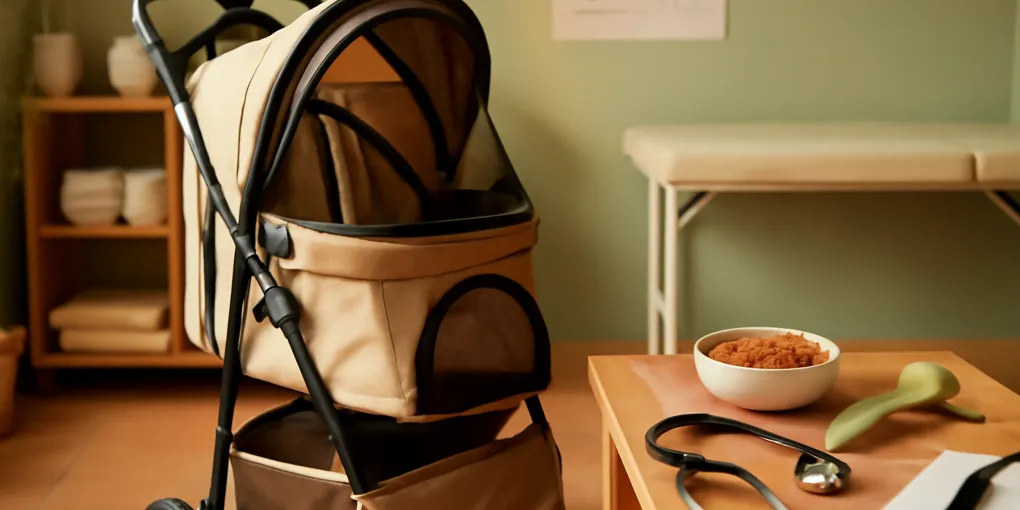
Best Dog Strollers for Senior Small Dogs: Fit, Brakes, and When to Use One
Buyer's GuideLow-entry small dog stroller
Best for seniorsBest for: Small senior dogs that need shorter walks but still enjoy outdoor time
$70-$180
Quick picks
| Product | Key Specs |
|---|---|
| See price on Amazon |
|
| See price on Amazon |
|
| See price on Amazon |
|
Product availability, certifications, and retailer details can change; check the current Amazon page before buying.
Quick answer
The best dog stroller for a senior small dog is low enough to enter safely, roomy enough for a natural lying posture, stable on the paths you actually use, and equipped with brakes you can trust. Buy it as outing support, not as a way to ignore pain, lameness, heat, obesity, or a dog who no longer wants crowded environments.
A good stroller lets a senior dog join a family walk after the comfortable walking portion is over. A bad stroller becomes a shaky box that scares the dog and hides the real mobility problem.
Quick picks
- Search Amazon for low-entry small dog strollers if your dog has arthritis, short legs, or hesitation stepping up.
- Search Amazon for all-terrain pet strollers if your route includes rough sidewalks, park paths, or curb cuts.
- Search Amazon for foldable pet strollers if storage, car loading, and vet-visit handling are the main use cases.
How we evaluated dog strollers
| Factor | Weight | What mattered | Senior-dog application |
|---|---|---|---|
| Fit and posture | 30% | Cabin length, width, height, and weight limit | The dog should not curl tightly or brace to stay upright. |
| Evidence quality | 25% | Mobility support matched to veterinary caution | Strollers support comfort but do not diagnose pain. |
| Value | 20% | Frame quality, washable surfaces, and useful brakes | A cheap tippy stroller is poor value if the dog refuses it. |
| User signals | 15% | Complaints about wheels, zippers, brake failure, and tipping | Repeated mechanical failures matter more than cup holders. |
| Transparency | 10% | Clear dimensions and return terms | Breed labels are less useful than measured cabin size. |
Who should consider one
A stroller makes sense when a small senior dog still enjoys sights, smells, and family outings but cannot walk the full distance. Common use cases include arthritis, heart or respiratory limits, post-injury rest periods, hot pavement avoidance, crowded vet waiting rooms, and neighborhoods where large off-leash dogs make walking stressful.
Use the stroller after a short sniff walk, not instead of every step. Many senior dogs still need gentle movement, toileting breaks, and muscle maintenance. Ask your veterinarian if lameness, collapse, coughing, weakness, or sudden exercise intolerance is new.
Fit checks before buying
Measure from the dog’s nose or chest to the base of the tail for usable length, from floor to shoulder for sitting height, and across the chest for width. Add room for a blanket without crowding ventilation. Check the stated weight limit, then look for reviews from dogs near the upper limit. A 24-pound dog in a 25-pound-rated stroller is not a good margin.
The cabin should have mesh ventilation, a flat enough floor, and a tether point that prevents jumping without choking. The tether should attach to a harness, not a neck collar. For long-backed dogs, measure the lying-down position rather than the standing body length only; dachshunds, small mixes, and thin seniors often need more horizontal room than the product photo suggests.
Brake and wheel rules
Brakes matter more than storage pockets. Engage the brake every time you load or unload. Test the stroller on a slight slope with no dog inside. If it rolls, skids, or rocks, do not trust it with a senior pet.
Small plastic wheels can work on smooth clinic floors and short sidewalks. Larger airless or rubberized wheels are better for cracked pavement. Jogging-style frames may roll smoothly but can be harder to store and lift. Avoid using a stroller for running unless the manufacturer explicitly supports it and your dog is secure and comfortable.
Entry height and lifting
Many senior small dogs dislike being lifted because of back, hip, or shoulder pain. A low-entry stroller, front door, or ramp-like opening can reduce handling. If you must lift the dog, support the chest and hind end together. Do not scoop under the armpits only.
Practice at home with treats, an open canopy, and no movement. Let the dog step in, eat, step out, and repeat. Then roll a few feet indoors before trying a busy sidewalk.
Match the stroller to the route
A stroller that is excellent for clinic floors can be frustrating on a cracked neighborhood loop. For smooth sidewalks and vet waiting rooms, a compact four-wheel frame with locking rear wheels, a low front door, and a cabin around 24-28 inches long is often enough for toy breeds and small seniors. For parks, curb cuts, brick paths, or gravel edges, look for larger rubberized wheels, a wider rear stance, and a brake pedal you can engage while holding the leash. If the front wheels chatter on every sidewalk seam, the dog may brace through the shoulders and refuse the ride.
Before buying, picture the hardest part of the normal outing: the apartment elevator threshold, the sloped driveway, the clinic door, the car trunk, the park path after rain, or the curb where you load the dog. That one obstacle usually determines whether a 12- to 17-pound foldable stroller is practical or whether you need a sturdier all-terrain frame that may weigh 20 pounds or more. Owners with hand, wrist, or back limitations should compare handle height, folded length, one-hand fold claims, and trunk clearance before ordering. A stroller that protects the dog but is painful for the person to lift will not get used consistently.
Comfort details that matter after ten minutes
The cabin floor should feel flat and supported under a towel or thin pad. If the floor bows, a senior dog may slide into a corner and tense the neck or back. Mesh on more than one side helps airflow and lets the dog see without standing. Zippers should close without catching fur, and the canopy should not press on the ears when the dog sits.
For dogs with urine leakage, muddy paws, or post-surgery restrictions, washable liners are more useful than plush trim. Choose fabrics you can wipe after a vet visit and dry before the next walk. If the dog has a sensitive trachea, attach any interior tether to a harness and keep it short enough to prevent jumping, but not so short that the dog is held in a stiff sitting position.
Acclimation plan for nervous seniors
Introduce the stroller as furniture before it becomes transportation. Day 1: park it in a quiet room with the rear brake locked, canopy open, mesh panels unzipped, and the dog’s regular blanket on the floor panel so the cabin smells familiar. Feed a few treats near the wheels, then on the front entry lip, then inside the cabin, then with the canopy partly closed. The first rolling session can be 10 feet in the hallway with the interior tether clipped to a harness and the dog’s paws fully on the floor pad. End before the dog tries to jump out.
On the first outdoor trip, choose a 5- to 10-minute low-stimulation route and let the dog walk the first block if that is comfortable. Load before fatigue turns into limping, keep the brake on during loading, and avoid bumpy curbs until the dog can stay relaxed for several short rides. If the dog trembles, pants hard in cool weather, claws at the mesh, tries to turn in a cabin that is too narrow, or freezes after several attempts, the stroller may not fit that dog’s temperament or body shape.
When to skip the stroller
Skip it if the dog panics, cannot settle, overheats inside the cabin, or is showing unexplained pain that needs veterinary care first. Skip crowded festivals if your senior dog startles easily or strangers keep reaching in. Skip direct sun when the cabin gets hot, even with mesh windows.
Also skip stroller use when it delays a needed veterinary visit. A dog who suddenly refuses stairs, drags toes, knuckles a paw, coughs during short walks, collapses, or cries when lifted needs assessment before a new piece of gear becomes the workaround. The stroller can make appointments and controlled outings easier after the problem is understood, but it should not become a rolling way to normalize new pain or weakness.
A stroller is not a crate, and it is not a safe restraint for car travel unless specifically crash-tested for that use. Fold it and use a proper car restraint or carrier in the vehicle.
FAQ
Is a stroller good for an arthritic senior dog?
It can help with distance and rest breaks, but it should sit alongside veterinary pain management, weight control, home traction, and gentle movement the dog can still do comfortably.
How big should a dog stroller cabin be?
The dog should be able to sit, turn, and lie naturally. Measure the dog instead of trusting breed labels, and leave room for ventilation and a thin pad.
Can a dog stroller make a senior dog weaker?
Yes, if it replaces all walking. Use it for longer outings, heat management, vet visits, or breaks, while preserving safe short walks your veterinarian approves.
Related reading
- Pair stroller use with our senior dog mobility plan.
- For vehicle trips, review how to secure a dog in the car.
Sources
- AVMA senior pet care guidance explains behavior and mobility changes owners should discuss with a veterinarian: https://www.avma.org/resources-tools/pet-owners/petcare/senior-pets
- AVMA arthritis guidance covers mobility, pain signs, weight management, and veterinary treatment planning for pets: https://www.avma.org/resources-tools/pet-owners/petcare/arthritis-pets
- VCA Hospitals senior-dog guidance discusses comfort, mobility changes, and adapting routines as dogs age: https://vcahospitals.com/know-your-pet/helping-our-senior-dogs-age-gracefully
Bottom line
Choose a senior dog stroller by fit, brakes, entry height, wheel stability, and your actual walking route. The right stroller extends comfortable outings. It should not hide pain, replace all movement, or put a nervous dog in a rolling crowd.