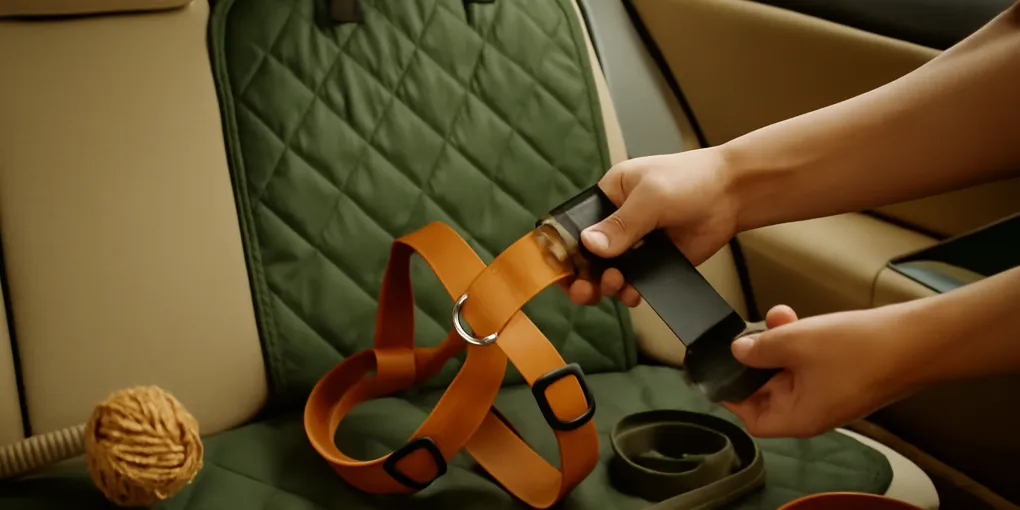
How to Secure a Dog in the Car: Harness, Crate, and Back-Seat Setup Protocol
ProtocolQuick picks
Start with a crash-tested dog car harness
★ Top pick- Why consider it: Best for medium and large dogs who ride on the back seat and can settle without chewing straps.
Use a secured travel crate for crate-trained dogs
- Why consider it: Best for smaller dogs, anxious dogs who relax in crates, and vehicles with a cargo area that can anchor a crate correctly.
Add a waterproof back-seat cover for traction
- Why consider it: A cover is not restraint by itself, but a grippy cover can reduce sliding and protect seats when used with a real harness or crate.
Securing a dog in the car is not only about preventing distraction. It is about reducing movement during sudden braking, keeping the dog away from airbags and open windows, and making routine rides predictable enough that the dog can settle. The safest setup depends on the dog’s size, behavior, vehicle layout, and whether the dog can tolerate a harness or crate without chewing.
Quick picks for safer dog car restraint
- Search Amazon for crash-tested dog car harnesses.
- Compare crash-tested dog travel crates on Amazon.
- See non-slip waterproof dog back-seat covers on Amazon.
For adjacent travel gear, see our reviews of dog crates and dog life jackets for water trips.
The protocol
Step 1: choose the restraint type
Use a crash-tested harness for dogs who can ride on the back seat without twisting, biting straps, or lunging at windows. Look for a broad chest plate, short seat-belt connection, and manufacturer crash-test documentation. The harness should be a travel restraint, not a thin walking harness with a random tether.
Use a secured travel crate when the dog is small enough for a properly placed crate, already crate-trained, or too likely to chew a harness. The crate must be sized so the dog can lie down and turn, but not so large that the dog is thrown across empty space. The crate also needs vehicle anchoring according to the manufacturer’s instructions.
Use a barrier only as a movement-management add-on. A cargo barrier may keep a dog out of the front seat, but most barriers do not provide crash restraint by themselves.
Step 2: move the dog out of the front seat
The back seat or a properly secured cargo-area crate is the default. Front seats add airbag and dashboard impact risks. A lap-held dog is unsecured cargo during a sudden stop, even if the trip is short.
If your dog panics in the back seat, solve the panic before relying on longer trips. Practice with the car parked, then with the engine on, then with one-block drives. A stressed dog who spins in a harness can create new injury risks.
Step 3: fit the harness before the first ride
Fit the harness at home while the dog is standing. You should be able to slide two fingers under the straps without gaping. The chest plate should sit on the chest, not across the throat. The back connection should keep the dog from reaching the front seat or window opening.
Do one short parked-car session before driving. Clip the harness to the seat belt, feed a few treats, unclip, and leave. If the dog immediately chews the strap, switch to a crate plan rather than hoping the chewing stops at highway speed.
Step 4: control traction and temperature
A slippery bench seat makes the dog brace even when restrained. A non-slip, waterproof seat cover can help, but it is not a restraint. Keep the dog’s paws on a flat surface, remove loose toys that can roll under pedals, and avoid thick bedding that lets a crate slide.
Temperature matters before and after the drive. Dogs can overheat in parked vehicles quickly, and brachycephalic, senior, overweight, and heart-disease dogs have less margin. Plan fuel, food, and restroom stops so the dog is not left unattended in a hot car.
Step 5: build the routine
Use the same loading door, same seat, and same cue every time. Clip the dog in before you load bags or open other doors. At the destination, attach the leash before releasing the restraint. Many parking-lot escapes happen during the transition between car and sidewalk.
For dogs who bark at traffic, cover part of the side window view or place the crate so the dog cannot scan every passing vehicle. Do not use remote yelling or repeated corrections from the driver’s seat. If barking or panic remains intense, ask a veterinarian or credentialed behavior professional for a travel anxiety plan.
Restraint mistakes that make car rides riskier
Do not clip a tether to a collar; braking force belongs on a car-rated chest harness or in a secured crate, not on the throat. Do not let the seat-belt strap run long enough for the dog to hit the console, front seat, or side glass. Do not buy a thin walking harness only because the listing includes a seat-belt loop; look for crash-test documentation, weight limits, belt-routing instructions, and a chest plate that stays below the neck.
Window access needs the same scrutiny. A dog riding with its head far outside the window can be hit by debris, jump at a stop, or twist against the restraint. Keep windows cracked for ventilation instead of open wide, and attach the leash before unclipping the harness in parking lots.
Also avoid overloading the back seat with hard objects around the dog. In a sudden stop, water bottles, tools, luggage, and loose crates can become impact hazards. Put heavy bags in the cargo area or footwell, keep the dog’s floor space flat, and remove toys that could roll under the driver’s pedals.
How to choose between harness and crate
Choose the harness route when your dog can lie down on the rear bench, leaves straps alone, and stays calm when clipped in. The restraint should limit forward travel without forcing the dog into an awkward crouch. Check the product instructions for weight range, belt routing, and whether the harness was tested as a car restraint rather than only marketed with a seat-belt loop.
Choose the crate route when your dog relaxes in enclosed spaces, chews fabric, or becomes tangled in a harness. A travel crate should not slide on the seat or cargo floor, and soft household crates are not automatically vehicle restraints. Measure the dog standing and lying down, then confirm the crate can be secured in your actual vehicle before buying a larger model just because it looks more comfortable.
For multi-dog households, secure each dog separately. Two dogs clipped to one tether can twist the strap, crowd each other, or transfer force unpredictably during sudden braking. If one dog is anxious and one is calm, train the anxious dog’s loading and settling routine separately before combining them in the same vehicle.
FAQ
Can I clip a dog seat belt tether to a normal walking collar?
No. A tether attached to a neck collar can concentrate crash or braking force on the throat. Use a car-rated harness or a properly secured travel crate instead.
Is the front passenger seat safe for a dog?
The back seat is usually safer because front airbags and dashboard impact points add risk. If a veterinarian gives a medical transport exception, placement should follow the vehicle manual, restraint instructions, and the dog’s medical needs.
Do dog car barriers count as crash restraint?
Most barriers manage movement inside the cabin but do not restrain the dog in a crash. They can be useful with a crate or harness plan, but they should not be the only safety device.
How do I stop my dog from chewing the harness strap?
Condition the harness outside the car first, keep trips short, use chew-safe enrichment before departure, and switch to a secured crate if the dog targets straps while moving.
Sources
- Center for Pet Safety. Certified products and crash-test program context: https://www.centerforpetsafety.org/cps-certified/
- ASPCA. Hot weather safety tips for pets: https://www.aspca.org/pet-care/general-pet-care/hot-weather-safety-tips
- American Kennel Club. Heatstroke in dogs: https://www.akc.org/expert-advice/health/heatstroke-in-dogs/