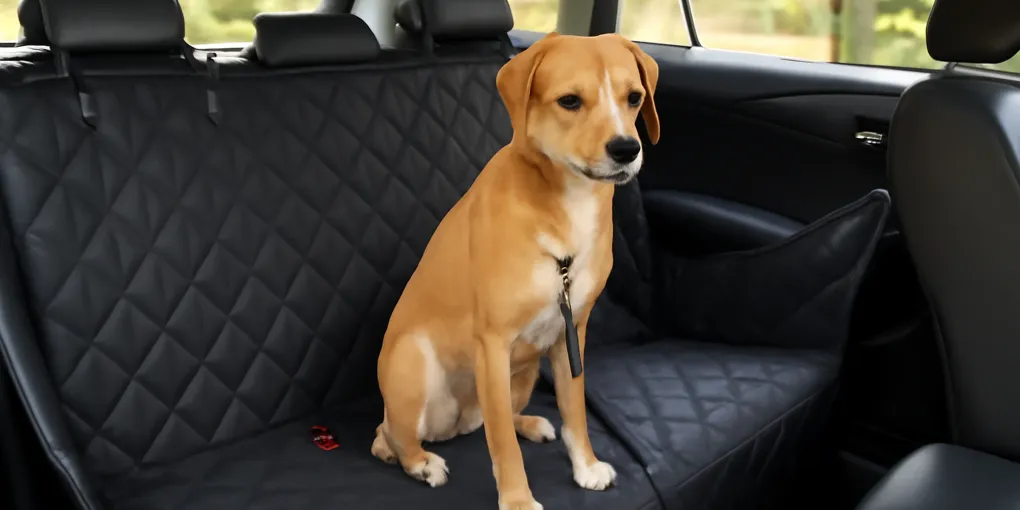
Best Dog Car Seat Covers for Hammock Safety: Protect Seats Without Losing Restraint Access
Buyer's GuideQuilted dog hammock with zippered seat-belt openings
Best overallBest for: Most back-seat dogs using a separate crash-tested harness or carrier
$35-$80
Quick picks
| Product | Key Specs |
|---|---|
| See price on Amazon |
|
| See price on Amazon |
|
| See price on Amazon |
|
Product availability, certifications, and retailer details can change; check the current Amazon page before buying.
Best dog car seat covers for hammock safety
A dog car hammock is worth buying when it keeps mud, hair, nails, and drool off the back seat without interfering with the actual restraint. The safest shopping rule is simple: the hammock protects the car; a crash-tested harness, secured carrier, or secured crate protects the dog. If a listing implies that the cover itself restrains a dog in a crash, skip it.
For most back-seat setups, start with a quilted hammock that has zippered openings for seat-belt buckles. Then add a properly fitted restraint system. The American Veterinary Medical Association recommends restraining pets in vehicles and never letting them ride unrestrained in a driver’s lap or loose around the cabin (AVMA). The Center for Pet Safety also emphasizes independent crash testing for carriers, crates, and harnesses, which is a different claim from waterproof fabric or door protection (Center for Pet Safety).
If your dog also struggles with mobility when loading, pair this with our senior dog mobility plan rather than asking the hammock to solve jumping, slipping, and pain.
Quick picks
- Search Amazon for dog hammocks with seat-belt openings if your dog rides in the back seat with a separate restraint.
- Search Amazon for split bench dog seat covers if humans or child seats sometimes share the row.
- Search Amazon for nonslip dog cargo liners if the dog rides in a secured crate or cargo setup.
- Search Amazon for crash tested dog harness if you still need the restraint piece.
How to judge the cover
The best hammock has four practical features. First, buckle openings should be reinforced and easy to reach. If you must fish for the buckle under a blanket of fabric, you will eventually clip the restraint incorrectly or stop using it. Second, the surface should be nonslip enough that a dog can stand, turn, and lie down without skating at every brake. Third, anchor straps should fit your headrests without forcing the front seats into an awkward position. Fourth, the cover should clean easily after saliva, mud, or car-sickness residue.
Door panels sound protective, but they are not automatically better. A high side wall can help with mud and scratches; it can also block airflow, trap heat, or make a nervous dog feel boxed in. Mesh center windows may improve visibility and rear air movement, but only if they do not tear or sag into the dog’s space.
Restraint access matters more than waterproof claims
Waterproof fabric is convenient. It is not a safety feature if it hides the buckle path. Check the exact vehicle row before buying: some cars have buckles that sit low, some have rigid stalks, and some have split-folding seats that need independent access. A good cover lets the restraint webbing run straight, without rubbing against a zipper or looping around a headrest post.
If the dog uses a harness, confirm that the tether length prevents front-seat access and floor falls without creating a loose clothesline. If the dog uses a carrier, secure the carrier according to the product instructions instead of resting it on top of the hammock.
Fit by dog and car
For a muddy retriever, prioritize water-resistant fabric, full bench coverage, and a machine-washable or hose-rinse design. For a small dog, prioritize buckle access and a low-stress surface because tiny paws slip easily on slick quilted covers. For a senior dog, prioritize traction and loading height; a ramp may matter more than the cover.
Measure the bench width, headrest spacing, and distance from rear seat back to front seat back. Covers labeled universal can still sag in compact cars or leave exposed edges in wide SUVs. If you use a child seat, choose a split cover that lets the child restraint remain installed according to its manual and local law; do not route straps through random cover slits.
Cleaning and odor control
Choose a cover you will actually wash. Muddy fabric left in a warm car can smell quickly. Remove loose hair before washing so drains and machines do not clog. If the cover has foam, rigid panels, or rubber backing, follow the manufacturer’s care instructions; high heat can warp backing and reduce grip.
A towel over the loading edge helps with wet paws, but do not pile loose blankets around a restrained dog. Loose layers can bunch under feet, cover buckles, or become chew material during a stressful ride.
Dog car hammock FAQ
Can a hammock keep my dog from falling into the footwell?
It can reduce that risk during normal driving, but it should not be your only plan. A properly fitted harness, carrier, or crate keeps the dog positioned; the hammock is secondary protection.
Is a hard-bottom extender better?
Hard-bottom extenders can help small or older dogs by creating a flatter platform, but they need careful fit. A board that shifts, blocks buckles, or raises the dog into poor harness geometry is not an upgrade.
What should I avoid?
Avoid covers with no buckle openings, slick vinyl surfaces, vague restraint claims, strong chemical odor, or straps that interfere with airbags, child seats, vents, or the driver’s seat position.
Best setup by rider style
For a calm dog that lies down, a hammock with buckle openings and a separate harness tether is usually enough. Keep the tether short enough that the dog cannot reach the front console, but long enough for the dog to lie with the chest and hips square. A dog forced to sit sideways because the tether is too short may twist into pressure points on long drives.
For a dog that stands and watches every window, prioritize traction. Quilting pattern matters less than the top surface. Run your hand across it and imagine a wet paw on a hard brake. If the fabric feels slick, add a fitted nonslip mat or choose another cover. Loose towels are weaker because they wrinkle and slide under the dog’s feet.
For a dog that scratches doors, use side flaps only if they attach securely and do not cover window controls, locks, airbags, or airflow. Door flaps are most useful during loading and unloading. Once the door is shut, the dog should be positioned by the restraint, not by fabric walls.
For puppies and adolescent dogs, assume chewing. Avoid exposed foam, dangling zipper pulls, loose straps, and soft storage pockets near the mouth. A hammock that survives an adult dog may be a toy to a teething puppy. Check the cover after every ride until you know how the dog behaves.
Crash language to distrust
Seat-cover listings sometimes blur comfort, containment, and crash protection. Look for the exact claim. A cover can be waterproof, quilted, nonslip, hammock-style, or heavy duty without being crash tested. A tether clipped to a collar is not a crash-tested system. A strap around a headrest is not the same as a restraint anchored to the vehicle according to a tested product design.
If a product says it keeps the dog from falling into the footwell, treat that as everyday containment only. It may help during ordinary stops, but crash forces are different. Buy the cover for the mess problem and buy the restraint for the safety problem. That separation keeps the shopping decision honest.
Loading and unloading routine
A good cover should make the first and last thirty seconds easier. Park, clip the restraint before opening the door fully, and keep the leash on until the dog is on the ground. Hammocks with side flaps can reduce muddy contact with the door sill, but they should not tempt you to let the dog jump blindly from a high SUV. Small dogs, seniors, and dogs with back or knee issues may need a ramp or lift assist.
After beach, trail, or dog-park trips, shake out sand and grit before it grinds into the seat. If the cover is wet, remove it at home instead of leaving moisture trapped against upholstery. Check the seat-belt openings for grit; a buckle packed with sand or hair is harder to latch cleanly next time.
What to check after installation
Sit in the driver’s seat and confirm the front seats still move normally. Check rear vents, child-seat anchors, buckles, and door locks. Put the dog in the car while parked, clip the restraint, and watch one full settle cycle. The dog should be able to lie down without putting a paw through a buckle slit or stepping on a loose strap.
Then drive a short local loop before using the setup for a highway trip. Listen for sliding fabric, buckle rattles, or stress vocalization. If the dog pants, braces, drools, or refuses to lie down, the problem may be motion sickness, anxiety, heat, or footing rather than the cover alone. Solve that before relying on the hammock for a long drive.
Product fit matrix
Choose a hammock with full-width bench coverage for muddy sporting dogs, a split bench cover for family cars that still need passenger access, and a cargo liner only when the dog rides in a secured crate or a cargo area designed for that use. Choose lighter fabric for hot climates if it still grips; choose thicker quilting for claws and cold wet gear. If a listing hides dimensions, buckle-opening photos, or cleaning instructions, move on.
The best purchase is the one that preserves the entire vehicle routine: leash, restraint, buckle path, door control, ventilation, loading height, cleanup, and a human who still checks the dog at stops.
Sources
- AVMA: Traveling with your pet FAQ
- Center for Pet Safety: Pet travel product safety resources
Frequently Asked Questions
- No. Treat the hammock as seat protection and a loose debris barrier. Use a crash-tested harness, secured carrier, or secured crate for restraint.
- No. Buckle access matters because the restraint or passenger seat belt still needs a clean, untwisted path.
- They can be, but check airflow and surface heat. Dark waterproof fabric can feel warm, especially when the car has been parked in sun.