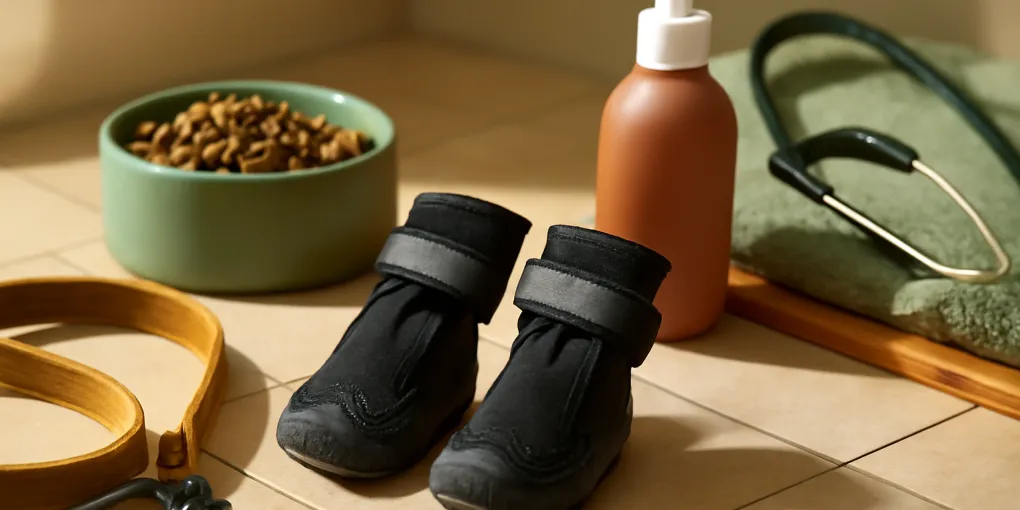
Best Dog Booties for Hot Pavement: Grip, Fit, and Heat-Safer Walks
Buyer's GuideRuffwear Grip Trex style breathable dog boots
$70-$90 per set
Quick picks
| Product | Key Specs | Pros / Cons |
|---|---|---|
| See price on Amazon | — |
|
| See price on Amazon | — |
|
| See price on Amazon | — |
|
Product availability, certifications, and retailer details can change; check the current Amazon page before buying.
Heat safety comes before the boot
Dog booties help when a sidewalk is warm enough to irritate paws but the walk still has to happen. They are not a heatstroke fix. If the air is hot, humidity is high, the route has no shade, or the dog is panting hard before the first block, move the walk to dawn, dusk, grass, or indoors.
The Humane Society and ASPCA both emphasize shade, water, and avoiding hot surfaces during summer outings. Paw burns and body overheating can happen together, so treat booties as one layer of risk control, not the whole plan.
PSR pavement-boot scorecard
| Criterion | Weight | Score | Why it matters for hot pavement |
|---|---|---|---|
| Research | 30% | 8.0 | Heat-safety guidance consistently warns against hot pavement exposure. |
| Evidence quality | 25% | 7.0 | Product evidence is mostly fit and owner-use data, so fit testing matters. |
| Value | 20% | 8.0 | A usable set can prevent aborted walks and paw irritation during necessary trips. |
| User signals | 15% | 8.0 | Boot refusal, twisting, and strap rub are the common failure points. |
| Transparency | 10% | 8.5 | This guide separates paw protection from heatstroke prevention. |
| Composite | 7.8/10 | Useful for short summer pavement exposure when heat timing is already conservative. |
Quick picks for different summer walks
- Search Amazon for Ruffwear Grip Trex boots if you need a structured sole, breathable upper, and measured fit for routine city walking.
- Search Amazon for QUMY hot pavement boots if you want a lower-cost set for short errands and can tolerate a bulkier boot.
- Search Amazon for Pawz rubber dog boots if the problem is a brief driveway, parking lot, or patio crossing rather than a full walk.
How to measure before buying
Put the dog on paper while standing, not sitting. Mark the widest part of the paw under weight. Measure front and rear paws because they may differ. If the boot lands between sizes, read the brand’s width chart and return terms before assuming bigger is safer.
A too-large summer boot twists and makes the dog high-step. A too-small boot squeezes toes and can rub the dewclaw area. For hot pavement, fit matters as much as sole thickness because a slipping boot makes the dog spend more time on the surface.
Sole and upper tradeoffs
For hot pavement, look for a sole that bends at the toes but still has visible tread, not a smooth costume bottom. Ruffwear-style boots usually give the most structure for curb cuts and rough concrete. QUMY-style waterproof boots can protect on short errands, but the thicker upper may feel warm if the dog is out longer than a potty break. Pawz-style rubber boots are best treated as a thin barrier for brief crossings, not as a long-walk asphalt shoe.
The upper should be breathable enough for summer and low-bulk enough that the dog can place the paw flat. Look for straps that close above the paw without crossing the dewclaw. Reflective trim is helpful for dawn or dusk walks, which are usually the better summer walking windows.
First-use training
Introduce one boot indoors with treats. Add the second boot only after the dog can stand calmly. Keep the first full set session under five minutes. Expect awkward steps at first, but stop if the dog freezes, bites at the straps, or shows a rub mark.
Do the first outdoor test on shaded pavement. Walk thirty to sixty seconds, check that each boot still points forward, then check the paws. A boot that rotates on the first minute will not become safer on a hot route.
When to skip the walk anyway
Skip or shorten the route if the dog is brachycephalic, elderly, overweight, recovering from illness, or already panting heavily. Booties do not cool the dog. Bring water and choose grass where possible. If heat is the main problem, pair this gear decision with a broader dog cooling station setup instead of relying on pawwear alone.
If a paw pad looks red, blistered, peeled, or painful after heat exposure, stop boot use and call a veterinarian. Do not apply harsh cleaners or adhesive bandages without advice.
Fit problems that mean return or exchange
Return the boot if the front edge folds under the paw, if the sole twists sideways, or if the dog repeatedly kicks the same boot off after a calm indoor introduction. A summer pavement boot has to stay aligned while the dog turns, steps off curbs, and changes speed. If it works only while the dog stands still in the kitchen, it is not ready for asphalt.
Check the top strap after five minutes. You should not see a deep band in the fur or skin. Long-haired dogs may need the hair around the paw brushed flat before fitting because trapped hair can make a strap seem secure while the boot slides during movement. Dogs with prominent dewclaws need extra caution; the strap should not saw across the dewclaw on every step.
Choosing by dog profile
A city apartment dog that crosses one hot block to reach a shaded park usually needs easy-on boots that tolerate quick potty trips. A trail dog that also hits hot parking lots needs a tougher sole, but that sole should still bend enough for normal gait. A senior dog may need lighter boots and a shorter training ramp because lifting the feet high can be tiring.
For small dogs, watch boot weight. Some rugged boots are built for larger paws and can feel clumsy on toy breeds. For large dogs, check width and strap length before brand reputation. A well-known boot in the wrong width can rub faster than a simpler model that actually matches the paw.
Boot cleaning after hot asphalt walks
After a pavement outing, tap each boot sole-down and brush out asphalt grit from the toe pocket, strap fold, and seam where the upper meets the tread. Fine sand trapped inside a Ruffwear-style fabric boot or a QUMY-style waterproof boot can abrade paw pads on the next route. If the liner feels damp, open the straps fully and air-dry the set before putting it back in a closed leash bin.
Inspect the paw pads while the boots dry. Look between toes for redness, seed heads, softened skin, or a dewclaw rub line from the upper strap. A dog that licks one paw after a boot walk may be reacting to friction, trapped heat, or debris rather than disliking boots in general. Sour odor, sticky lining, cracked rubber, or worn tread means clean or replace the set before the next hot-sidewalk errand.
What not to buy for hot pavement
Avoid novelty shoes with smooth costume soles, fashion boots with hard seams inside the toe box, and heavy winter boots marketed mainly for snow. Hot-weather pawwear should prioritize breathable uppers, predictable traction, and a fit chart that uses paw width. If the listing cannot explain sizing beyond small, medium, and large, expect more trial and return risk.
Be cautious with adhesive paw pads for pavement. They can shift, collect grit, or pull hair and skin during removal. Paw wax may reduce minor abrasion, but it does not create the same thermal barrier as a real boot and should not be treated as enough for hot asphalt.
Three-test fit check before keeping the boots
Keep the packaging until the dog completes three short tests: one indoor fit session, one shaded outdoor potty trip, and one normal curb-to-grass transition. During each test, check whether the toes stay inside the sole, whether the strap loosens, and whether the dog starts favoring one foot. Take the boots off immediately after the test so you can inspect skin rather than discovering rubs later.
Do not judge by the funny first few steps alone. Many dogs high-step in any boot at first. Judge by recovery: the dog should settle into a normal gait, approach treats, and turn without rolling a paw. If the boot still changes movement after several calm sessions, the design is wrong for that dog.
Add one warm-weather surface test before a real errand: touch the pavement yourself, choose a shaded patch, and walk only far enough to see whether the sole grips when the dog turns back toward you. If the boot slides on a turn, rubs behind the stopper pad, or traps grit after one minute, exchange it before asking the dog to cross a parking lot.
For multi-dog households, do not share boots unless the paw width and gait match closely. A boot stretched by a larger dog can loosen on a smaller one, and damp liners can move skin irritation between dogs. Label each set or store it with the leash for that dog.
Dog booties FAQ
Can I use socks instead of dog booties?
Indoor socks are usually too slippery and too thin for hot pavement. They may help inside on smooth floors, but they are not a reliable sidewalk solution.
Should boots cover dewclaws?
Usually no. The strap should secure the boot without grinding over the dewclaw. Check that area after every early walk.
Are dog booties worth it for apartment dogs?
Yes if the only potty route crosses hot concrete or asphalt. They are less useful if you can switch to shaded grass at cooler times.
How many minutes can a dog walk in hot-pavement boots?
There is no safe universal number. Start with a very short test, avoid peak heat, and stop for panting, lagging, paw lifting, or boot twisting.
Sources
- Humane Society: Keep pets safe in the heat
- ASPCA: Hot weather safety tips
- American Kennel Club: Dog paws and hot pavement
Frequently Asked Questions
- No. Booties are paw protection, not permission to walk at peak heat. Shorten the route, seek shade, and watch breathing and gait.
- They should stay above the paw without pinching toes, rubbing dewclaws, or cutting circulation. Check skin after the first five minutes.
- They can help for brief crossings, but structured breathable boots usually handle longer pavement contact better.