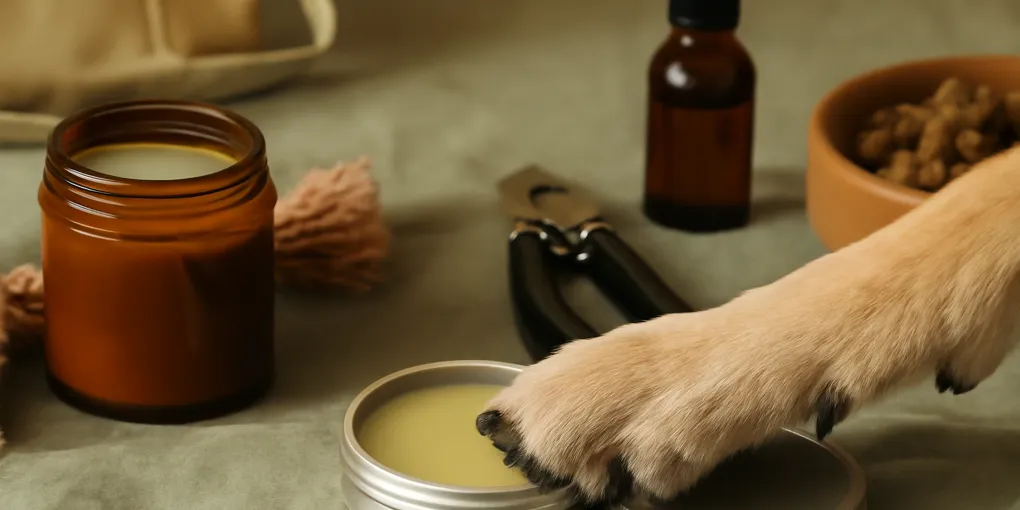
Best Dog Paw Balm for Winter Sidewalks: What to Buy Before Salt Season
Buyer's GuideMusher's Secret Dog Paw Wax
Best overall winter waxBest for: Salted sidewalks, packed snow, short winter walks
$15–$25
Quick picks
| Product | Key Specs |
|---|---|
| See price on Amazon |
|
| See price on Amazon |
|
| See price on Amazon |
|
Product availability, certifications, and retailer details can change; check the current Amazon page before buying.
Best Dog Paw Balm for Winter Sidewalks: What to Buy Before Salt Season
The best dog paw balm for winter sidewalks is a simple wax barrier that you can apply quickly, wipe off after the walk, and replace before it becomes gritty. For most dogs, Musher’s Secret Dog Paw Wax is the strongest first choice because it is built for snow and salt exposure, spreads in a thin layer, and does not require a fussy grooming routine. If your dog’s pads are already rough or cracked, Natural Dog Company Paw Soother is a better recovery-oriented balm for between walks.
A paw balm is not magic armor. It cannot make long walks on ice, sharp crust, or heavy de-icer safe. Its job is narrower: reduce direct contact between pads and sidewalk salt, slow moisture loss from already dry pads, and make the post-walk wipe easier. If your dog is lifting paws, bleeding, chewing, or refusing to walk, skip another balm layer and call your veterinarian. For a broader senior-dog winter routine, pair this with our senior dog mobility plan.
Quick picks
- Best overall: Search Amazon for Musher’s Secret Dog Paw Wax — best wax barrier for salted sidewalks and short snow walks.
- Best for rough pads: Search Amazon for Natural Dog Company Paw Soother — better for dry-pad recovery after the paws are cleaned.
- Budget spare: Search Amazon for dog paw balm winter salt — useful as a mudroom backup when you want a second stick near the leash.
How paw balm helps, and where it does not
Winter paw trouble usually has three overlapping causes: chemical irritation from ice melt, mechanical abrasion from frozen pavement, and moisture loss from cold dry air. A wax balm helps most with the first and third problems. It fills tiny surface irregularities in the pad and leaves a thin hydrophobic layer that can reduce how much salt slurry sits directly on the skin. That layer also makes it easier to wipe grit away before a dog licks it.
The limitation is important. A balm does not stop pressure from ice edges and does not warm the paw. If the route includes frozen gravel, metal grates, or de-icer pellets that look like small crystals, boots are often safer. Balm is best for dogs who tolerate normal walks but come home with dry pads or obsessive licking. Dogs with existing pad wounds need veterinary advice because sealing a dirty wound under wax can trap debris.
Veterinary dermatology guidance generally treats paw-pad irritation as a skin-barrier and exposure problem, not a supplement problem. That is why the most useful product features are boring: a smooth wax, simple ingredients, a container you can open with cold hands, and a texture your dog does not immediately lick off. Strong fragrance is a downside because it encourages licking and adds another potential irritant.
PSR G6 Composite Score for winter dog paw balm
| Factor | Weight | Score | Weighted contribution |
|---|---|---|---|
| Research fit | 30% | 4.3 | 1.29 |
| Evidence quality | 25% | 4.1 | 1.03 |
| Value | 20% | 4.2 | 0.84 |
| User signals | 15% | 4.0 | 0.60 |
| Transparency | 10% | 4.4 | 0.44 |
| Composite | 100% | 4.2/5 |
The score is not a medical claim. It reflects how well the product category or protocol maps to veterinary guidance, owner execution, replacement costs, and avoidable risk. A high score means the purchase or routine has a clear job and a low chance of causing new problems when used as directed. It does not mean every pet should use it or that it replaces veterinary care.
Product notes: what each pick does best
Musher’s Secret Dog Paw Wax
Musher’s Secret is the easiest first recommendation for the owner who needs a winter sidewalk barrier, not a spa treatment. The wax format matters because it can be applied in a very thin film before the walk. You do not want a thick greasy layer; thick balm picks up grit, leaves slippery floors, and gives the dog more material to lick. The right amount is just enough to make the pad look slightly conditioned.
Use it before a predictable exposure: salted sidewalk, packed snow on a neighborhood loop, or a short potty trip after a storm. Keep a small towel by the door and wipe each paw when you return. If the towel picks up gray slush or salt grains, the balm did its job by making removal easier. If your dog still lifts paws within a minute, switch to boots or shorten the route.
Natural Dog Company Paw Soother
Paw Soother is more of a conditioning balm than a pure sidewalk wax. That makes it useful at night after paws are rinsed and dried, especially for dogs whose pads feel rough but are not bleeding. Apply a pea-sized amount, distract the dog for several minutes, and use it away from slick stairs. Owners often fail with this category by applying too much. A thin layer several nights per week beats one heavy layer that ends up on bedding.
Budget winter paw balm
A cheaper balm is reasonable if it has a simple wax-and-oil base, no strong scent, and no medicated claims that sound like wound treatment. The budget option is not for active cracks, swelling, or interdigital redness. It is for owners who want a spare by the door or in a car kit. Before buying, check the listing photos for texture and container size; tiny tins can be awkward with gloves, while very soft balms can melt in a warm car.
Buying criteria that matter in real winter use
First, choose the texture for the job. Wax barriers are better before walks. Softer conditioning balms are better after cleaning. Second, look for a low-odor formula. Dogs investigate smells with their mouths, and a vanilla or herbal scent can turn a protective layer into a licking target. Third, consider your flooring. A greasy balm on hardwood stairs can create a fall risk for both dog and owner.
Fourth, check the container. Sticks are cleaner and easier for quick application, while tins let you control amount better but require a finger or applicator. Fifth, think about coat type. Long-haired paws often collect snowballs between toes; balm on the pads alone will not solve that. Trimmed paw fur, shorter walks, or boots may be needed. Finally, avoid products that imply they can heal wounds without veterinary care. Pad cracks that bleed, smell, drain, or cause limping are medical problems.
How to apply paw balm without creating a licking habit
Start indoors before the first snow. Touch each paw, reward, then touch the balm container to the paw without applying it. On the next session, apply a rice-grain amount to one pad and immediately start a low-key activity, such as clipping on the leash. The goal is to make balm a walk cue rather than a snack cue.
Before a winter walk, apply a thin layer to the main weight-bearing pads and gently press it into the pad surface. Do not pack balm between toes. After the walk, wipe with a damp cloth, dry the paw, and inspect between toes for redness or trapped ice. If the pads look dry later that evening, use a conditioning balm then, not right before another gritty walk.
When boots beat balm
Choose boots instead of balm for long exposure below freezing, known ice-melt sensitivity, sharp crusted snow, repeated paw lifting, or city sidewalks that are visibly coated in chemical pellets. Boots also help dogs with neurological weakness or arthritis when cold surfaces make footing worse. If your dog refuses boots, train them indoors one paw at a time before winter. Balm can still be used under boots for dry pads, but it should not make the paw slide inside the boot.
Owner fit notes by dog and route
Small dogs with short coats often need the most conservative plan because their paws contact cold ground while the body loses heat quickly. A balm can help on a five-minute sidewalk loop, but it should not be used to justify a long route when the dog is shivering. For these dogs, buy the balm that is fastest to apply and keep the walk short enough that paws never become numb.
Large athletic dogs often tolerate cold better but create more pad friction because they hit the pavement harder. Watch for worn pad edges after runs on salted roads. These dogs may do better with a wax before the route and a conditioning balm at night, especially if they run on cleared pavement where salt granules remain.
Long-haired breeds have a different problem: snowballs between toes. Balm on the pads will not prevent all ice clumps in long toe fur. Trim excess paw hair carefully or ask a groomer, then use balm only on the pad surface. If snowballs keep forming, boots are the more honest solution.
Dogs with allergies or a history of interdigital cysts need extra caution. Redness between toes after winter walks may be allergy, infection, salt irritation, or a foreign body. Do not keep layering balm over inflamed skin for a week. Clean, dry, document with a photo, and call your veterinary clinic if it persists.
Label and listing checks before salty walks
Read the ingredient list before the marketing copy. You want a short wax-and-oil style formula, a low-odor presentation, and a texture that reviewers describe as firm rather than runny. Check recent reviews for complaints about melting, graininess, or dogs licking aggressively. Also check container size against your dog count; a tiny stick can disappear quickly in a two-dog home during a snowy month.
The best listing photos show the balm texture and applicator. Be cautious with products that show dramatic before-and-after wound photos or imply they can treat infection. Paw balm is a barrier and conditioner. Medical claims are a reason to slow down, not a reason to trust the product more.
FAQ
Can my dog lick paw balm?
Small incidental licking is common, but the product should not encourage licking. Choose a low-odor balm and use a thin layer. If your dog tries to eat it, stop using that product and ask your veterinarian about safer options.
Should I use balm before or after the walk?
Use wax-style balm before the walk as a barrier. Use conditioning balm after the paws are rinsed and dried. The same product can sometimes do both, but the timing and amount should change.
Does paw balm replace rinsing salt off paws?
No. Rinsing or wiping after salt exposure is still the most important step. Balm makes the cleanup easier; it does not make sidewalk salt safe to leave on the skin.
Sources and veterinary references
- ASPCA: cold weather pet safety tips, https://www.aspca.org/pet-care/general-pet-care/cold-weather-safety-tips
- Merck Veterinary Manual: disorders of the footpads and skin barrier concepts, https://www.merckvetmanual.com/dog-owners/skin-disorders-of-dogs
- VCA Hospitals: first aid for torn or injured foot pads in dogs, https://vcahospitals.com/know-your-pet/first-aid-for-torn-or-injured-foot-pads-in-dogs