Senior Dog Mobility Plan: Ramps, Rugs, Harnesses, and Vet Checks That Actually Help
Evidence ExplainerQuick picks
| Product | Key Specs |
|---|---|
| See price on Amazon |
|
| See price on Amazon |
|
| See price on Amazon |
|
Product availability, certifications, and retailer details can change; check the current Amazon page before buying.
Medical Disclaimer
Mobility changes can come from arthritis, injury, neurologic disease, nail or paw problems, obesity, endocrine disease, pain, or other conditions. This article is educational and cannot diagnose your dog. Sudden weakness, collapse, dragging limbs, severe pain, inability to rise, or loss of bladder/bowel control warrants urgent veterinary care.
How We Score This Explainer
| Criterion | Weight | Score | Weighted | Why it matters for senior mobility |
|---|---|---|---|---|
| Research | 30% | 8.5 | 2.55 | Mobility decline is common and strongly affected by pain control, weight, traction, and daily environment. |
| Evidence Quality | 25% | 8.0 | 2.00 | Veterinary guidance supports early pain assessment, weight management, and home modifications for osteoarthritis. |
| Value | 20% | 8.5 | 1.70 | Small home changes can reduce falls and make veterinary treatment plans easier to follow. |
| User Signals | 15% | 8.0 | 1.20 | Owners search for ramps, rugs, harnesses, and arthritis routines when daily function changes. |
| Transparency | 10% | 9.0 | 0.90 | The score favors practical gear with measurable sizing, weight limits, washable traction surfaces, and a clear job in the dog’s daily route. |
| Composite Score | 8.4/10 | High practical value when paired with veterinary diagnosis and pain control. |
The Short Version
A senior dog mobility plan should start with a veterinary exam and a safer floor plan. The most useful home upgrades are usually not fancy. They are:
- Nonslip routes across hard floors.
- A low ramp or stable steps for furniture and vehicles.
- A support harness for stairs, cars, and bathroom breaks.
- Raised or easier-access resting spots only when they reduce strain.
- Weight, nail, and pain plans guided by the veterinarian.
For product searches, start with Search Amazon for senior dog ramp with traction, Search Amazon for nonslip rugs for dogs, and Search Amazon for dog support harness for hind legs. Verify weight limits, dimensions, washable surfaces, and return policies before buying.
Why Mobility Changes Deserve a Plan, Not Guesswork
Many owners first notice a senior dog hesitating at stairs, slipping on wood floors, rising more slowly, or refusing a car jump. These signs are easy to dismiss as normal aging, but veterinary groups increasingly emphasize that chronic pain and osteoarthritis are underrecognized. A dog that still wags and eats may still be hurting.
The American Animal Hospital Association’s pain-management resources and canine osteoarthritis guidance from veterinary hospitals point to multimodal care: diagnosis, pain control, weight management, appropriate activity, environmental changes, and follow-up. Home products can help, but they work best when the medical cause is known.
A ramp does not fix untreated pain. A supplement does not make slippery floors safe. A harness does not replace a neurologic exam if the dog is dragging toes. The plan is strongest when each piece has a job.
Step 1: Map the Dog’s Daily Routes
Walk through the home at dog height. Note every place your dog slips, jumps, hesitates, pivots, or braces. Common problem zones include:
- Bed to door route for morning bathroom trips.
- Food and water areas on slick tile.
- Stairs to the yard.
- Sofa or human bed jumps.
- Car entry.
- Hallway corners where paws slide outward.
Add traction where the dog already travels. A few well-placed washable runners can matter more than one expensive orthopedic bed in a room the dog rarely uses.
Step 2: Improve Traction First
Slipping causes pain, fear, and compensatory movement. It can also make a dog avoid normal activity. Use nonskid rugs, yoga-mat style runners, or washable traction mats in continuous paths. Avoid loose mats that bunch or slide.
Toenails matter too. Long nails change paw contact and can worsen slipping. Ask your veterinarian, groomer, or rehab professional for help if nails are overgrown, painful, or the dog resists handling.
Paw wax and booties can help some dogs, but they are not universal. A dog with neurologic deficits may scuff or twist booties. Introduce any paw product slowly and watch gait carefully.
Step 3: Replace Jumps With Ramps or Stable Steps
Jumping down from beds, sofas, SUVs, and porches can stress sore joints. A good ramp is low enough in angle, wide enough for confidence, and covered with a surface the dog can grip. Lightweight ramps are convenient but may flex; nervous dogs often need something more stable.
Search options include Search Amazon for folding dog car ramp, Search Amazon for low dog couch ramp, and Search Amazon for wide dog stairs for senior dogs. Match the product to the dog, not to a staged product photo.
Train the ramp with treats on flat ground first. Do not drag the dog up it. If the dog refuses repeatedly, the angle, texture, wobble, or pain level may be wrong.
Step 4: Use a Support Harness for Transitions
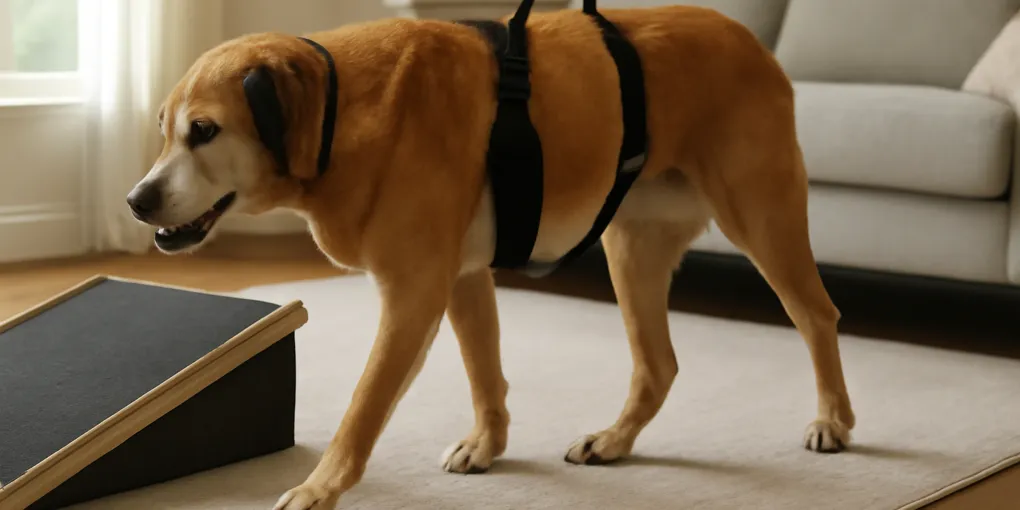
A support harness can help on stairs, car entries, and slippery bathroom trips. It should lift without squeezing the abdomen sharply or forcing the spine into an awkward curve. Rear-lift slings may be useful for hind-end weakness, while full-body harnesses can distribute assistance better for larger dogs.
Look for handles you can actually reach, washable material, and sizing that matches chest and belly measurements. A harness should help the dog move; it should not suspend the dog like luggage unless a veterinarian or rehab professional specifically instructs that technique.
Step 5: Keep Activity Boring and Consistent
Senior dogs usually do better with predictable low-impact movement than with weekend bursts. Short leash walks, gentle sniff routes, and veterinary-approved exercises can maintain function without overloading joints. Avoid sudden fetch marathons after a quiet week.
If your veterinarian diagnoses osteoarthritis, ask whether a rehab referral, weight plan, pain medication, injectable therapy, or specific strengthening program is appropriate. Do not start human pain medications; many are dangerous for dogs.
Weight and Body Condition Are Mobility Tools
Extra body weight increases joint load and can make rising, stairs, and heat tolerance worse. Body condition scoring is more useful than guessing from the scale alone. Ask the clinic to show you the target shape and set a safe calorie plan.
Food puzzles and training treats should be counted in daily intake. If weight loss is needed, use a veterinary plan rather than simply cutting meals until the dog is hungry and undernourished.
Product Checklist
Before buying mobility gear, verify:
- Weight rating and width for your dog.
- Traction surface that works when paws are wet.
- Cleaning method for urine, mud, and hair.
- Storage if the ramp is for a car.
- Return policy if the dog refuses the product.
- Edges and hinges that will not pinch paws.
- Whether the product solves the actual route you mapped.
FAQ
When should a senior dog’s stiffness be checked by a veterinarian?
New, worsening, one-sided, or painful stiffness deserves a veterinary visit, especially if the dog slips, avoids stairs, changes appetite, loses weight, or acts differently.
Are stairs or ramps better for an older dog with sore joints?
A low, stable ramp with good traction is often easier than stairs, but some dogs trust shallow steps more. The best answer depends on diagnosis, size, home layout, and training.
Can rugs really improve senior dog mobility?
Yes. Continuous traction paths reduce slipping and hesitation on hard floors. Place them where the dog actually walks, not just where they look tidy.
Should I start joint supplements before changing the home setup?
Talk with your veterinarian about supplements, but do not delay traction, jump reduction, and pain assessment. Environmental changes are low-risk and often immediately useful.
Sources
- PetMD: How to help dogs with arthritis
- American College of Veterinary Surgeons: Osteoarthritis in dogs
- VCA Animal Hospitals: Arthritis in dogs
- WSAVA Global Nutrition Committee: Body condition score resources
Room-by-Room Setup Examples
In the bedroom, the goal is a safe first movement of the day. Put a nonslip runner from the bed to the door, block high jumps if the dog launches off furniture, and use a low ramp only if the dog accepts it calmly. A dog that wakes stiff may need a few slow steps before stairs.
In the kitchen, focus on traction around food and water. Bowls can slide, water can spill, and excited turning can make paws skate outward. A washable mat under bowls helps, but it should have a rubber backing that stays flat.
At the door to the yard, add traction before and after the threshold. Many dogs slip when they accelerate outside or hurry back in. If there are steps, use a harness handle during bad weather and ask your veterinarian whether the stair pattern is safe for your dog’s condition.
How to Talk With the Veterinarian
Bring specific observations instead of saying only that the dog is getting old. Useful notes include which leg seems worse, when stiffness appears, whether the dog warms out of it, what surfaces cause slipping, and whether appetite or mood changed. A short phone video of the dog rising, walking, and using stairs can help the clinic understand the pattern.
Ask about pain control, weight targets, nail care, safe exercise, and whether rehab therapy is appropriate. If medication is prescribed, ask what improvement should look like and when to recheck. The home plan should change as the medical plan changes.
Products That Are Usually Not First-Line Fixes
Expensive beds, novelty braces, and dramatic supplement stacks are tempting because they feel proactive. They may have a place, but they should not come before diagnosis, traction, safer transitions, and weight management. A brace used without guidance can rub, shift load, or hide worsening symptoms. A plush bed in the wrong room does not prevent slips on the way to the door.
If the dog also struggles in hot weather, read dog car ramp senior dogs guide before buying summer gear. Heat, pain, and fatigue often appear together in senior dogs.
Owner Review After Two Weeks
Revisit the setup after two weeks instead of assuming the first purchase solved the problem. Look for a specific improvement: easier drinking, calmer resting, safer movement, slower eating, or fewer avoided areas. If you cannot name the improvement, adjust the plan before buying more accessories.
A useful review asks four questions. Did the pet use the item voluntarily? Did the owner keep it clean and available? Did any new stress, guarding, chewing, slipping, or avoidance appear? Did the change reveal a medical concern that deserves a veterinary call? This habit keeps the article’s shopping advice grounded in welfare rather than novelty.
Document one photo of the setup for yourself, not for social media. The photo helps you notice cord placement, cramped corners, slippery gaps, water near food crumbs, or toys that migrated into the wrong zone. Small layout changes often outperform a second purchase.
Maintenance Calendar
Set one recurring reminder for the item or routine you chose. Weekly reminders work for cleaning, surface inspection, and checking whether the pet still uses the setup. Monthly reminders work for measuring fit, replacing worn parts, and comparing the plan with current veterinary advice. If the reminder feels annoying, simplify the setup rather than ignoring it; a product that depends on heroic maintenance is rarely the right product for a normal household.
Keep notes plain: used, avoided, cleaned, replaced, or call vet. Those five words catch most problems early. They also help different family members follow the same routine instead of each person assuming someone else checked the bowl, mat, ramp, or feeder.