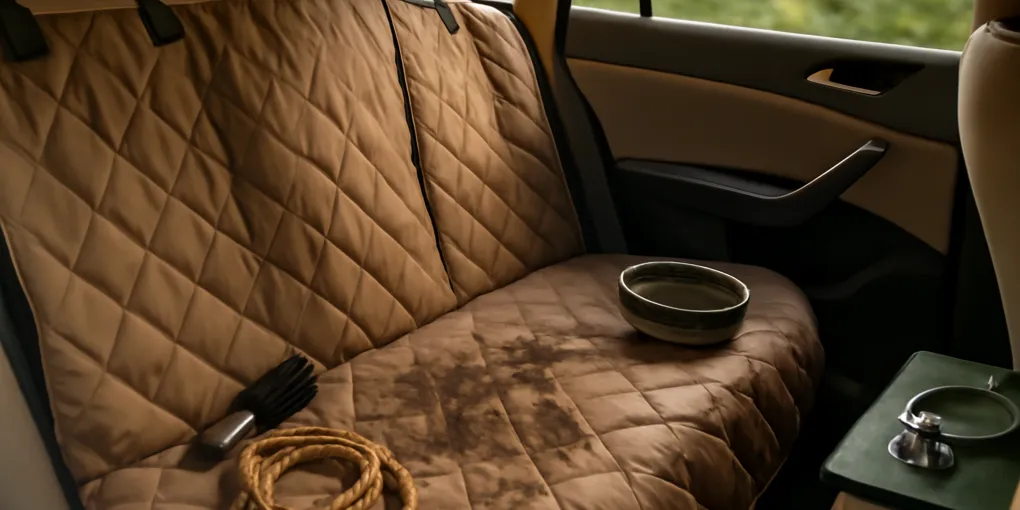
Best Dog Car Seat Covers for Muddy Rides: Fit, Grip, and Back-Seat Safety
Buyer's GuideURPOWER-style waterproof dog hammock seat cover
Best for muddy back seatsBest for: Wet paws, shedding, and dogs that ride restrained on the rear bench
$25-$70
Quick picks
| Product | Key Specs |
|---|---|
| See price on Amazon |
|
| See price on Amazon |
|
| See price on Amazon |
|
Product availability, certifications, and retailer details can change; check the current Amazon page before buying.
Quick answer
The best dog car seat cover for muddy rides is a waterproof rear-seat cover that stays flat, exposes the seat-belt buckles, and lets your restraint system work exactly as intended. Treat the cover as a washable mud barrier, not as safety equipment. Your dog still needs a properly fitted harness, secured crate, or other vehicle restraint that matches the trip.
For most owners, start with a Search Amazon for URPOWER waterproof dog hammock covers if your dog rides on the rear bench and comes home wet after parks or hikes. Choose a Search Amazon for 4Knines bench dog seat covers if harness routing is the priority. Use a Search Amazon for Meadowlark waterproof cargo liners only with a crate, barrier, or other containment plan. If the restraint question is not already solved, read our dog car restraint setup protocol before shopping for upholstery protection.
What a seat cover can and cannot do
A car seat cover can catch mud, sand, hair, drool, and some water before they reach the upholstery. It can also make cleanup faster after beach days, trail walks, lake trips, and rainy daycare pickups. That is valuable because wet fabric and trapped dirt can make the back seat unpleasant for the next human rider.
A seat cover cannot keep a dog safe in a crash. The American Veterinary Medical Association advises restraining pets during travel and planning for safe loading, ID, and emergency needs (AVMA pet travel FAQ). The Center for Pet Safety has also shown that restraint design and test evidence matter; soft accessories and marketing claims are not enough (Center for Pet Safety test results). If a cover makes the harness strap hard to route, it is the wrong cover for that setup.
Best fits by vehicle and dog
Waterproof hammock cover: best for messy rear-seat routines
A hammock cover clips to the front and rear headrests so the fabric forms a sling over the footwell. This can keep a muddy dog from dropping wet paws between the seats, and it protects the front seat backs from splatter. It is especially helpful for medium and large dogs that ride on the rear bench after muddy walks.
Buy one only if your rear-seat buckles remain accessible. Look for reinforced openings that close around the belt or tether. The cover should not force you to route a harness through a random fabric slit, around the headrest, or under a loose panel. It should also leave door handles, child locks, side air bags, and seat-fold controls unobstructed.
Bench cover: best when restraint routing comes first
A bench cover lies over the seat bottom and back without making a full hammock. It usually works better when the dog is restrained with a harness because the belt path is easier to see. It also creates less fabric tension near the front seats, which can matter in smaller cars.
The weak point is slipping. A bench cover needs seat anchors, grippy backing, and straps that keep the cover from sliding forward during normal braking. If your dog surfs the cover toward the floor, add a better-fitting cover or move to a crate setup. A wrinkled cover can also bunch under elbows and hocks, so smooth it before every ride.
Cargo liner: best for crates and muddy gear
SUV and wagon owners often want the dog in the cargo area after messy hikes. A waterproof cargo liner protects the floor and seat backs, but it does not stop a dog from being thrown or escaping when the hatch opens. Use it with a secured crate or a vehicle barrier appropriate to the dog and vehicle.
Cargo liners should have side flaps for bumper and side-wall mud, but avoid flimsy liners that slide under a crate. If a crate is part of the setup, check that the crate sits level, the door opens fully, and tie-down points remain usable.
Fit checks before you keep it
Open every buckle and anchor you use before installing the cover. Then install the cover and confirm each point is still reachable by touch, not just visible in a product photo. Clip the dog harness or position the crate exactly as you would for a real drive. If the cover makes the safe setup slower or confusing, return it.
Next, test traction. Put light pressure on the cover and push forward. A good cover moves a little but does not skid across the seat. Dogs brace during turns and stops; slippery covers can make anxious dogs scramble. A textured top layer, seat anchors, and tight headrest straps help, but fit to your vehicle matters more than a long list of features.
Finally, check door coverage. Muddy dogs often smear the side of the seat while turning around. Door flaps help if they do not interfere with windows, locks, or air bags. If the dog panics when enclosed by high flaps, use a lower bench cover and towel the door separately.
Cleaning and odor control
Choose a cover that can be shaken outside, wiped with a damp cloth, and machine washed when needed. Waterproof coatings can break down if washed hot or dried aggressively, so follow the label. After wet rides, remove or fold back the cover so the seat and cover can dry. Leaving damp fabric sealed against upholstery is how a mud solution turns into an odor problem.
Keep an old towel, paw wipes, and a small trash bag in the car. Wiping paws before loading reduces the job the cover has to do. For dogs with allergies or skin problems, talk with your veterinarian about paw rinsing and drying rather than relying on the car cover to catch allergens after every walk.
Mud-specific buying details that matter
A muddy dog cover fails in predictable places. The first is the seam where the seat bottom meets the seat back. Thin flat covers often let grit collect in that crease, especially when the dog turns around before lying down. Look for a cover with enough fabric length to tuck into the crease or with anchors that hold the panel back. If your dog rides after swimming, a short cover that leaves the front seat edge exposed will drip exactly where passengers put their legs.
The second failure point is the buckle opening. You need the buckle, but you do not want a large square hole that funnels mud into the seat. Better covers use hook-and-loop flaps or overlapping fabric around the seat-belt slots. Before keeping the cover, buckle the harness tether, then pour a spoonful of dry dirt or sand on the flap and shake the cover lightly. If debris falls straight through, expect mud to do the same.
The third is the side flap. Door protection is useful for dogs that brace paws against the door, but stiff flaps can block the door from closing cleanly or cover a speaker, latch, or air-bag label. Flexible flaps with adjustable straps are easier to live with than rigid boards. If you frequently carry human passengers, choose a cover that unclips quickly on one side without removing the whole setup.
Material tradeoffs
Oxford-style polyester covers are common because they are inexpensive, wipeable, and reasonably tough. They vary widely in coating quality. A cover can be water-resistant enough for damp paws but not for a wet retriever after lake swimming. If your trips involve soaked dogs, look for waterproof backing and washable construction rather than only a glossy top layer.
Quilted covers feel nicer and can reduce sliding, but deep stitching can trap hair and grit. Smooth rubberized tops clean faster but may feel slippery under wet paws. Heavy covers stay in place better, but they are harder to wash and dry in a small apartment. There is no universal best material; match the cover to your mess pattern. Mud and sand need easy shaking. Lake water needs waterproof backing and drying space. Heavy shedding needs a surface that releases hair.
Fit by dog size
Small dogs often need the cover paired with a carrier, booster, or harness setup because they can disappear into hammock folds. A tall hammock that looks protective in photos may create a fabric wall a small dog cannot climb over calmly. Medium dogs usually do well with standard rear-bench covers if the straps fit the vehicle. Giant breeds need width, stronger anchors, and a cover that does not pull loose when they turn.
Measure your rear bench width, seat depth, and headrest spacing. Do not rely on “universal” sizing if your vehicle has integrated headrests, captain’s chairs, or a split bench. For captain’s chairs, a cargo liner or individual bucket-seat cover may fit better than a hammock designed for a single rear bench.
What to skip
Skip covers that advertise “car safety” without explaining restraint compatibility. Skip covers that require the dog to ride loose inside the hammock. Skip covers with chemical odor that does not air out, loose straps the dog can chew, or slick backing that slides during a short neighborhood test. Also skip covers that cannot be removed easily enough to dry after a wet ride; a dirty cover you never wash is not a hygiene upgrade.
A good cover should make the safe routine easier: towel dog, clip restraint, load calmly, drive, remove dog, shake cover, dry everything. If the cover turns that routine into a puzzle, buy a simpler design.
Dog car seat cover FAQ
Should my dog ride in the front seat with a cover?
No. The rear seat or a secured crate area is usually safer. Front air bags and driver distraction are not worth the easier cleanup.
Is a mesh window in the hammock useful?
It can improve airflow and sight lines, but it is not a safety feature. Check stitching and tension so the mesh does not tear or sag under paw pressure.
What should I buy today?
If your dog rides harnessed on the back bench, buy a bench or hammock cover with reinforced belt openings and non-slip backing. If your dog rides crated in an SUV, buy a cargo liner that leaves tie-down points accessible. Skip any cover that hides the restraint hardware you actually use.
Frequently Asked Questions
- No. A cover protects the vehicle. It does not restrain the dog in a sudden stop, crash, or door-opening escape moment.
- They can be useful for dirt control if they do not block belt routing, anchors, air bags, or doors, but they should be paired with a proper restraint.
- Water resistance, non-slip backing, washable material, usable belt openings, door protection, and a fit that does not bunch under the dog.