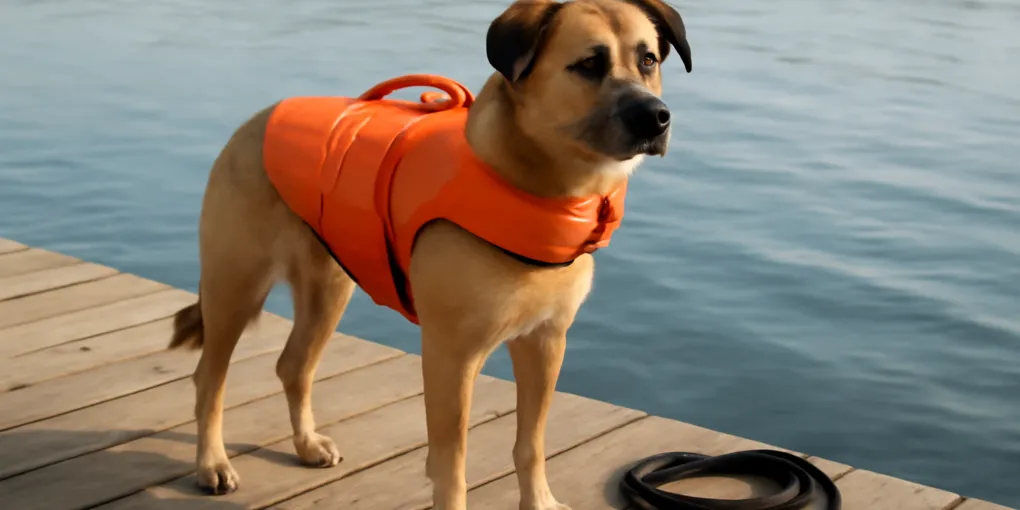
Ruffwear Float Coat Review: Worth It for Dogs Who Swim or Boat?
ReviewRuffwear Float Coat
Best premium swim vest fitBest for: Dogs that swim, boat, paddleboard, or need a sturdy lift handle near water
$80-$100
Quick picks
| Product | Key Specs |
|---|---|
| See price on Amazon |
|
| See price on Amazon |
|
Product availability, certifications, and retailer details can change; check the current Amazon page before buying.
Verdict
The Ruffwear Float Coat is a strong premium dog life jacket for owners who actually use water gear: boating, paddleboarding, dock swimming, lake trips, and dogs that need a confident grab handle at the waterline. Its value is fit stability and control, not magic buoyancy. A poorly sized Float Coat is less safe than a cheaper vest that fits your dog correctly.
If you need the broader fitting routine first, read our dog life jacket fit protocol. If you are still deciding whether a life jacket is necessary, start with Do Dogs Need Life Jackets?.
Buy or skip
| Check current options | Best fit | Watch-out |
|---|---|---|
| Search Amazon for Ruffwear Float Coat | Frequent water trips, boating, docks, paddleboards, and owners who need a firm lift handle | Costs more, and sizing must be checked carefully |
| Search Amazon for Outward Hound Granby Splash life jackets | Occasional calm-water use when the budget is tighter | More variation in stitching, buoyancy placement, and rotation |
Practical score
| Criterion | Weight | Score | Why it matters for this vest |
|---|---|---|---|
| Fit and control evidence | 30% | 8.5 | The design emphasizes panel coverage, visible color, and a handle, which are the features owners can inspect and test. |
| Safety documentation | 25% | 7.5 | Water-safety guidance supports restraint, supervision, and buoyancy aids, but there is limited public crash-style testing for pet swim vests. |
| Value | 20% | 7.5 | The price is high, but it can make sense for repeated use where fit and handle quality matter. |
| Owner signals | 15% | 8.5 | Owners tend to value the handle, visibility, and build, while sizing complaints cluster around chest shape. |
| Transparency | 10% | 8.5 | The brand publishes fit guidance, but buyers still need to verify the current model and size chart. |
| Composite score | 8.1/10 | A good buy for repeated water exposure, not a reason to loosen supervision. |
What the Float Coat does well
The Float Coat’s biggest advantage is control at the edge of water. Dogs do not always exit gracefully. A sturdy top handle lets you guide a dog onto a dock, into a kayak, or up a low bank without grabbing the collar. That matters because collars can slip, twist, or put force on the neck when a wet dog is scrambling.
The bright colors also help. In choppy water, near reeds, or around a busy beach, visibility is not cosmetic. A visible vest helps you track the dog and signals to other people that the dog is attached to a handler’s plan.
The AVMA’s travel and disaster guidance consistently points owners toward planning, identification, and safe control when pets are away from home (AVMA travel FAQ). Water trips are exactly where that planning matters: exit route, leash, ID, towel, shade, and fresh water should be arranged before the dog is excited at the shoreline.
Fit is the deal-breaker
Measure girth first, then check neck and body length. A life jacket should not ride over the shoulders, dig behind the front legs, or slide around the rib cage when wet. On deep-chested breeds, the belly panel can fit differently than the size chart suggests. On short-bodied dogs, a jacket can extend too far toward the hips.
At home, put the vest on for a quiet sizing check before the first swim. Watch the dog walk, sit, turn, and lie down, then steady the handle with one hand while supporting the chest with the other. Note any throat pressure, jacket rotation, rubbing, freezing, or gait change before deciding whether this size and model fit your dog.
What it cannot solve
No dog life jacket makes swimming risk-free. Dogs can fatigue, inhale water, panic, overheat, get caught in current, or fail to find an exit. Flat-faced breeds, puppies, seniors, dogs with heart or respiratory disease, and dogs recovering from injury need extra caution and veterinary guidance.
The AVMA’s warm-weather pet safety guidance emphasizes shade, water, heat awareness, and avoiding conditions that overwhelm pets (AVMA warm weather pet safety). Treat the Float Coat as one layer in that plan. It should reduce some risk, not invite longer or rougher sessions.
Heat also matters. A wet vest can still trap warmth during shore breaks. Give the dog shade and drinking water, remove the vest when the dog is resting away from water, and watch for heavy panting, weakness, glassy eyes, vomiting, or confusion. Those are not gear problems; they are stop-now signals.
When to choose something cheaper
If your dog only wades in ankle-deep water twice a year, a premium vest may not be the best use of money. A lower-cost dog life jacket with visible color, secure buckles, and a handle can be reasonable for calm, supervised use after a careful fit check. Spend the savings on a long waterproof leash, towel, collapsible water bowl, or a carrier ramp if those solve the real trip problem.
Do not buy the cheapest vest if the handle stitching looks weak, the jacket spins around the dog, the buckles sit in the armpits, or the foam floats mostly above the back without supporting the chest. A bargain vest that shifts in the water can make a struggling dog harder to help.
Owner setup checklist
Before the first real swim, practice on land. Adjust the vest, reward calm handling, attach ID, and walk the route from car to water. At the water, start in shallow calm conditions. Keep the first session short. Guide the dog to the exit several times before letting excitement build.
After swimming, rinse sand and lake residue from the vest, hang it open to dry, and check for strap wear. Also check the dog’s armpits, belly, and neck for rubbing. A vest that works in May can become tight after weight gain, coat changes, or a different haircut.
Ruffwear Float Coat FAQ
Should the handle be used to lift the dog fully out of water?
Use the handle for control and assisted lifting, but support the dog’s body whenever possible. A panicked, heavy, or twisting dog can put major load on stitching and on their own body.
Is this vest good for paddleboarding?
It can be, if the dog is trained for the board, the fit is stable, and you have a safe re-entry plan. Practice near shore before deeper water.
What should I buy today?
Buy the Ruffwear Float Coat if your dog has repeated water exposure and the size chart matches your dog’s girth and shape. Choose a cheaper handle vest for rare calm-water sessions, but reject any vest that rotates, rubs, or hides weak stitching.
Frequently Asked Questions
- It is worth considering for dogs that spend real time near water and need a secure fit, visible color, and a sturdy handle. It is probably overkill for rare shallow splash sessions.
- No. A vest helps buoyancy and visibility, but dogs still need supervision, safe entry and exit, and heat breaks.
- It should sit snugly without rubbing, allow normal shoulder movement, keep the belly panel secure, and not rotate when you lift gently by the handle.