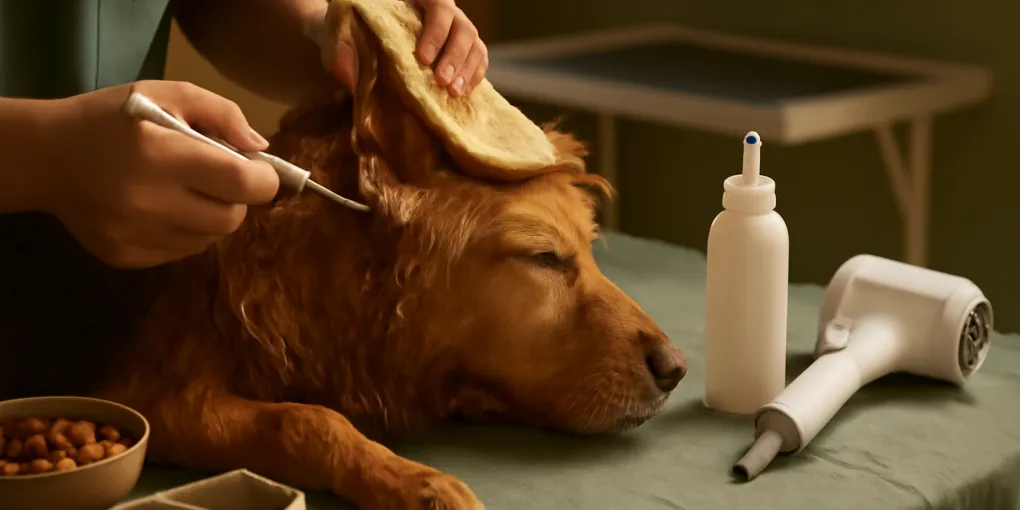
Dog Post-Swim Ear Drying Protocol: A Safer Routine for Water-Loving Dogs
ProtocolQuick picks
| Product | Key Specs |
|---|---|
| See price on Amazon |
|
| See price on Amazon |
|
Product availability, certifications, and retailer details can change; check the current Amazon page before buying.
The short version
After swimming, dry the outer ear, neck, collar line, and skin folds first. Use ear cleaner only if your veterinarian has said your dog should have routine cleaning, and never force liquid into a painful or infected ear. Water exposure can matter, but ear infections are usually about a mix of moisture, anatomy, allergies, wax, microbes, and skin inflammation rather than one missed towel session.
VCA notes that otitis externa is common in dogs and can involve redness, odor, discharge, pain, head shaking, and scratching (VCA ear infections in dogs). That is why the safest post-swim plan is observation plus gentle drying, not aggressive home treatment or repeated cleaning without a diagnosis.
Supplies to keep by the door
Set up a small swim-return basket:
- Two soft towels: one for the dog, one kept clean for the ear flaps and neck.
- Cotton pads or gauze squares for visible outer-ear moisture.
- A dog-labeled ear cleaner approved by your veterinarian, if your dog needs one.
- Treats for cooperative handling.
- A dry collar or harness if the wet one traps moisture behind the ears.
Search Amazon for microfiber dog drying towels if your current towel stays damp against the coat. Search Amazon for veterinary dog ear cleaners only after you know your vet is comfortable with routine cleaning for this dog.
Step-by-step protocol
1. Start before the dog shakes everywhere
Clip the leash near the door or towel station and reward calm standing. Do not chase the dog with a towel. A predictable routine lowers stress and makes it easier to inspect both ears without wrestling.
If your dog swims often, practice the routine on a dry day: touch ear flap, treat; lift ear flap, treat; wipe outer ear with a dry pad, treat. The first real swim day should not be the first handling lesson.
2. Dry the outer ear and nearby coat
Use the towel on the ear flap, base of the ear, neck, cheeks, and collar line. Lift floppy ears gently so air can reach the underside. For thick-coated dogs, blot rather than scrub.
Use cotton pads only on visible outer ear surfaces. Do not push pads, swabs, or towel corners into the canal. If you cannot see where the material is going, it is too deep.
3. Decide whether cleaner is appropriate
Use cleaner only when it fits the dog’s plan. Dogs with recurrent ear infections, allergies, narrow canals, heavy hair, or prior ear-drum concerns need veterinary instructions. A product that helped one dog can irritate another.
Do not use hydrogen peroxide, vinegar mixes, essential oils, alcohol, or human ear products unless your veterinarian specifically prescribed that approach. If the ear is red, painful, smelly, swollen, bleeding, or full of discharge, skip the cleaner and book care.
4. Let air finish the job
After drying, leave tight collars, snoods, and harness straps off until the coat is dry. Give the dog a clean mat or crate pad, not a damp towel pile. For dogs with heavy ears, a calm rest period indoors can help you notice head shaking early.
This is also a good time to check paws and skin. Our dog cooling station protocol covers hot-weather recovery when swimming is part of a heat-management day.
5. Check again that evening
A normal ear should look comfortable and smell mild. Watch for head shaking, pawing, one ear held low, new odor, discharge, redness, swelling, or sensitivity when the ear is touched. Those signs matter more than whether the dog swam in a pool, lake, or ocean.
Dogs that need extra caution
Be extra careful with Cocker Spaniels, retrievers, doodles with heavy ear hair, dogs with allergies, dogs that have had ear surgery, and any dog with recurring otitis. These dogs need an individualized plan. Some need prescribed cleaners; others need allergy management, cytology, or medication rather than more cleaning.
Puppies that resist handling should not be pinned for ear care. Train the routine in tiny steps and ask your veterinary team to demonstrate safe technique. The goal is a dog that lets you inspect the ear tomorrow, not a perfect wipe today.
When to call the veterinarian
Call if your dog shakes the head repeatedly after the coat is dry, cries when the ear is touched, tilts the head, develops a strong odor, or has brown, yellow, bloody, or coffee-ground discharge. Also call if one ear looks different from the other. Ear problems can look minor from the outside while the canal is painful deeper down.
Do not try a new cleaner the night before a boarding stay, hunting trip, or beach weekend. If the dog reacts badly, you will be away from the team that knows the ear history. Test any approved routine on an ordinary day first.
Post-swim ear FAQ
How soon after swimming should I dry my dog’s ears?
Dry the outer ears as soon as practical after the swim, especially before a car ride or nap where wet ears stay folded against the head.
Is a drying powder safer than liquid cleaner?
Not automatically. Powders can clump, irritate, or hide discharge if used incorrectly. Ask your veterinarian before adding powder to a dog with ear problems.
What if my dog hates ear handling?
Stop while the dog can still succeed. Practice dry touch-and-treat sessions, use a mat or helper, and ask your veterinarian or trainer for a cooperative-care plan. Forced ear handling can make future care harder.
Frequently Asked Questions
- Not every dog needs cleaner after every swim. Many need only outer-ear drying unless a veterinarian recommends a cleaner for recurrent ear problems.
- Avoid pushing swabs into the ear canal. Use soft cotton pads or towels on visible outer areas and seek veterinary care for pain, odor, discharge, or head shaking.