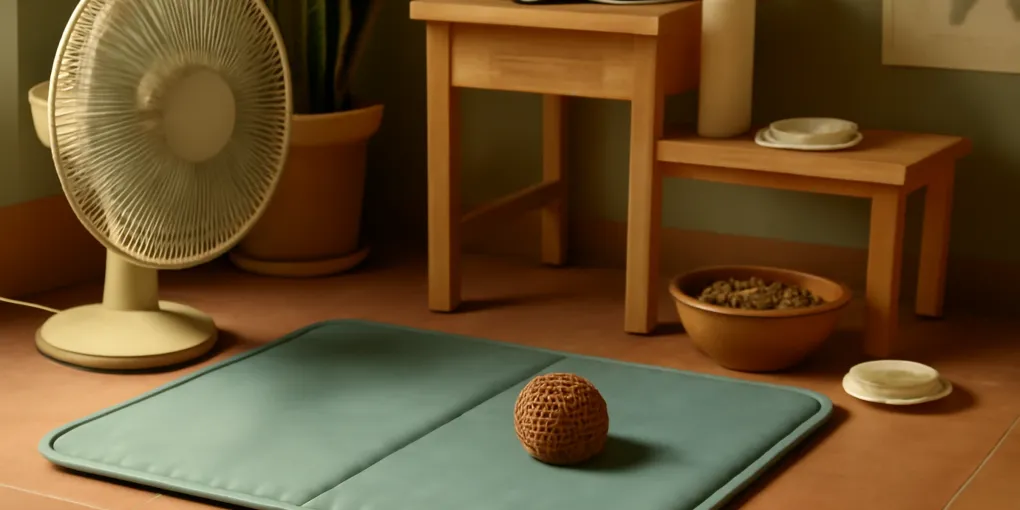
Dog Cooling Mat Heat Safety: What Helps, What Overpromises, and When to Stop
Evidence ExplainerQuick picks
Pressure-activated gel dog cooling mat
★ Top pick Best indoor comfort aid- No freezer required
- Easy to move room to room
- Good crate-adjacent rest surface
- Not chew-proof
- Warms with use
Elevated mesh dog cot
Best airflow backup- Airflow under the dog
- No gel filling
- Useful in shade
- Bulky
- Some dogs need training
Portable dog water bottle
Best walk safety add-on- Supports shorter walks
- Easy travel item
- Encourages water breaks
- Does not cool the dog alone
- Needs regular cleaning
A dog cooling mat is a comfort product, not a heat safety plan. It can give a warm dog a cooler surface to choose during indoor rest, crate-adjacent downtime, or shaded patio time. It cannot make midday pavement safe, cannot fix poor ventilation, and cannot treat heat stroke.
Buy a cooling mat if your dog seeks tile floors, overheats in warm rooms, or needs a portable rest surface for supervised summer downtime. Skip the mat if your real problem is long hot walks, no shade, a parked car, or a dog showing heat illness signs. Those require schedule changes and veterinary attention, not another accessory.
Quick picks
- For supervised indoor rest: a pressure-activated gel cooling mat. Search Amazon for gel dog cooling mats.
- For chewers or outdoor shade: an elevated mesh cot. Search Amazon for elevated dog cots.
- For walks: a portable water bottle plus shorter routes, not just a mat at home. Search Amazon for dog water bottles.
The safest purchase is often a mat plus a behavior change: earlier walks, more shade, indoor enrichment during heat waves, and a clear stop rule.
What cooling mats actually do
Most pressure-activated mats absorb body heat for a limited period, then need time away from the dog to cool again. Water-filled mats and damp towels rely on evaporation or conductive cooling. Elevated cots do not feel cold, but they let air move under the body instead of trapping heat in a thick bed.
None of these products lowers risk enough to justify exercise in unsafe conditions. ASPCA hot-weather safety guidance warns that shade, water, indoor cooling, and avoiding peak heat matter more than any single cooling accessory (ASPCA hot weather safety tips).
Choose by dog, not by marketing claim
Pressure-activated gel mat
This is the common blue or gray mat sold for indoor use. It works best for dogs that rest calmly and do not chew bedding. Pick a size large enough for the dog to lie on one side with the chest and belly supported.
Do not use it unsupervised with puppies, anxious dogs, or known fabric chewers. If the cover tears, remove it.
Elevated mesh cot
A cot is better for dogs that destroy soft mats or for shaded outdoor lounging. It separates the dog from hot decking and lets air move underneath. It is not cold, so some dogs prefer it with a towel nearby.
Check leg stability and fabric tension. A cot that tips or sags can make senior dogs avoid it.
Damp towel or cooling vest
A damp towel can help for short supervised rest, but it should not sit on the dog until it becomes warm and heavy. Cooling vests are more useful for short transitions than for long heat exposure. Remove any damp layer once it stops feeling cool.
Red flags: stop using the product and cool the environment
A mat is not enough if your dog is:
- panting heavily at rest
- drooling more than usual
- stumbling, glassy-eyed, weak, or confused
- vomiting or having diarrhea after heat exposure
- refusing water while seeming distressed
- unable to settle after moving indoors
For these signs, move to a cooler area, offer small amounts of water if the dog is alert, and call a veterinarian or emergency clinic. Do not wait to see whether the mat helps.
VCA’s veterinary heat-stroke guidance emphasizes that brachycephalic dogs, seniors, overweight dogs, and dogs with heart or airway disease need extra caution in heat (VCA heat stroke in dogs).
Surface and placement rules
Put the mat on a cool indoor floor or in full shade, not on sun-heated pavement. Leave space next to it so the dog can choose to move off. A product that forces the dog to stay on a cooling surface inside a closed crate can backfire if the mat warms, leaks, or becomes uncomfortable.
Keep water nearby, but not so close that spilled water soaks electrical cords or fans. If you use a fan, make sure the dog can move away from direct airflow.
Cleaning and inspection
Wipe gel mats after use and check seams weekly. Hair, dirt, and drool make a mat unpleasant before it looks obviously dirty. For washable covers, dry fully before reuse.
Inspect for:
- tooth marks
- gel seepage
- stiff or bubbling panels
- odor that remains after cleaning
- curling edges that trip senior dogs
Retire damaged gel mats immediately. If your dog has already chewed one bed, assume a gel mat needs supervision.
Buyer mistakes to avoid
Do not choose the coldest-sounding product if your dog will not lie on it. Some dogs dislike slick textures. Start with a mat near the dog’s existing resting spot rather than placing it in a new corner.
Do not buy a tiny mat for a large dog. Cooling only the paws is not the point; the chest, belly, and inner thighs are the useful contact areas.
Do not use a mat to extend walk time. If the pavement is hot to your hand, it is a paw problem before a cooling-mat problem.
For a broader room setup, pair this mat decision with shade, fans, and water placement from our dog cooling station setup protocol rather than treating one gel pad as a heat plan.
Dog cooling mat FAQ
Can a dog cooling mat prevent heatstroke?
No. A mat may help a dog rest more comfortably indoors, but it cannot make hot cars, direct sun, heavy exercise, or humid heat safe. Heat illness signs need cooling action and veterinary help, not another product.
Are gel cooling mats safe for chewers?
They are a poor fit for persistent chewers. Choose an elevated cot, damp towel under supervision, or another non-gel cooling surface if your dog mouths bedding or tears seams.
How do I know the mat is too warm to keep using?
Touch it after your dog has been lying on it. If it feels warm, slippery, damaged, or no cooler than the floor, rotate it out and move the dog to shade, airflow, and fresh water.
Reader test: what to buy or do today
If your dog is a calm indoor rester, buy a pressure-activated mat sized for full-body contact and introduce it during quiet evening time. If your dog chews bedding, buy an elevated mesh cot instead. If your dog is already panting hard in the home, skip shopping and fix the room temperature, shade, water, and veterinary triage plan first.
Frequently Asked Questions
- No. A cooling mat may improve resting comfort, but it cannot make hot cars, intense exercise, poor shade, or heat illness safe. Move the dog to a cooler area and contact a veterinarian for concerning signs.
- They are not a good choice for dogs that chew bedding. Use an elevated cot, supervised short sessions, or a washable damp towel instead.
- Only if the manufacturer says to. Many pressure-activated mats are not designed for freezing, and an overly cold surface can be uncomfortable or damage the mat.