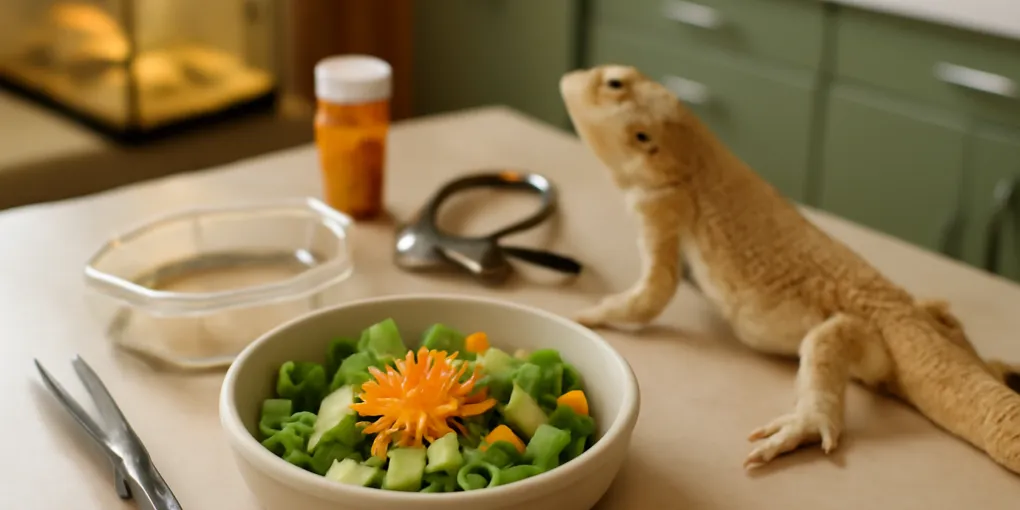
Bearded Dragon Salad Bowl Setup Protocol: Greens, Bugs, Calcium, and Cleanup
ProtocolQuick picks
| Product | Key Specs |
|---|---|
| See price on Amazon |
|
| See price on Amazon |
|
| See price on Amazon |
|
Product availability, certifications, and retailer details can change; check the current Amazon page before buying.
Bearded dragon salad bowl setup protocol
A bearded dragon salad bowl should make the healthy food easy to notice, easy to remove, and hard to contaminate with substrate. It is not just a decorative dish of greens. The bowl is part of a husbandry system that includes UVB, basking temperature, calcium, insect control, hydration, and stool monitoring.
Adult bearded dragons usually need a plant-forward diet with appropriately sized insects offered in controlled amounts. VCA’s bearded dragon feeding guidance emphasizes varied vegetables and insects, careful supplementation, and veterinary input for individual animals (VCA). ReptiFiles also separates staple greens from occasional foods and warns against relying on lettuce-like low-nutrient filler (ReptiFiles).
If your lighting or temperature setup is still uncertain, solve that before fine-tuning the bowl. Start with our bearded dragon UVB light setup protocol and bearded dragon basking setup protocol.
Quick setup list
- Search Amazon for shallow reptile feeding dishes for greens and chopped vegetables.
- Search Amazon for reptile calcium powder only after matching the label to your UVB and veterinarian plan.
- Search Amazon for reptile feeding tongs for controlled insect feeding.
- Search Amazon for digital reptile kitchen scale if weight tracking is part of your vet’s plan.
The bowl placement rule
Put the salad bowl on a stable, cleanable surface away from loose substrate and away from the hottest basking spot. The dragon should be able to stand beside the bowl, lower the head, and eat without climbing into the dish. A low ceramic bowl is usually better than a tall cup because it does not make the animal stretch or tip food onto the floor.
Avoid placing greens directly under the basking bulb for hours. Produce wilts, dries, and becomes less appealing. If the dragon only eats when food is warm, offer the bowl after the enclosure is at normal daytime temperature rather than leaving greens to bake.
Daily salad protocol
- Wash hands and rinse produce.
- Chop greens into pieces the dragon can bite without dragging long stems.
- Add a small amount of colorful vegetable if appropriate for the animal’s age and diet plan.
- Dust only according to a veterinarian or reputable husbandry schedule.
- Place the bowl after lights and temperatures have stabilized.
- Watch whether the dragon actually eats or only licks high-value pieces.
- Remove wilted or soiled food the same day.
- Wash and dry the dish before the next feeding.
Do not judge the diet by how pretty the bowl looks. Judge it by intake, body condition, stool quality, growth or weight trend, and veterinary exams.
Greens, insects, and calcium are separate decisions
A common mistake is to treat the salad bowl as the whole diet. Greens matter, but insect amount and supplement schedule change with age, growth, reproductive status, UVB exposure, health conditions, and veterinary advice. A juvenile dragon eating many insects is a different case from a stable adult that needs more greens and fewer calorie-dense treats.
Keep insects controlled. Loose crickets can hide in decor and bother reptiles. Tongs or a short feeding bin help you know what was eaten. If insects are dusted with calcium, offer them promptly so the powder does not fall off into substrate.
Calcium powder is not a magic safety layer. Too little calcium, too much calcium, poor UVB, expired bulbs, blocked mesh, wrong basking temperatures, and low appetite can all create problems. If you see weakness, twitching, jaw softness, limb swelling, poor growth, or appetite changes, call an exotics veterinarian.
Bowl materials and cleaning
Choose ceramic, stainless steel, or another smooth nonporous dish that can be scrubbed thoroughly. Avoid rough novelty bowls that trap food in grooves. Avoid deep dishes that let greens compact into a wet clump. Avoid lightweight bowls that flip when the dragon steps on the rim.
Wash the dish after each produce session. Reptile enclosures can contain fecal bacteria, shed skin, insect debris, and substrate dust. A dedicated cleaning brush and a drying spot away from human food prep surfaces make the routine easier.
Bearded dragon salad bowl FAQ
What if my dragon picks out only squash or fruit?
Reduce sweet or high-value add-ins and make staple greens the predictable base. Fruit should not become the daily reason the dragon approaches the bowl.
Should I mist the salad?
A light rinse can keep greens fresh, but a wet bowl sitting in a warm enclosure can become messy. Remove uneaten food instead of trying to preserve it all day.
Can baby bearded dragons use the same setup?
They can use a shallow dish, but their diet balance, insect frequency, and supplement schedule differ from adults. Use age-specific veterinary or reputable husbandry guidance.
Troubleshooting low salad intake
First check husbandry. A dragon that is too cool, stressed, in brumation-like behavior, dehydrated, ill, or under poor UVB may not eat normally. Then check food presentation: pieces may be too large, greens may be stale, the bowl may be in an exposed spot, or insects may be overused so the dragon waits for them.
Try rotating safe staple greens, cutting stems smaller, and offering salad early in the active part of the day. Do not starve a sick dragon into eating greens. Sudden appetite change deserves veterinary attention.
Bottom line
A good bearded dragon salad bowl is shallow, clean, stable, and tied to the rest of husbandry. Use it to make greens visible and hygienic, but manage insects, supplements, UVB, basking heat, and veterinary red flags as separate safety checks.
Sources
- VCA Hospitals. “Bearded Dragons - Feeding.” https://vcahospitals.com/know-your-pet/bearded-dragons-feeding
- ReptiFiles. “Bearded Dragon Food & Diet.” https://reptifiles.com/bearded-dragon-care/bearded-dragon-food/
- RSPCA. “Bearded dragons.” https://www.rspca.org.uk/adviceandwelfare/pets/other/beardeddragon
Frequently Asked Questions
- Fresh greens can be offered for a feeding window, but wilted, soiled, or dried produce should be removed before it attracts pests or contaminates the habitat.
- Use caution. Loose insects can hide, bite, or stress the dragon. Many keepers offer insects separately with tongs or in a controlled feeding bin.
- No. Calcium, vitamin D3, UVB exposure, temperatures, and veterinary guidance work together; powder alone cannot fix poor lighting or husbandry.