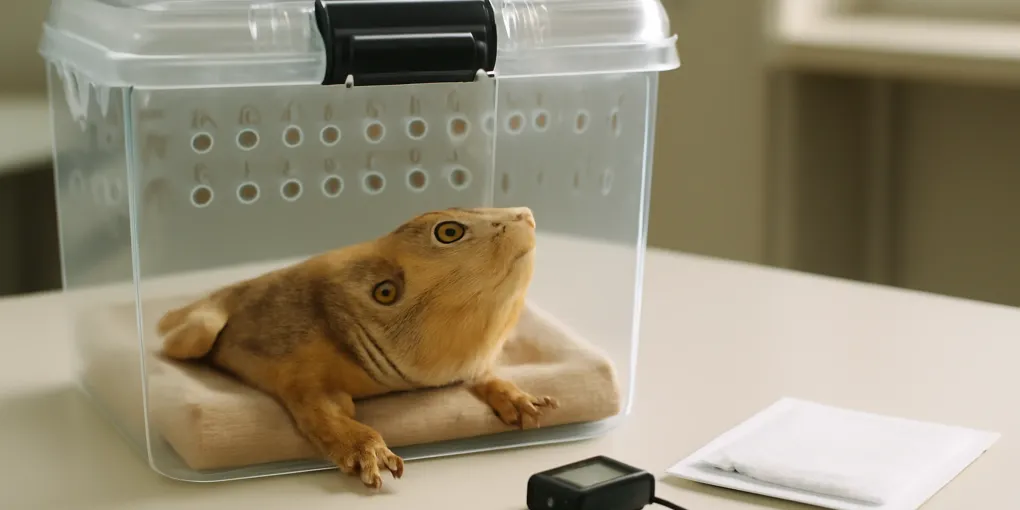
Bearded Dragon Travel Carrier Setup Protocol: Heat, Grip, and Short Vet-Trip Safety
ProtocolQuick picks
| Product | Key Specs |
|---|---|
| See price on Amazon |
|
| See price on Amazon |
|
Product availability, certifications, and retailer details can change; check the current Amazon page before buying.
Direct answer
A bearded dragon travel carrier should be secure, ventilated, boring, and temperature-aware. Use a rigid carrier or latching plastic tub, add a towel or grippy liner, check the temperature before leaving, and keep heat sources outside the animal’s direct reach. A vet-trip carrier is not a miniature display enclosure. It is a controlled transport box for a short, necessary move.
Bearded dragons depend on environmental heat and correct husbandry. The RSPCA’s bearded dragon guidance emphasizes suitable temperature gradients, UVB exposure, diet, and housing conditions (RSPCA). VCA notes that bearded dragons need appropriate heat, light, and veterinary care as part of ownership (VCA Hospitals). Travel interrupts the normal setup, so the carrier should reduce stress and temperature mistakes rather than add decoration.
Step 1: choose the carrier before the appointment day
Use a purpose-made carrier or search Amazon for small ventilated reptile travel carriers if your current box does not latch. A secure plastic tub with smooth ventilation holes can also work. The lid must latch. The carrier should be big enough for the dragon to turn around but not so large that braking sends the animal sliding across an empty floor.
Avoid tall mesh cages for car rides. They look airy, but claws and toes can catch, and the dragon may climb and fall when the car moves. Avoid cardboard boxes unless it is a short emergency and there is no safer option; cardboard can collapse, overheat in sun, or get damp.
Step 2: add grip, not loose decor
Line the carrier with a clean towel, paper towel stack, or reptile-safe mat that lies flat. The liner should give traction and absorb small messes. Do not add loose sand, bark chips, water bowls, hammocks, rocks, or heavy hides. A normal enclosure can have enrichment; a moving vehicle needs stability.
If the dragon is small, fold the towel to reduce sliding space. If the dragon is large, keep the liner flat so toes do not tangle. Bring a spare towel in a separate bag in case of stool or urates during the trip.
Step 3: manage temperature carefully
Check the car before loading the dragon. A carrier can heat quickly in sun and cool quickly in winter. Search Amazon for reptile digital probe thermometers if you need a simple way to check the carrier environment, but route the probe so the cord cannot wrap around feet or neck.
Do not put an unwrapped heat pack inside the carrier with the dragon. If warmth is needed for a short winter trip, place a wrapped heat source outside or under part of the carrier, leave a cooler side, and monitor closely. In summer, never leave the carrier in a parked car. If the appointment is delayed, bring the carrier indoors with you.
Step 4: reduce handling and visual stress
Load the dragon calmly. Support the body and tail, place the animal on the liner, and close the lid before walking to the car. Keep the carrier level. In the vehicle, secure it on the floor behind a seat or in another stable spot where it cannot slide or tip. Do not let passengers open the lid to look during the drive.
A light towel over part of the carrier can reduce visual stimulation, but do not block ventilation or trap heat. Skip loud music and unnecessary errands. The shortest safe route is usually better than the most scenic route.
What to bring to the vet
Bring the dragon, a fresh stool sample if requested, photos of the enclosure, temperatures, UVB fixture details, diet notes, and supplement schedule. Many reptile problems are husbandry-linked, and the veterinarian can help more if they can see the basking setup and UVB distance. For home heat setup, review the bearded dragon basking setup protocol and reptile habitat controller guide.
Cold-day and hot-day adjustments
On cold days, warm the car before bringing the dragon outside, but do not blast hot air directly at the carrier. Use the thermometer to check the carrier space rather than guessing from the dashboard setting. On hot days, cool the car first and keep the carrier out of sun beams, including the waiting-room window ledge.
If the appointment is far away, call the clinic and ask how they prefer reptiles to be transported. Some clinics may suggest timing, stool sample handling, or waiting-room steps that reduce stress and keep the animal away from dogs and cats.
What to avoid
Avoid feeding a large meal immediately before travel unless your veterinarian says otherwise. Avoid letting the dragon ride on your shoulder, lap, dashboard, or loose in a blanket. Avoid direct sun through car glass, because it can heat a small carrier faster than expected.
Avoid trying to maintain full basking temperatures inside the carrier. Transport is temporary. The practical goal is safe, stable, monitored warmth without burns, overheating, or escape.
Bearded dragon travel carrier FAQ
How big should the travel carrier be?
It should allow the dragon to turn around and rest naturally, but it should not be so roomy that the animal slides far during braking. For most short trips, snug and stable beats display-enclosure spacious.
Can I use a cat carrier for a bearded dragon?
Sometimes, if the openings are escape-proof, the floor is lined, and the space is not too tall or drafty. Many cat carriers have gaps that are too large for juveniles, so inspect carefully.
How long can a bearded dragon stay in a travel carrier?
Keep it as short as practical. For routine vet visits, the carrier is for the drive and waiting room. Longer moves need a veterinarian-informed plan for temperature, hydration, and stops.
Internal next step
If travel is for a husbandry concern, start with the home environment. The bearded dragon UVB light setup protocol covers the light side, while the reptile habitat controller guide covers heat-control mistakes that a travel carrier cannot fix.
Sources
- RSPCA: Bearded dragon care
- VCA Hospitals: Bearded dragons: owning
Frequently Asked Questions
- Do not put loose heat packs directly with the dragon. If warmth is needed, place a wrapped heat source outside or under part of the carrier and monitor temperature carefully.
- For short vet trips, usually no. Loose bowls spill and insects can stress the animal. Ask your reptile veterinarian for longer transport plans.