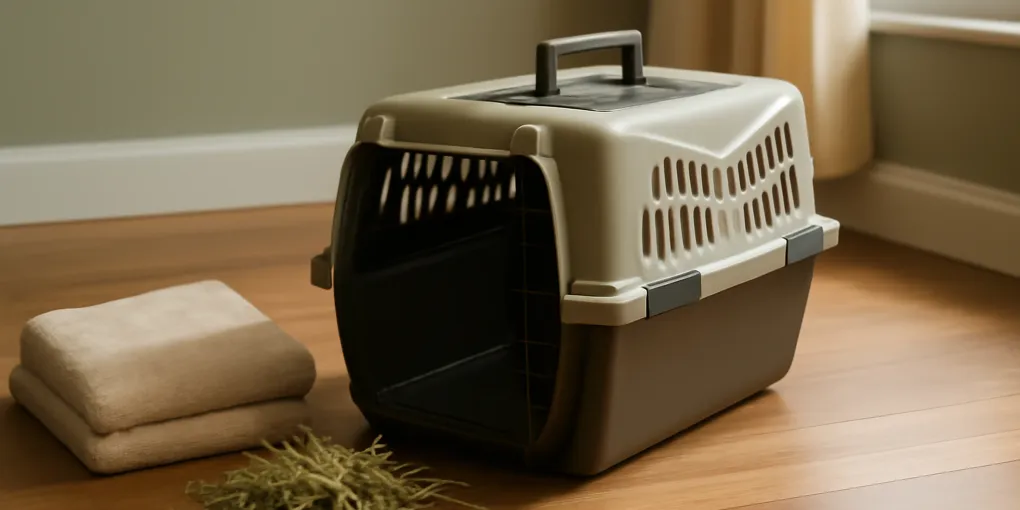
Guinea Pig Carrier for Vet Visits: What Safe Transport Actually Requires
Buyer's GuideHard-sided small-animal carrier
Best for most veterinary tripsBest for: Short car trips and clinic access
Quick picks
| Product | Key Specs |
|---|---|
| See price on Amazon |
|
| See price on Amazon |
|
Product availability, certifications, and retailer details can change; check the current Amazon page before buying.
A veterinary carrier for a guinea pig is not a tiny display cage or a soft bag. It needs a stable floor, reliable ventilation, a latch that cannot be nudged open, and enough room for the guinea pig to sit, turn, and rest on a flat liner. The goal is calm, safe transport, not extra accessories.
Quick picks
- See price on Amazon for a hard-sided small-animal carrier: the best default for a short clinic trip because a rigid base stays level and staff can inspect the animal safely.
- See price on Amazon for the Kaytee Come Along small animal carrier: a compact option only when its usable floor space suits one guinea pig and every closure is checked before leaving.
The four checks that matter
Choose by the carrier’s inside dimensions, not its marketing photo. Your guinea pig should be able to stand naturally, turn around, and lie down without being folded against a wall. A flat base is more important than a high roof. Avoid wire floors, unstable backpack-style carriers, and fabric bags that sag when lifted.
Ventilation should be distributed rather than concentrated in one small opening. Check the door and lid with your hands before the trip: loose panels, broken clips, and gaps at a corner create a real escape risk. A hard-sided model is the useful default because it is easy to clean and protects the animal from being squeezed in a busy waiting room.
Set the carrier up for the trip, not for permanent housing
Line the base with a clean absorbent layer and a flat fleece or towel without loose loops. Add a small amount of familiar grass hay. Do not overload the carrier with huts, toys, or a heavy water bottle that can slide. For a longer trip, get the clinic’s feeding and water advice in advance.
Keep the carrier level on the vehicle floor behind a secure seat, or restrain it according to the carrier and vehicle instructions. Never leave a guinea pig in a parked car. Direct sun, cold air conditioning, and a hot dashboard can change the carrier environment far faster than the room feels to a person.
Buy for access, not just a cute shape
The most practical feature is an opening that lets a veterinary team see and lift the guinea pig without chasing it through a narrow side door. A removable top or a wide door can be useful when a frightened animal needs a low-stress exam. Check that any opening still locks positively once closed. If the product has multiple panels, assemble it and test every latch at home rather than discovering a loose connection in a parking lot.
Use the carrier only for transport, appointments, and brief familiarization sessions. A guinea pig needs a much larger permanent living area, social contact with an appropriate companion, and a normal hay-based diet. Buying a carrier that doubles as a cage is a false economy because the two jobs require different space and access.
What to skip
- Cardboard boxes and laundry baskets: they can collapse, chew through, or expose the guinea pig to drafts.
- Loose bedding piles: deep, shifting material makes footing hard and hides droppings or signs of illness.
- Heavy ceramic dishes: they can slide or tip during a stop; ask the clinic before offering food or water for a long trip.
- Scented liners and sprays: fragrance is not a substitute for cleaning and can add an unfamiliar stressor.
Practice before the appointment
Leave the clean carrier open near the enclosure with a little familiar hay during a calm part of the day. Let the guinea pig investigate voluntarily. On another day, close the door for a few seconds, lift the carrier smoothly, and return it to the enclosure. End before frantic scrambling begins. This is not training for a medical emergency; it simply makes the shape, smell, and motion less novel.
For a scheduled visit, confirm the appointment time, transport instructions, and whether the practice wants a fecal sample or current food list. Bring a short note of appetite, water intake, droppings, medications, and the reason for the visit. Do not alter diet or fast a guinea pig unless the veterinary team gives exact instructions.
Make the return trip boring
After the appointment, follow any isolation, medication, feeding, or bedding guidance exactly. Clean the carrier promptly if it is soiled, dry it completely, and store it ready for the next visit. If two guinea pigs were separated for care, ask the clinic about safe reintroduction rather than assuming the usual cage routine is appropriate.
Compare the two carrier styles honestly
A hard-sided carrier is usually easier to disinfect after a messy journey and maintains a predictable floor when it is lifted. It is the practical choice for a guinea pig that is unwell, anxious, or likely to need a careful examination. Its tradeoff is storage bulk. Measure the place where you will keep it, then make sure that convenience does not lead to buying an interior that is too small.
A compact small-animal carrier can be easier to store and carry, but its limits are more important. Check the floor does not flex, the ventilation cannot catch toes, and the animal is not forced to crouch. A compact carrier is for a short, direct trip, not a way to make a long day out feel manageable. If it becomes crowded after adding a towel and hay, it is the wrong size.
The price cue is simple: expect basic hard-sided small-animal carriers to sit in the lower-cost pet-accessory range, while models with heavier latches, larger openings, or a top-access design may cost more. Do not choose based on a sale price alone. A carrier that cannot be cleaned, secured, or safely opened at the clinic is poor value even if it is inexpensive.
Appointment-day checklist
Before leaving, check the carrier twice rather than buying another accessory:
- The bottom is dry and flat, with no loose threads or sharp plastic.
- Every door, top, and clip closes fully and cannot be pushed open from inside.
- The carrier is shaded from direct sun but not covered so tightly that airflow is reduced.
- There is a little familiar hay and no item that can roll, tip, or trap a foot.
- The clinic phone number, appointment time, medication list, and route are ready.
For a scheduled checkup, leave early enough that a traffic delay does not turn into prolonged waiting in a warm car. For an emergency, call first and follow the clinic’s directions about food, a companion animal, and arrival. A safe carrier makes the journey possible; it never replaces triage advice.
The specific skip decision
Skip any product that markets itself as a guinea-pig “play house” yet does not state usable interior space, has a decorative opening that cannot be secured, or needs a person to hold it shut. Also skip carriers with a hard-to-reach bottom corner where urine and bedding collect. You are buying a transport tool, so access, cleaning, and a secure floor matter more than color, windows, or a novelty shape.
When a companion can help, and when it cannot
Some bonded guinea pigs travel more calmly with a familiar companion. That is a decision for the veterinary team when one animal is sick, injured, or being admitted. The carrier must still have enough space for both without crowding, and separation may be necessary for examination, treatment, or infection control.
Bring the carrier inside with the animal rather than carrying the guinea pig loose. If the clinic needs to remove the animal, tell staff which door opens most safely and whether the guinea pig is fearful of being lifted. Merck’s guinea-pig reference includes restraint and clinical-examination considerations, which is why a contained, accessible setup matters.
Do not make the carrier a treatment plan
Reduced appetite, fewer droppings, labored breathing, weakness, bleeding, collapse, or a painful posture needs a veterinary call promptly. Extra bedding, a cover, or a warmer accessory cannot diagnose the problem. Call while preparing the carrier so the clinic can advise on timing, temperature, food, and whether to bring a companion.
For routine home containment, see our guinea pig floor-time playpen setup. For a rabbit-specific emergency transport checklist, see rabbit GI stasis early signs; the urgent medical details differ by species.
Guinea pig carrier FAQ
Can I put a water bottle in the carrier?
Only if it is securely mounted and the veterinary team advises it for the trip. A loose or dripping bottle can wet the liner and roll into the guinea pig. Fresh hay and a short, direct trip are often more useful for a routine appointment.
Should I cover the carrier?
A light, breathable cover can reduce visual stress in a busy area if it does not block ventilation or trap heat. Leave airflow clear and remove it if the carrier becomes warm.
Sources
- Merck Veterinary Manual, Guinea Pigs: https://www.merckvetmanual.com/exotic-and-laboratory-animals/guinea-pigs
- VCA Animal Hospitals, Guinea pigs: https://vcahospitals.com/know-your-pet/guinea-pigs
Frequently Asked Questions
- A cardboard box can soften, tip, chew through, and provide poor ventilation. Use a secure carrier for travel and keep the trip as short and temperature-stable as possible.
- Ask the veterinary team, especially if one animal is ill. A calm compatible companion can reduce stress for some guinea pigs, but the carrier must be large enough and the ill animal must be safely observable.