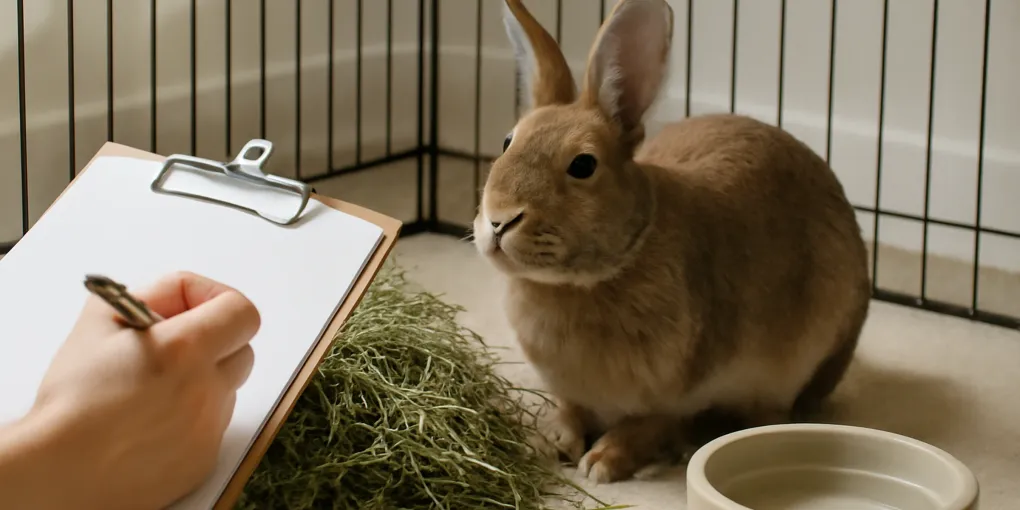
Rabbit GI Stasis: Early Signs and the Action Plan Before the Vet Visit
Evidence ExplainerQuick picks
Digital kitchen scale with flat platform
★ Top pick Best trend tool- Note: Weigh the rabbit in a secure low-sided carrier or box at the same time of day; record the combined and container weights rather than balancing the rabbit loose.
Hard-sided top-opening small pet carrier
Best transport tool- Note: Choose ventilation, a secure latch, room to turn, and a removable top so veterinary staff can access the rabbit with less pulling.
Digital probe thermometer for room and carrier
Best environment check- Note: Use it to monitor the environment, not to take a rectal temperature without veterinary instruction.
Rabbit GI stasis is a slowdown of normal gastrointestinal movement, often secondary to pain, dental disease, dehydration, stress, an unsuitable diet, or another illness. A rabbit eating less and producing fewer or smaller droppings needs a rabbit-experienced veterinary call now, not a wait-and-see supplement. The safest owner action is to document the change, maintain a calm appropriate environment, offer familiar hay and water if the rabbit can eat voluntarily, and prepare for examination.
The paired warning: food intake and droppings change together
Rabbits normally eat and pass feces throughout the day. The most useful early sign is a change from that individual’s pattern:
- pellets or greens remain at the usual mealtime;
- hay use drops noticeably;
- droppings become fewer, smaller, drier, misshapen, or absent;
- the rabbit sits hunched, presses the abdomen down, hides, or moves less;
- tooth grinding, repeated position changes, abdominal distension, or reluctance to be touched appears;
- water intake changes or the rabbit will not take a favorite familiar food.
Refusing a treat but eating hay normally is different from refusing everything. Check actual hay disturbance, water use, and the litter area rather than judging by one offered snack.
A rabbit that is collapsed, very weak, cold to the touch, struggling to breathe, severely bloated, unable to stand, bleeding, repeatedly straining without urine, or showing intense pain needs emergency veterinary care. Call while arranging transport.
GI stasis is a syndrome, not the final diagnosis
Reduced motility allows gas and intestinal contents to accumulate, which causes pain and further suppresses eating. But the trigger matters. Dental disease, urinary disease, arthritis, infection, toxin exposure, overheating, medication effects, a foreign-body obstruction, and other problems can present as “not eating.”
That is why an exam may include oral assessment, abdominal palpation, hydration and temperature checks, pain assessment, imaging, and blood tests. Treatment can differ sharply when a mechanical obstruction is suspected. A home remedy cannot make that distinction.
Call with six concrete observations
Tell the clinic:
- when the rabbit last ate a normal amount of hay and other food;
- when normal droppings were last seen and what changed;
- whether urine has been produced;
- activity, posture, breathing, and any abdominal swelling;
- recent diet, medication, chewing, stress, or environmental changes;
- known dental, digestive, urinary, or other medical history.
Photograph the litter area and bring a sample of unusual fresh droppings in a clean container if the clinic requests it. Take a picture of every medication label. Do not rely on remembering a drug concentration during an emergency.
Quick picks for monitoring and transport
- A flat-platform digital scale supports weekly weight trends when used with a low stable container. Check Flat Platform Kitchen Scale Rabbit on Amazon.
- A hard-sided top-opening carrier lets veterinary staff lift off the top instead of pulling a painful rabbit through a narrow door. Check Hard Sided Top Opening Rabbit Carrier on Amazon.
- A digital probe thermometer checks the carrier environment; it is not a substitute for a veterinary body-temperature measurement. Check Digital Probe Thermometer Pet Carrier on Amazon.
The carrier is the urgent purchase. The scale helps before a crisis, while the thermometer only adds value when its probe is protected from chewing and positioned to measure air rather than a hot or cold pack.
What to do while the clinic directs the next step
Keep the rabbit in a quiet, familiar, temperature-appropriate space and minimize chasing. Offer unlimited familiar grass hay, the normal water bowl, and the rabbit’s usual veterinarian-approved leafy greens if the rabbit is alert and swallowing normally. Do not introduce a new food, sugary treat, or large fruit serving.
Observe without repeatedly handling the abdomen. Gentle voluntary movement in a secure pen may be reasonable for an alert rabbit if the veterinarian agrees, but forced exercise and belly massage can add pain or delay transport.
Do not give:
- human pain medicine;
- leftover gut-motility medicine;
- oil, laxatives, pineapple juice, or hairball paste;
- an enema;
- force-fed food or water unless a veterinarian has assessed the situation or given case-specific instructions.
Prokinetic drugs can be inappropriate when obstruction is possible. Syringe feeding can cause aspiration or worsen distension in the wrong patient. “It helped last time” does not establish that today’s cause is the same.
Build a transport kit before an emergency
A hard-sided carrier with a secure top and removable lid gives the clinic access without dragging a painful rabbit through a small front door. Check Hard Sided Top Opening Rabbit Carrier on Amazon. Line it with a nonslip towel, add familiar hay, and keep the carrier level in the vehicle.
| Item | Useful feature | Avoid |
|---|---|---|
| Carrier | Hard shell, secure latch, top access, ventilation | Fabric bag that collapses or can be chewed open |
| Liner | Flat towel or absorbent pad under a towel | Loose loops that catch nails |
| Hay | Familiar fresh grass hay | New treats used to tempt during transit |
| Records | Medication list, clinic contacts, photos, weight log | Unlabeled syringes or decanted drugs |
| Environment monitor | Visible probe or digital display | Unsupervised heat source against the rabbit |
Do not place a hot pack directly against a weak rabbit. If the clinic instructs supplemental warmth, use the exact barrier, position, and monitoring method it specifies, leaving room to move away.
Weight and output tracking that helps
A weekly body-weight trend can reveal chronic decline before a crisis. Use a flat digital kitchen scale with a low stable box or carrier. Check Flat Platform Kitchen Scale Rabbit on Amazon. Weigh the empty container, then container plus rabbit, and subtract. Keep the rabbit close to the floor.
During an appetite concern, do not repeatedly weigh instead of calling. Record:
- time and measured weight;
- hay, pellet, greens, and water intake compared with normal;
- count or photograph of droppings over a defined interval;
- urine presence and appearance;
- posture, movement, and response to food;
- advice received and departure time for the clinic.
A kitchen scale and dropping log are useful because rabbits can lose intake before an owner sees dramatic weakness. They are trend tools, not evidence that it is safe to postpone treatment.
Prevention targets the common triggers
Maintain unlimited appropriate grass hay, fresh water, a measured species-appropriate diet, daily movement, and regular veterinary and dental care. Make diet changes gradually with professional guidance. Groom long-haired or heavily shedding rabbits so loose fur is removed before ingestion, but remember that swallowed fur often accumulates because motility has already slowed rather than acting as a simple “hairball.”
Watch closely after surgery, medication changes, painful illness, a companion loss, boarding, travel, or a sudden housing change. Ask the veterinarian in advance what food-intake threshold and pain signs should trigger a call.
Two rabbit-specific facts drive the action plan: declining droppings are an early objective measure of reduced intake and transit, and unsupervised syringe feeding can be unsafe when obstruction has not been ruled out. Photograph the litter box, then call.
Sources
- VCA Animal Hospitals, Gastrointestinal Stasis in Rabbits: https://vcahospitals.com/know-your-pet/gastrointestinal-stasis-in-rabbits
- Rabbit Welfare Association & Fund, Gut Slowdown: https://rabbitwelfare.co.uk/gut-slowdown/
Frequently Asked Questions
- Do not wait for a set number of hours. A clear reduction in appetite or droppings can worsen quickly and warrants an immediate call to a rabbit-experienced veterinarian.
- Only after a veterinarian has assessed or specifically advised it. A blockage, severe distension, aspiration risk, or inability to swallow can make unsupervised feeding dangerous.
- No. Sugary juice does not remove an obstruction or correct pain and dehydration. It can delay appropriate diagnosis and treatment.