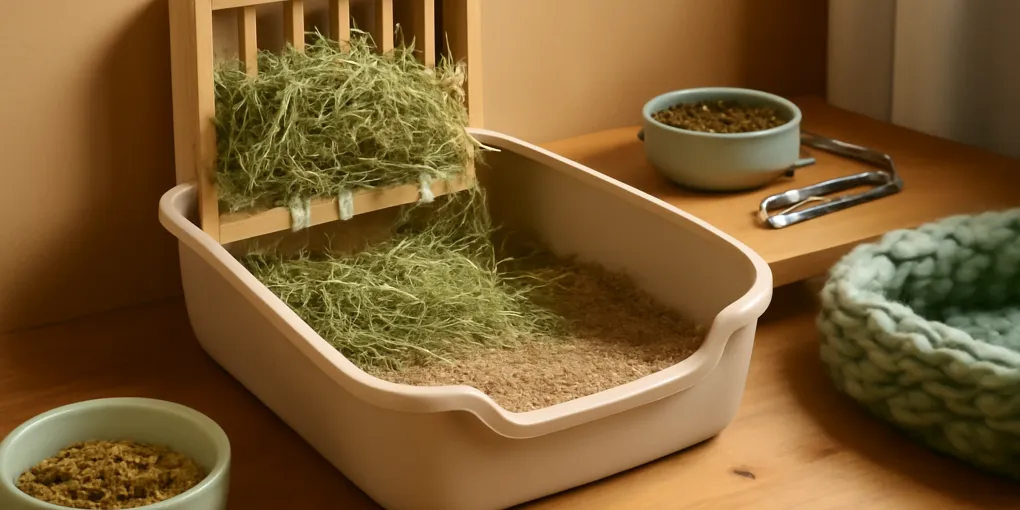
Rabbit Hay Feeder Litter Box Setup: Cleaner Hay Without Blocking Grazing
ProtocolQuick picks
| Product | Key Specs |
|---|---|
| See price on Amazon |
|
| See price on Amazon |
|
| See price on Amazon |
|
Product availability, certifications, and retailer details can change; check the current Amazon page before buying.
Direct answer
A good rabbit hay feeder keeps hay cleaner without making the rabbit work for food. Mount or place it low, close to the litter area, with openings wide enough for easy pulling and no sharp or narrow gaps. The rabbit should have hay available at all times, including loose hay if the rack slows eating.
The setup fails if it protects hay so well that the rabbit eats less of it. For rabbits, access beats tidiness.
Feeder options to consider
- Search Amazon for low rabbit hay racks if you want hay above the wet litter surface but still easy to reach.
- Search Amazon for rabbit litter boxes with hay areas for a grazing-and-toilet layout.
- Search Amazon for rabbit timothy hay and prioritize fresh smell, low dust, and reliable supply.
How we score this setup
| Criterion | Weight | Score | Why it matters here |
|---|---|---|---|
| Research | 30% | 8.5 | Rabbit welfare guidance strongly supports constant grass-hay access for dental and digestive health. |
| Evidence Quality | 25% | 8.0 | Feeder style evidence is practical husbandry, but the hay-access requirement is well established. |
| Value | 20% | 8.5 | A simple rack or litter-box hay station can reduce waste without expensive equipment. |
| User Signals | 15% | 8.0 | Owners struggle with hay on the floor, soiled hay, and rabbits ignoring awkward racks. |
| Transparency | 10% | 9.0 | The cleanest feeder is not the best one if it reduces hay intake. |
Step 1: Start with the rabbit’s behavior
Many rabbits like to eat hay while using the litter box. Instead of fighting that, place hay at or beside the litter area. A rack above one end of a large litter tray can keep the main pile cleaner while letting loose strands fall where the rabbit already spends time.
Do not put all hay in a decorative ball or narrow grid across the room from the litter area and then wonder why the rabbit pulls it out. Rabbits graze in long sessions. They need comfort, room to turn, and easy access.
Step 2: Set the height low
The hay opening should be near nose level when the rabbit is sitting or standing normally. The rabbit should not have to stretch upward, twist the neck, or stand on hind legs for routine eating. Senior rabbits and large breeds need especially forgiving access.
If you use a wall-mounted rack, watch the first few sessions. If the rabbit yanks aggressively, gives up, or eats only fallen hay, lower the rack or switch to a wider opening.
Step 3: Avoid unsafe feeder designs
Avoid spring-loaded hay balls, tiny wire gaps, sharp unfinished edges, and anything that could trap a head or leg. Chewed plastic can also create rough edges. If a rack hangs from cage bars, confirm it cannot fall into the litter tray or swing into the rabbit.
A heavy ceramic hay manger or a rack mounted outside an exercise pen can work, but only if the rabbit can pull hay without scraping the nose or teeth against wire.
Step 4: Manage waste without restricting food
Some hay waste is normal. Rabbits sort hay by smell, texture, and strand quality. Remove wet or soiled hay daily, shake out dusty fines, and refill before the feeder is empty. If the hay smells musty, looks moldy, or feels damp, discard it.
For adult rabbits, grass hay such as timothy, orchard, or meadow hay is the daily staple. Alfalfa is richer and is not the default for most healthy adults unless a veterinarian recommends it.
Step 5: Pair the feeder with water and enrichment
Hay intake supports dental wear and gut movement, but rabbits also need fresh water and safe chewing options. Place a water bowl where hay dust will not constantly fall into it. Add cardboard tubes, untreated willow, or other rabbit-safe chews nearby so the hay rack is not the only object getting teeth attention.
If the rabbit suddenly eats less hay, produces fewer droppings, drools, or seems painful, treat it as a veterinary concern rather than a feeder preference.
Signs the feeder is hurting hay intake
Count behavior, not just hay left in the rack. A rabbit that visits the feeder less often, waits for loose hay on the floor, chews the rack instead of pulling strands, or leaves smaller droppings may be telling you the setup is too restrictive. Put a loose hay pile back immediately while you adjust the rack height or opening size.
FAQ
Should a rabbit hay rack be inside or outside the litter box?
Either can work. The practical test is whether the rabbit can eat comfortably and whether the hay stays dry enough for daily use.
Is it okay if my rabbit pulls hay onto the floor?
Some pulling is normal. If most hay ends up ignored or soiled, adjust height, opening size, or hay quality instead of restricting access.
What hay should adult rabbits eat every day?
Most healthy adult rabbits do well with grass hay such as timothy, orchard, or meadow hay. Ask a veterinarian about special diets for young, pregnant, underweight, or ill rabbits.
Related reading
- For small-pet cleaning routines, see hamster wheel cleaning protocol.
- For another hay-access setup, read guinea pig hay rack setup.
Sources
- RSPCA rabbit diet advice emphasizes constant good-quality hay or grass access: https://www.rspca.org.uk/adviceandwelfare/pets/rabbits/diet
- VCA rabbit feeding guidance explains hay, water, and safe feeding basics: https://vcahospitals.com/know-your-pet/feeding-your-rabbit
- Merck Veterinary Manual notes the importance of dietary fiber and hay in rabbit care: https://www.merckvetmanual.com/all-other-pets/rabbits/providing-a-home-for-a-rabbit
Bottom line
Set the hay feeder where your rabbit already wants to graze, keep it low and generous, remove wet hay daily, and never trade constant hay access for a tidier-looking rack.